友
| ||||||||
Translingual
| Stroke order | |||
|---|---|---|---|
 | |||
| Stroke order | |||
|---|---|---|---|
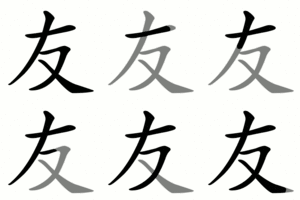 | |||
Han character
友 (Kangxi radical 29, 又+2, 4 strokes, cangjie input 大水 (KE), four-corner 40047, composition ⿸𠂇又)
References
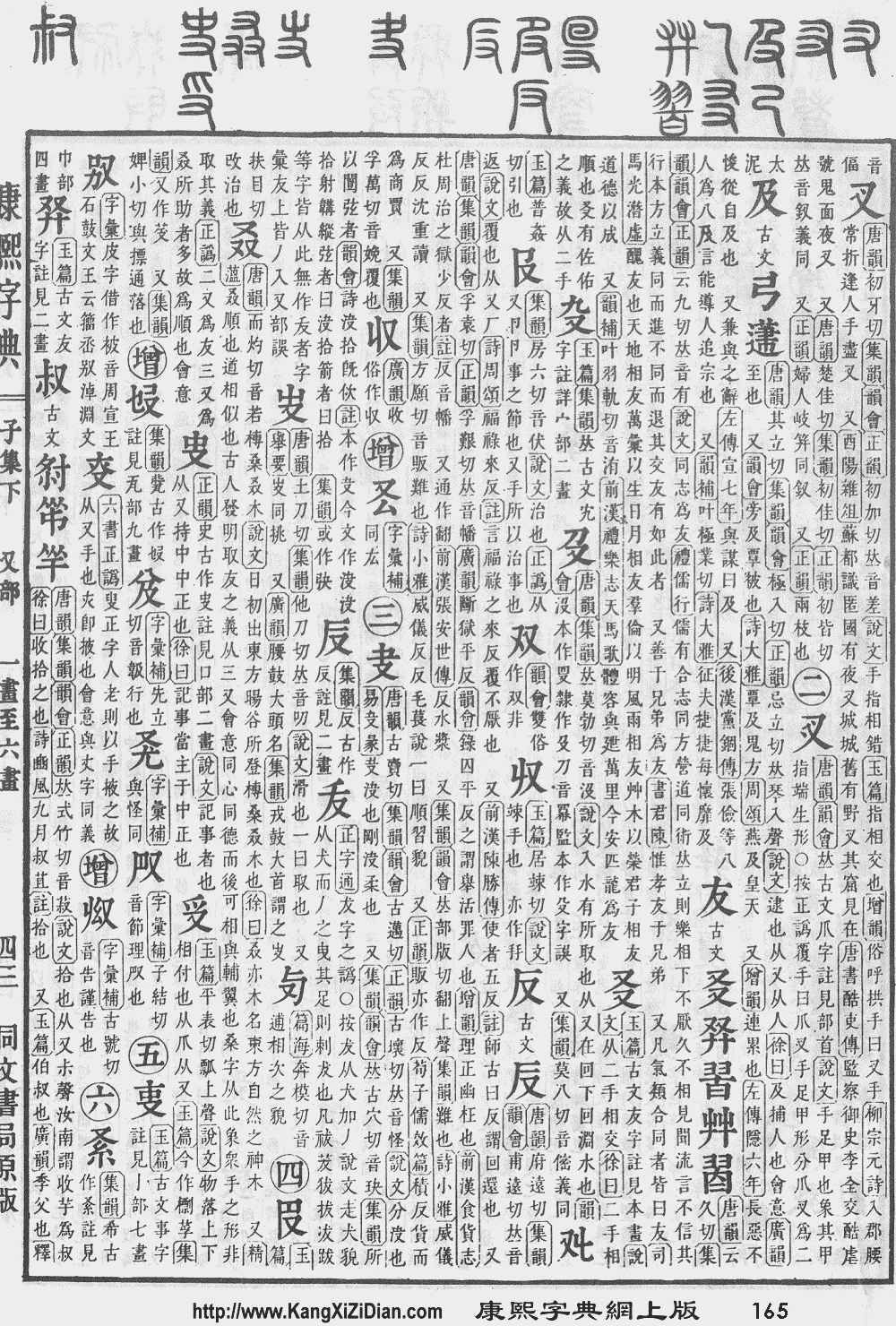
- KangXi: page 165, character 6
- Dai Kanwa Jiten: character 3119
- Dae Jaweon: page 374, character 18
- Hanyu Da Zidian (first edition): volume 1, page 391, character 1
- Unihan data for U+53CB
Chinese
| simp. and trad. |
友 | |
|---|---|---|
| alternative forms | 㕛 𦫹 𦐮 | |
Glyph origin
| Historical forms of the character 友 | |||
|---|---|---|---|
| Shang | Western Zhou | Shuowen Jiezi (compiled in Han) | Liushutong (compiled in Ming) |
| Oracle bone script | Bronze inscriptions | Small seal script | Transcribed ancient scripts |
 |
 |
 |
 |
Characters in the same phonetic series (又) (Zhengzhang, 2003)
Ideogrammic compound (會意) : 又 (“hand”) + 又 (“hand”) – two right hands meeting in friendship. Also phono-semantic (形聲) , from 又 (OC *ɢʷɯs).
Etymology
Endoactive derivation of 右 (OC *ɢʷɯʔ, “right”) (Schuessler, 2007). Cognate with Tibetan གྲོགས (grogs, “friend; companion”) (STEDT).
Pronunciation
Definitions
友
- friend; companion
- 好友 ― hǎoyǒu ― good friend
- 招招舟子、人涉卬否。人涉卬否、卬須我友。 [Pre-Classical Chinese, trad.]
- From: The Classic of Poetry, c. 11th – 7th centuries BCE, translated based on James Legge's version
- Zhāozhāo zhōuzǐ, rén shè áng fǒu. Rén shè áng fǒu, áng xū wǒyǒu. [Pinyin]
- The boatman beckons and beckons; others cross, not me. Others cross, not me; I'm waiting for my friend.
招招舟子、人涉卬否。人涉卬否、卬须我友。 [Pre-Classical Chinese, simp.]
- (literary) to make friends with
- 無友不如己者。 [Classical Chinese, trad.]
- From: The Analects of Confucius, c. 475 – 221 BCE, translated based on James Legge's version
- Wú yǒu bùrú jǐ zhě. [Pinyin]
- Have no friends not equal to yourself.
无友不如己者。 [Classical Chinese, simp.]
- (literary, chiefly among brothers) to love each other
- 窈窕淑女,琴瑟友之。 [Pre-Classical Chinese, trad. and simp.]
- From: The Classic of Poetry, c. 11th – 7th centuries BCE, translated based on James Legge's version
- Yǎotiǎoshūnǚ, qínsè yǒu zhī. [Pinyin]
- The modest, retiring, virtuous, young lady: With lutes, small and large, let us give her friendly welcome.
- 兄亦不念鞠子哀,大不友于弟。 [Classical Chinese, trad. and simp.]
- From: The Book of Documents, circa 4th – 3rd century BCE, translated based on Bernhard Karlgren's version
- Xiōng yì bù niàn jūzǐ āi, dà bù yǒu yú dì. [Pinyin]
- The elder brother likewise does not think of his tender younger brother’s pitiableness and is greatly unfriendly towards his younger brother.
- (in compounds) friendly
- (Cantonese, colloquial, slightly impolite) guy; bloke (Classifier: 條/条; 班)
- a surname
Compounds
Derived terms from 友
|
|
|
References
- “友”, in 漢語多功能字庫 (Multi-function Chinese Character Database), 香港中文大學 (the Chinese University of Hong Kong), 2014–
Japanese
Korean
Etymology
From Middle Chinese 友 (MC ɦɨuX).
| Historical readings |
|---|
|
Pronunciation
- (SK Standard/Seoul) IPA(key): [u(ː)]
- Phonetic hangul: [우(ː)]
- Though still prescribed in Standard Korean, most speakers in both Koreas no longer distinguish vowel length.
Compounds
Vietnamese
This article is issued from Wiktionary. The text is licensed under Creative Commons - Attribution - Sharealike. Additional terms may apply for the media files.