咫
| ||||||||
Translingual
Han character
咫 (Kangxi radical 30, 口+6, 9 strokes, cangjie input 尸人口金 (SORC), four-corner 76808, composition ⿺尺只)
References
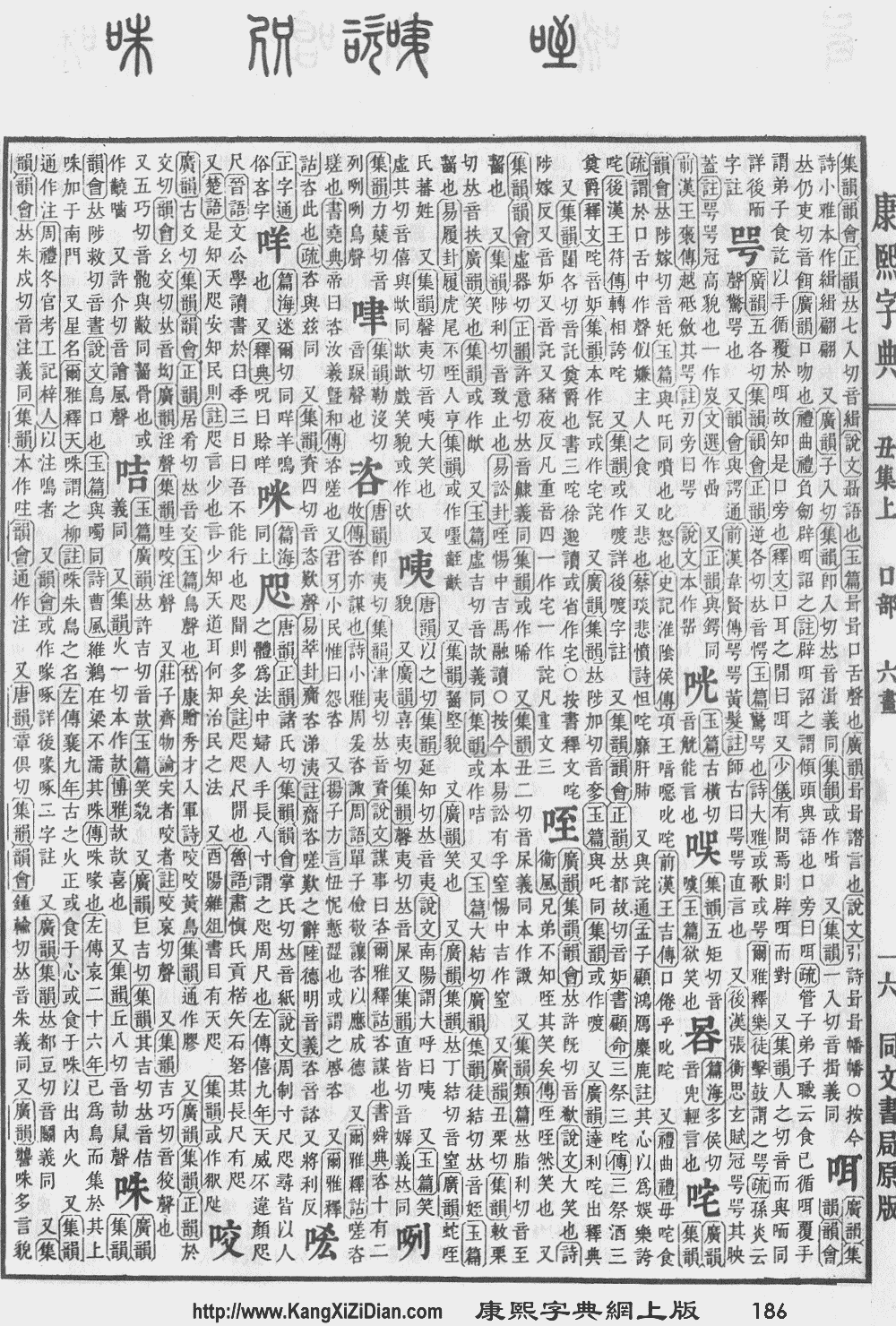
- KangXi: page 186, character 15
- Dai Kanwa Jiten: character 3542
- Dae Jaweon: page 405, character 36
- Hanyu Da Zidian (first edition): volume 1, page 624, character 1
- Unihan data for U+54AB
Chinese
| trad. | 咫 | |
|---|---|---|
| simp. # | 咫 | |
| alternative forms | 𣥉 𦐖 ⿰羽尺 | |
Glyph origin
Characters in the same phonetic series (只) (Zhengzhang, 2003)
Phono-semantic compound (形聲, OC *kljeʔ) : semantic 尺 (“ruler; measuring stick”) + phonetic 只 (OC *klje, *kljeʔ)
Pronunciation
Definitions
咫
- unit of measurement during the Zhou dynasty, equal to eight cun/tsun (寸)
- † few; little
- Synonym: 少 (shǎo)
- † short
- Synonym: 短 (duǎn)
- 北首燕路,而後遣辯士奉咫尺之書,暴其所長於燕,燕必不敢不聽從。 [Classical Chinese, trad.]
- From: The Records of the Grand Historian, by Sima Qian, c. 91 BCE
- Běi shǒu yàn lù, ér hòu qiǎn biàn shì fèng zhǐchǐ zhī shū, bào qí suǒ cháng yú yàn, yàn bì bùgǎn bù tīngcóng. [Pinyin]
- (please add an English translation of this example)
北首燕路,而后遣辩士奉咫尺之书,暴其所长于燕,燕必不敢不听从。 [Classical Chinese, simp.]
Japanese
Kanji
咫
Readings
- Go-on: し (shi)←し (si, historical)
- Kan-on: し (shi)←し (si, historical)
- Kun: あた (ata, 咫); た (ta, 咫)
Compounds
- 咫尺 (shiseki)
Korean
Etymology
From Middle Chinese 咫 (MC t͡ɕiᴇX).
Pronunciation
- (SK Standard/Seoul) IPA(key): [t͡ɕi]
- Phonetic hangul: [지]
Hanja
Wikisource 咫 (eumhun 여덟 치 지 (yeodeol chi ji))
- This term needs a translation to English. Please help out and add a translation, then remove the text
{{rfdef}}.
References
Vietnamese
Han character
咫: Hán Việt readings: chỉ[1]
咫: Nôm readings: chỉ[1]
- This term needs a translation to English. Please help out and add a translation, then remove the text
{{rfdef}}.
References
- Trần (2004).
This article is issued from Wiktionary. The text is licensed under Creative Commons - Attribution - Sharealike. Additional terms may apply for the media files.