埳
| ||||||||
Translingual
Han character
埳 (Kangxi radical 32, 土+8, 11 strokes, cangjie input 土弓竹X (GNHX), four-corner 47177, composition ⿰土臽)
Further reading
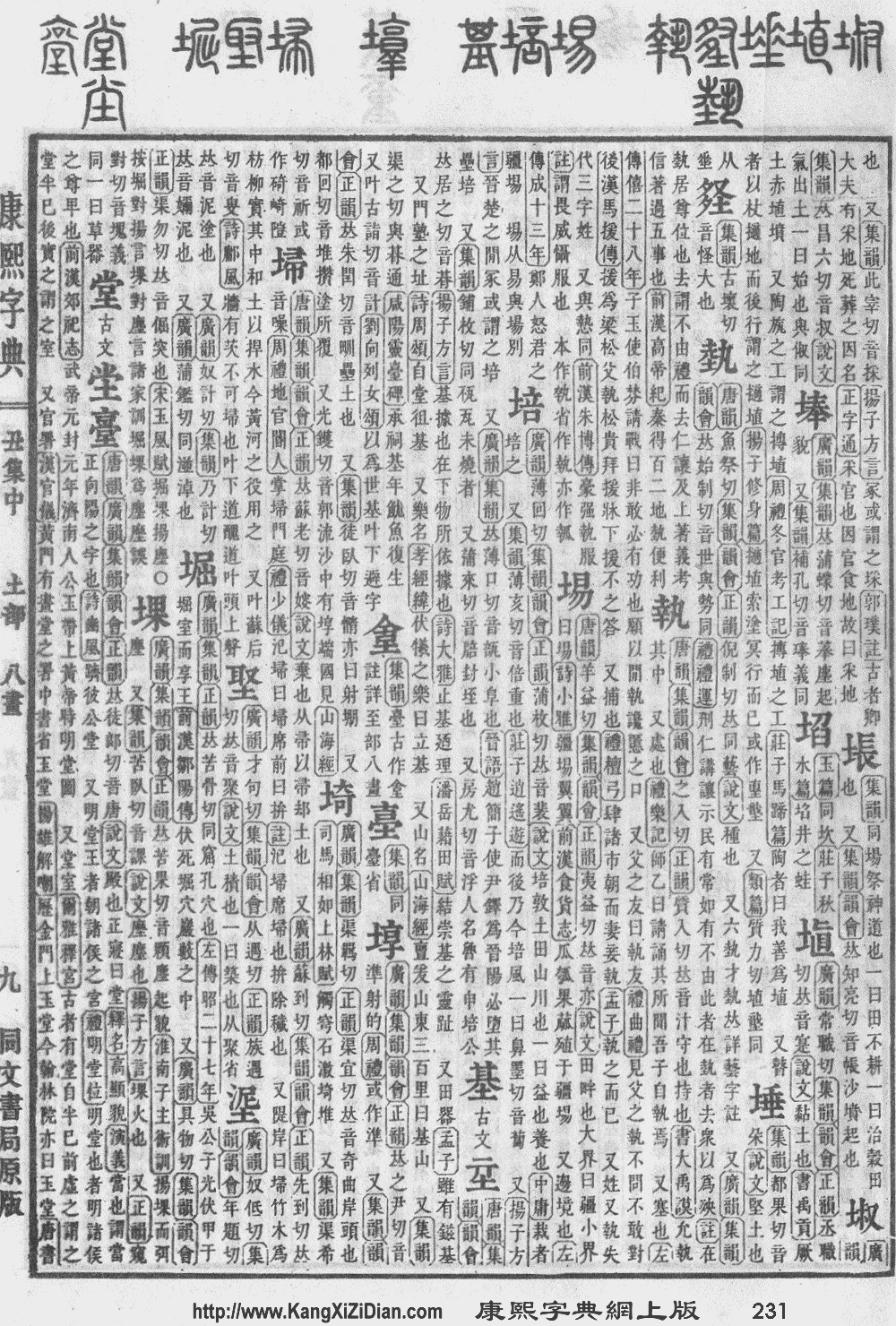
- KangXi: page 231, character 4
- Dai Kanwa Jiten: character 5186
- Dae Jaweon: page 467, character 8
- Hanyu Da Zidian (first edition): volume 1, page 456, character 3
- Unihan data for U+57F3
Chinese
Glyph origin
Characters in the same phonetic series (臽) (Zhengzhang, 2003)
| Old Chinese | |
|---|---|
| 萏 | *l'oːmʔ |
| 窞 | *l'oːmʔ |
| 惂 | *kʰloːmʔ |
| 輡 | *kʰloːmʔ |
| 錎 | *kʰloːmʔ, *ɡroːms |
| 埳 | *kʰloːmʔ |
| 臽 | *kʰloːmʔ, *ɡroːms |
| 淊 | *ɡloːmʔ, *qroːm, *qroːms, *lomʔ |
| 欿 | *ɡloːmʔ |
| 蜭 | *ɡloːmʔ, *ɡluːms |
| 啗 | *l'aːmʔ, *l'aːms |
| 鵮 | *ʔr'oːm, *kʰroːm, *kʰroːms |
| 餡 | *ɡroːms |
| 陷 | *ɡroːms |
| 爓 | *ljom, *loms |
| 諂 | *l̥ʰomʔ |
| 讇 | *l̥ʰomʔ |
| 閻 | *lom |
| 焰 | *loms |
| 壛 | *lom |
| 櫩 | *lom |
| 燄 | *lomʔ |
| 掐 | *kʰroːb |
Phono-semantic compound (形聲, OC *kʰloːmʔ) : semantic 土 (“soil”) + phonetic 臽 (OC *kʰloːmʔ, *ɡroːms).
Japanese
Kanji
埳
- This term needs a translation to English. Please help out and add a translation, then remove the text
{{rfdef}}.
Korean
Hanja
埳 (eum 감 (gam))
- This term needs a translation to English. Please help out and add a translation, then remove the text
{{rfdef}}.
This article is issued from Wiktionary. The text is licensed under Creative Commons - Attribution - Sharealike. Additional terms may apply for the media files.