婦
See also: 妇
| ||||||||
 | ||||||||
Translingual
Han character
婦 (Kangxi radical 38, 女+8, 11 strokes, cangjie input 女尸一月 (VSMB), four-corner 47427, composition ⿰女帚)
Derived characters
- 𦸱
Descendants
References
- KangXi: page 265, character 14
- Dai Kanwa Jiten: character 6432
- Dae Jaweon: page 532, character 13
- Hanyu Da Zidian (first edition): volume 2, page 1062, character 6
- Unihan data for U+5A66
- Unihan data for U+2F866
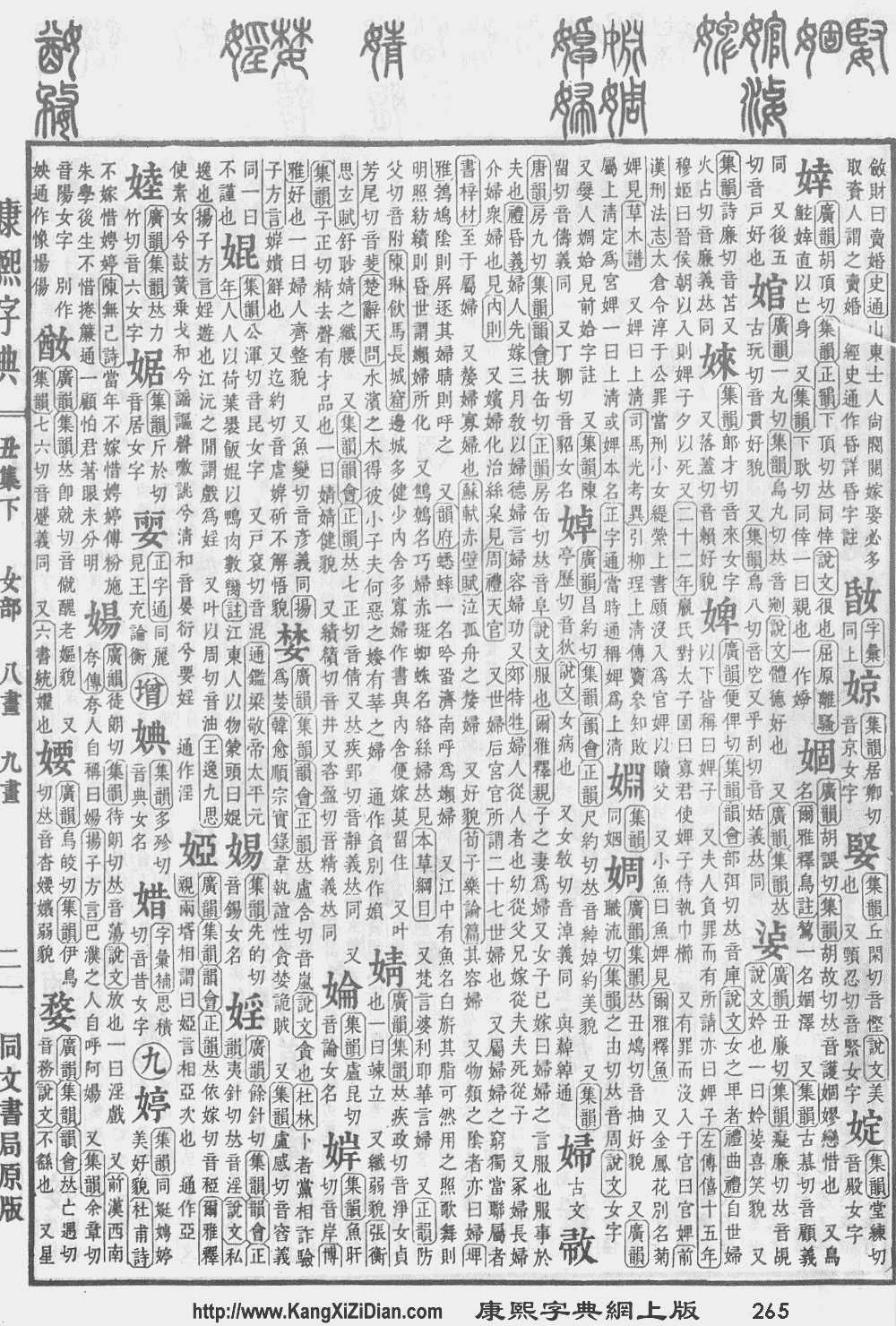
Chinese
| trad. | 婦 | |
|---|---|---|
| simp. | 妇 | |
Glyph origin
| Historical forms of the character 婦 | |||
|---|---|---|---|
| Shang | Western Zhou | Shuowen Jiezi (compiled in Han) | Liushutong (compiled in Ming) |
| Oracle bone script | Bronze inscriptions | Small seal script | Transcribed ancient scripts |
 |
 |
 |
 |
Characters in the same phonetic series (帚) (Zhengzhang, 2003)
Two possibilities:
Pronunciation
Definitions
婦
- married woman
- woman
- 婦無公事、休其蠶織。 [Pre-Classical Chinese, trad.]
- From: The Classic of Poetry, c. 11th – 7th centuries BCE, translated based on James Legge's version
- Fù wú gōngshì, xiū qí cánzhī. [Pinyin]
- So a woman, who has nothing to do with public affairs, leaves her silk-worms and weaving.
妇无公事、休其蚕织。 [Pre-Classical Chinese, simp.]- 無自廣以狹人,匹夫匹婦,不獲自盡,民主罔與成厥功。 [Classical Chinese, trad.]
- From: Forged Old Text of the Book of Documents, circa 3rd – 4th century CE
- Wú zì guǎng yǐ xiá rén, pǐfū pǐfù, bù huò zì jǐn, mínzhǔ wǎng yǔ chéng jué gōng. [Pinyin]
- Do not think yourself so large as to deem others small. If ordinary men and women do not find the opportunity to give full development to their ability, the people's lord will be without the proper aids to complete his merit.'
无自广以狭人,匹夫匹妇,不获自尽,民主罔与成厥功。 [Classical Chinese, simp.]
- wife
- 使君自有婦,羅敷自有夫! [Classical Chinese, trad.]
- From: 陌上桑 (日出東南隅行) "Ballad about Sunrise at the southeast corner", included in New Songs from the Jade Terrace (玉臺新詠) [circa 6th century]. Translated by Anne Birrell
- Shǐjūn zì yǒu fù, Luó Fū zì yǒu fū! [Pinyin]
- You have your own wife, Prefect, Luofu has her own husband!
使君自有妇,罗敷自有夫! [Classical Chinese, simp.]
Compounds
Derived terms from 婦
|
|
|
Descendants
References
- “婦”, in 漢語多功能字庫 (Multi-function Chinese Character Database), 香港中文大學 (the Chinese University of Hong Kong), 2014–
Japanese
| Shinjitai | 婦 | |
| Kyūjitai [1] |
婦󠄁 婦+ 󠄁?(Adobe-Japan1) |
 |
| 婦󠄃 婦+ 󠄃?(Hanyo-Denshi) (Moji_Joho) | ||
| The displayed kanji may be different from the image due to your environment. See here for details. | ||
Readings
References
- “婦”, in 漢字ぺディア (Kanjipedia) (in Japanese), 日本漢字能力検定協会, 2015—2023
Korean
Etymology
From Middle Chinese 婦 (MC bɨuX). Recorded as Middle Korean 부〮 (pwú) (Yale: pwu) in Hunmong Jahoe (訓蒙字會 / 훈몽자회), 1527.
Vietnamese
This article is issued from Wiktionary. The text is licensed under Creative Commons - Attribution - Sharealike. Additional terms may apply for the media files.