盡

See also: 尽 and 䀆
盡 U+76E1, 盡
CJK UNIFIED IDEOGRAPH-76E1
← 盠
[U+76E0]
CJK Unified Ideographs 盢 →
[U+76E2]

Translingual

Han character

盡 (Kangxi radical 108, 皿+9, 14 strokes, cangjie input 中一火月廿 (LMFBT), four-corner 50107, composition ⿳⺻灬皿)

Derived characters

References

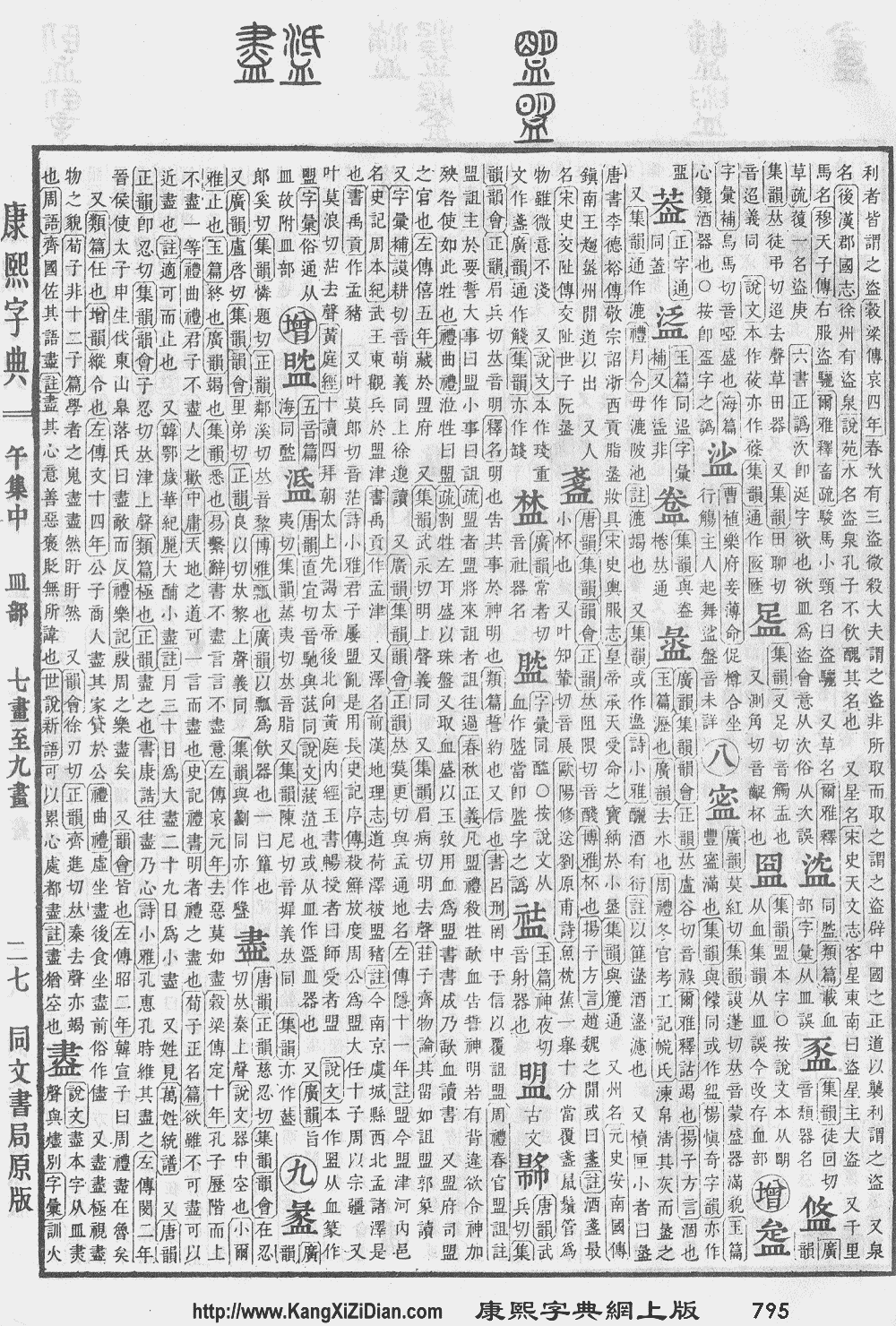
  • KangXi: page 795, character 22
  • Dai Kanwa Jiten: character 23029
  • Dae Jaweon: page 1210, character 15
  • Hanyu Da Zidian (first edition): volume 4, page 2567, character 5
  • Unihan data for U+76E1

Chinese

trad. 盡
simp. 尽*
alternative forms 䀆

Glyph origin

Ideogrammic compound (會意) : 聿 (“hand holding a brush”) + 灬 (“bristles”) + 皿 (“dish”) – cleaning a dish with a brush – empty.

Etymology 1

From Proto-Sino-Tibetan *dzin (“to exhaust; to come to an end”). Cognate with Tibetan ཟིན (zin, “to be finished; to draw near an end”).

Pronunciation


Rime
Character 盡
Reading # 1/2
Initial (聲) 從 (15)
Final (韻) 眞 (43)
Tone (調) Rising (X)
Openness (開合) Open
Division (等) III
Fanqie 慈忍切
Baxter dzjinX
Reconstructions
Zhengzhang
Shangfang
/d͡ziɪnX/
Pan
Wuyun
/d͡zinX/
Shao
Rongfen
/d͡zjenX/
Edwin
Pulleyblank
/d͡zinX/
Li
Rong
/d͡ziĕnX/
Wang
Li
/d͡zĭĕnX/
Bernard
Karlgren
/d͡zʱi̯ĕnX/
Expected
Mandarin
Reflex
jìn
Expected
Cantonese
Reflex
zan6
Baxter–Sagart system 1.1 (2014)
Character 盡
Reading # 2/2
Modern
Beijing
(Pinyin)
jìn
Middle
Chinese
‹ dzinX ›
Old
Chinese
/*m-tsi[n]ʔ/
English exhaust (v.)

Notes for Old Chinese notations in the Baxter–Sagart system:

* Parentheses "()" indicate uncertain presence;
* Square brackets "[]" indicate uncertain identity, e.g. *[t] as coda may in fact be *-t or *-p;
* Angle brackets "<>" indicate infix;
* Hyphen "-" indicates morpheme boundary;

* Period "." indicates syllable boundary.
Zhengzhang system (2003)
Character 盡
Reading # 2/2
No. 6758
Phonetic
component
盡
Rime
group
眞
Rime
subdivision
1
Corresponding
MC rime
盡
Old
Chinese
/*zlinʔ/

Definitions

盡

  1. to end; to finish; to be exhausted
    取之不盡/取之不尽  ―  qǔzhībùjìn  ―  to be inexhaustible
    想盡辦法/想尽办法  ―  xiǎng jìn bànfǎ  ―  to come up with every possible solution
  2. to reach the end
    盡頭/尽头  ―  jìntóu  ―  the end
    山窮水盡/山穷水尽  ―  shānqióngshuǐjìn  ―  having no more options; at the end of one's rope
    盡善盡美/尽善尽美  ―  jìnshànjìnměi  ―  perfect; flawless
  3. to exhaust; to use to the fullest extent
    盡最大的努力/尽最大的努力  ―  jìn zuìdà de nǔlì  ―  to exert one's utmost effort
    盡心竭力/尽心竭力  ―  jìnxīnjiélì  ―  to do something with all one's heart and all one's might
  4. to die
    自盡/自尽  ―  zìjìn  ―  to commit suicide
  5. all; completely; entirely
    他說的話不可盡信。 [MSC, trad.]
    他说的话不可尽信。 [MSC, simp.]
    Tā shuō de huà bùkě jìn xìn. [Pinyin]
    You cannot believe everything he said.

Compounds

Descendants

Sino-Xenic (盡):
  • → Vietnamese: tận (盡)

Etymology 2

For pronunciation and definitions of 盡 – see 儘 (“utmost; extreme; furthest; to do one's utmost; to do all one can; to do one's best; etc.”).
(This character, 盡, is a variant form of 儘.)

References

Japanese

Shinjitai

尽

Kyūjitai

盡

Kanji

盡

(“Jinmeiyō” kanji used for names, kyūjitai kanji, shinjitai form 尽)

  1. exhaust, use up

Readings

Korean

Hanja

盡 • (jin) (hangeul 진)

  1. exhaust, use up
  2. deplete

Vietnamese

Han character

盡: Hán Nôm readings: tận, hết

  1. This term needs a translation to English. Please help out and add a translation, then remove the text {{rfdef}}.

References

This article is issued from Wiktionary. The text is licensed under Creative Commons - Attribution - Sharealike. Additional terms may apply for the media files.