歷
| ||||||||
| ||||||||
Translingual
| Traditional | 歷 |
|---|---|
| Shinjitai | 歴 |
| Simplified | 历 |
Han character
歷 (Kangxi radical 77, 止+12, 16 strokes, cangjie input 一竹木一 (MHDM) or 一木卜中一 (MDYLM), four-corner 71211, composition ⿸厤止)
References
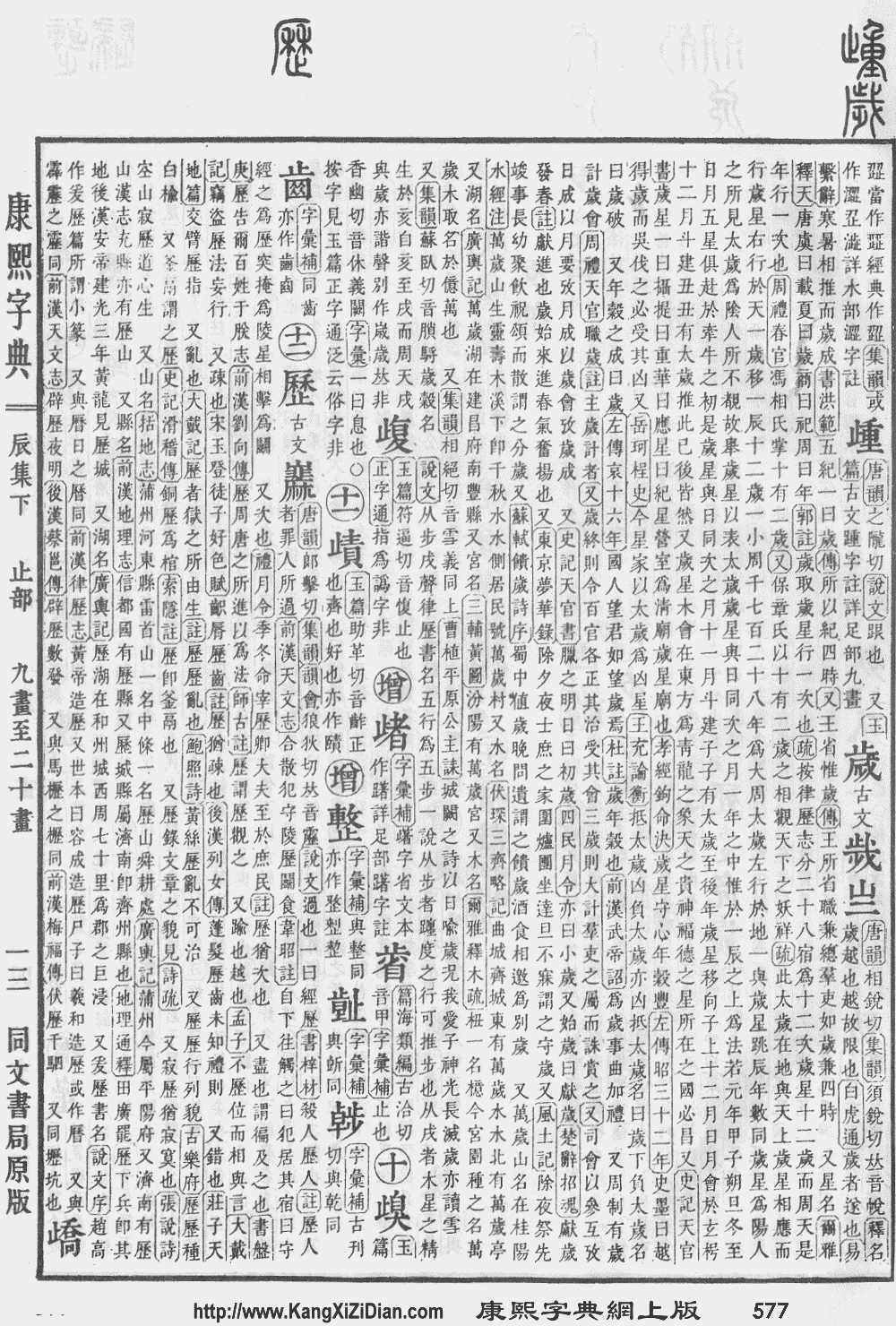
- KangXi: page 577, character 14
- Dai Kanwa Jiten: character 16340
- Dae Jaweon: page 968, character 9
- Hanyu Da Zidian (first edition): volume 2, page 1445, character 9
- Unihan data for U+6B77
- Unihan data for U+F98C
Chinese
| trad. | 歷 | |
|---|---|---|
| simp. | 历* | |
| alternative forms | 歴/历 厯 𢟍 | |
Glyph origin
Characters in the same phonetic series (秝) (Zhengzhang, 2003)
Phono-semantic compound (形聲, OC *reːɡ) : phonetic 厤 (OC *reːɡ) + semantic 止.
Etymology
Schuessler (2007) considered this word to be of Sino-Tibetan origin and a cognate to Burmese ရေ (re, “to count”), Kinnauri ri (“to count”), Tibetan རྩི (rtsi, “to count; to calculate”), and [script needed] (rtsis-pa, “astronomer”); however, STEDT derives Burmese ရေ (re) & Tibetan རྩི (rtsi) from Proto-Sino-Tibetan *r-tsjəj (“to count”) and does not compare them to Chinese 歷.
Pronunciation
Definitions
歷
- to experience; to go through; to undergo
- experience; history; record
- to surpass; to exceed; to overstep
- to offend; to go against; to undermine
- 民有不事農桑、任氣遊俠、犯歷法禁、不從吏教者,傷王之化。 [Classical Chinese, trad.]
- From: Six Secret Teachings, c. 475 – 221 BCE
- Mín yǒu bùshì nóngsāng, rènqì yóuxiá, fànlì fǎjìn, bùcóng lìjiào zhě, shāng wáng zhī huà. [Pinyin]
- When the people are not engaged in agriculture and sericulture but instead give rein to their tempers and travel about as bravados, outstepping and transgressing the laws and prohibitions, not following the instructions of the officials, it harms the king's transforming influence.
民有不事农桑、任气游侠、犯历法禁、不从吏教者,伤王之化。 [Classical Chinese, simp.]
- to travel through; to go travelling
- extensively; all over; completely
- many times; repeatedly
- one by one; one at a time
- all of the previous (occurrences); all past
- to take charge of; to assume (a role)
- to choose; to select (a date)
- to examine; to scrutinise; to observe; to calculate
- clear; distinct; lucid
- few and far between; sporadic
- a surname
Compounds
Derived terms from 歷
|
|
|
Vietnamese
This article is issued from Wiktionary. The text is licensed under Creative Commons - Attribution - Sharealike. Additional terms may apply for the media files.