庶
See also: 庻
| ||||||||
 | ||||||||
Translingual
Han character
庶 (Kangxi radical 53, 广+8, 11 strokes, cangjie input 戈廿火 (ITF), four-corner 00237, composition ⿸广⿱廿灬)
Derived characters
References
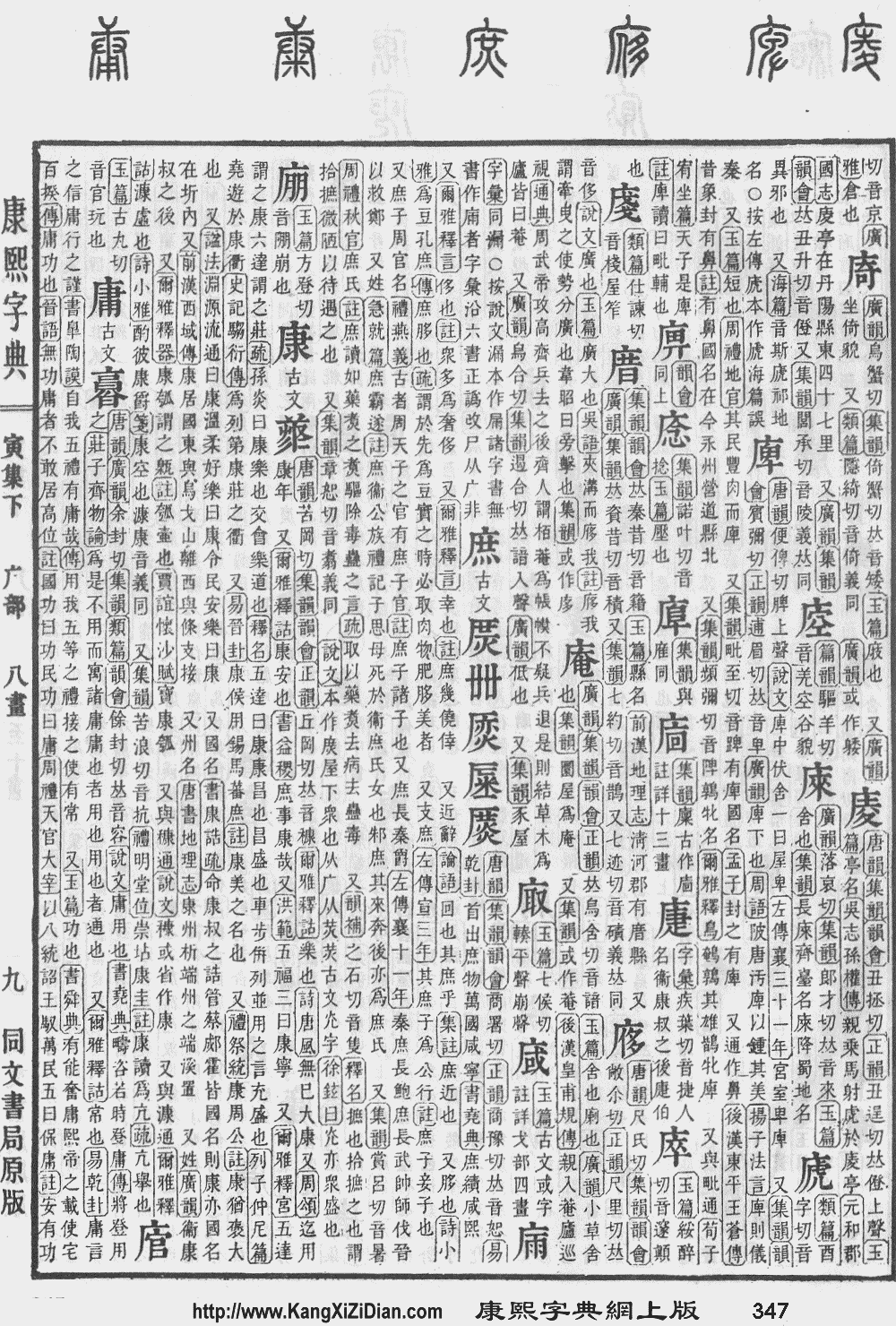
- KangXi: page 347, character 20
- Dai Kanwa Jiten: character 9373
- Dae Jaweon: page 657, character 28
- Hanyu Da Zidian (first edition): volume 2, page 886, character 15
- Unihan data for U+5EB6
- Unihan data for U+2F88D
Chinese
| simp. and trad. |
庶 | |
|---|---|---|
| alternative forms | 庻 | |
Pronunciation
Definitions
庶
- numerous; many
- 冉有曰:「既庶矣,又何加焉?」曰:「富之。」 [Classical Chinese, trad. and simp.]
- From: The Analects of Confucius, c. 475 – 221 BCE, translated based on James Legge's version
- Rǎn Yǒu yuē: “Jì shù yǐ, yòu hé jiā yān?” Yuē: “Fù zhī.” [Pinyin]
- Ran You said, "Since they are thus numerous, what more shall be done for them?" "Enrich them," was the reply.
- common; ordinary; without title or rank; pertaining to a commoner
- 庶人 ― shùrén ― commoner
- (chiefly historical) pertaining to concubinage (a concept in the polygynous practices of traditional Chinese society)
- Antonym: 嫡 (dí)
- (especially) born by a concubine or illegitimate partner
Japanese
| 庶 | |
| 庻 |
Korean
Etymology
From Middle Chinese 庶 (MC ɕɨʌH). Recorded as Middle Korean 셔 (sye) (Yale: sye) in Sinjeung Yuhap (新增類合 / 신증유합), 1576.
Pronunciation
- (SK Standard/Seoul) IPA(key): [sʰɘ(ː)]
- Phonetic hangul: [서(ː)]
- Though still prescribed in Standard Korean, most speakers in both Koreas no longer distinguish vowel length.
Compounds
Vietnamese
This article is issued from Wiktionary. The text is licensed under Creative Commons - Attribution - Sharealike. Additional terms may apply for the media files.