批
| ||||||||
Translingual
Han character
批 (Kangxi radical 64, 手+4, 7 strokes, cangjie input 手心心 (QPP), four-corner 51010, composition ⿰扌比)
Derived characters
- 𫵫
References
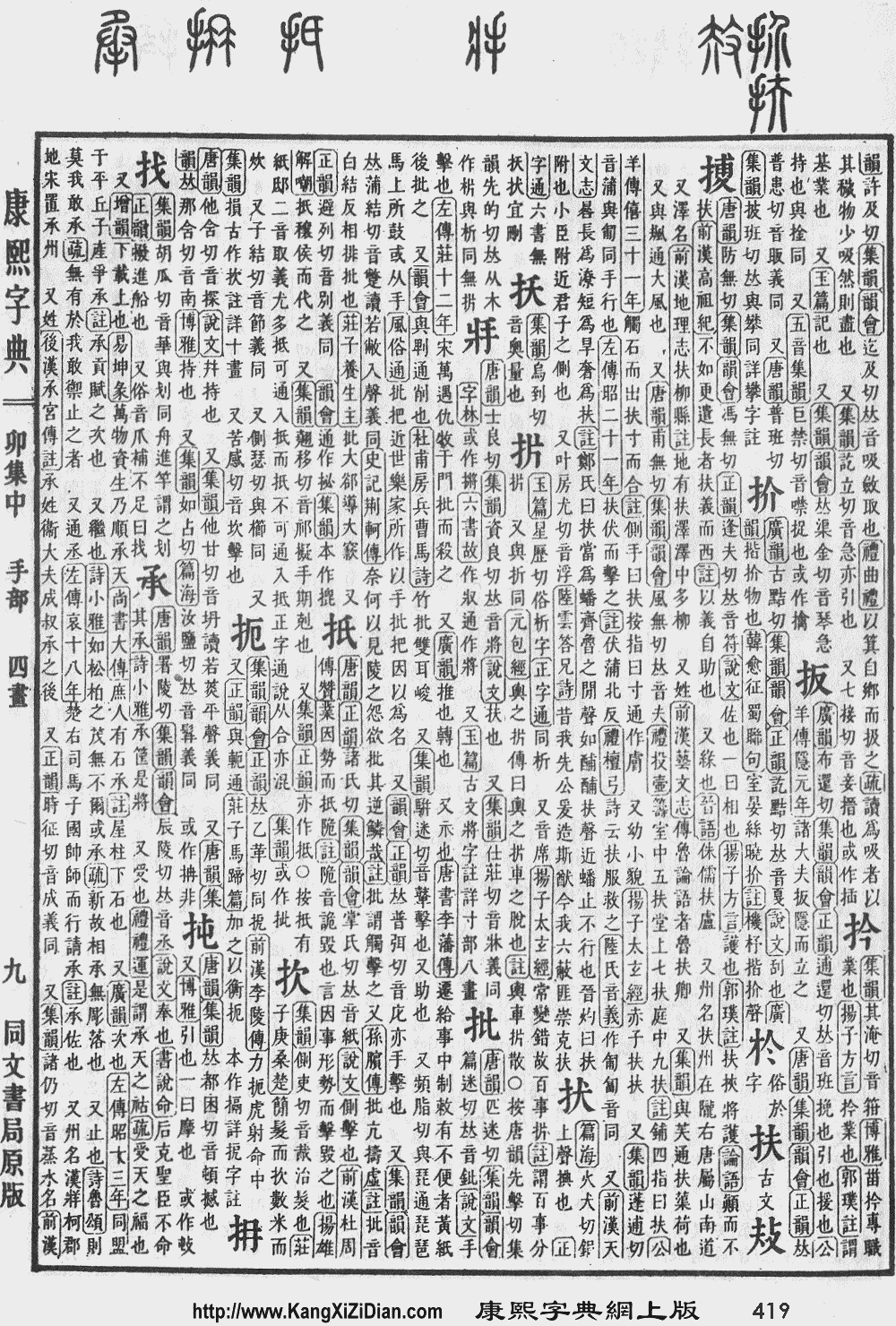
- KangXi: page 419, character 12
- Dai Kanwa Jiten: character 11845
- Dae Jaweon: page 766, character 4
- Hanyu Da Zidian (first edition): volume 3, page 1835, character 5
- Unihan data for U+6279
Chinese
| trad. | 批 | |
|---|---|---|
| simp. # | 批 | |
| alternative forms | 𠜱 Cantonese; Hakka; Teochew "to pare" 㓟 Cantonese and Teochew "to pare" 剕 Cantonese "to pare" 剖 Teochew "to pare" | |
Glyph origin
Characters in the same phonetic series (比) (Zhengzhang, 2003)
| Old Chinese | |
|---|---|
| 梐 | *piː, *biːʔ |
| 狴 | *piː |
| 悂 | *piː, *pʰi |
| 螕 | *piː |
| 鎞 | *piː |
| 蓖 | *piː |
| 篦 | *piː, *bis |
| 批 | *pʰiː |
| 砒 | *pʰiː |
| 鈚 | *pʰiː, *bi |
| 磇 | *pʰiː |
| 媲 | *pʰiːs |
| 笓 | *biː |
| 膍 | *biː, *bi |
| 陛 | *biːʔ |
| 仳 | *pʰeʔ, *piʔ, *bi, *briʔ |
| 吡 | *pʰeʔ, *piʔ, *biɡ |
| 紕 | *be, *pʰi, *kʰjɯʔ |
| 比 | *piʔ, *pis, *bi, *bis, *biɡ |
| 妣 | *piʔ, *pis |
| 秕 | *piʔ |
| 沘 | *piʔ, *bi |
| 枇 | *piʔ, *bi, *bis |
| 粊 | *pris |
| 庇 | *pis |
| 屁 | *pʰis |
| 琵 | *bi |
| 毗 | *bi |
| 貔 | *bi |
| 豼 | *bi |
| 蚍 | *bi |
| 芘 | *bi, *bis |
| 肶 | *bi |
| 魮 | *bi |
| 阰 | *bi |
| 坒 | *bis, *biɡ |
| 玭 | *bin |
Phono-semantic compound (形聲, OC *pʰiː) : semantic 手 (“hand”) + phonetic 比 (OC *piʔ, *pis, *bi, *bis, *biɡ).
Etymology
- “to pare”
- 𠜱 (pī) is sometimes treated as the 本字 (běnzì, “original character”).
- “pie”
- Borrowed from English pie.
- “pipe”
- Borrowed from English pipe.
- “vulva; cunt”
- From the Sichuanese pronunciation of 屄 (pi1).
This etymology is incomplete. You can help Wiktionary by elaborating on the origins of this term.
Pronunciation
Definitions
批
- to slap
- (obsolete) to attack; to offend
- (obsolete) to eliminate; to discard
- to cut (into thin slices), peel, or shape with a knife or blade; to pare: to peel [fruits], to sharpen [pencils], etc.
- (Cantonese) to plaster
- (Cantonese) to hit with diagonal or horizontal motion
- to make comments and criticisms (to an inferior from a superior, regarding a submitted report, essay, etc.)
- (literary, or in compounds) comment; annotation; criticism
- to judge
- to criticize
- to approve
- (Cantonese) to guess; to predict
- (Min Dong, Hokkien, Puxian Min) letter (written or printed communication) (Classifier: 張/张; 封)
- 手提紙筆趕緊要寫一張批,安慰媽媽講阮在外一切沒問題。 [Taiwanese Hokkien, trad.]
- From: 1991, 詹雅雯, 故鄉一封信
- Chhiú the̍h chóa-pit kóaⁿ-kín beh siá chi̍t tiuⁿ phe, an-ùi má-mah kóng gún chāi-gōa it-chhè bô būn-tê. [Pe̍h-ōe-jī]
- With paper and a pen in my hand, I hurried to write a letter, comforting Mom, saying that everything is alright away from home.
手提纸笔赶紧要写一张批,安慰妈妈讲阮在外一切没问题。 [Taiwanese Hokkien, simp.]
- (Teochew) letter from a foreign country
- to sell at wholesale
- Classifier for batches, groups, lots, etc (of merchandises).
- (colloquial) fibres of cotton, flax, etc. ready to be drawn and twisted
- (Cantonese) pie
- (Hong Kong Cantonese, rare) pipe
- (Southwestern Mandarin, Internet slang, vulgar) Alternative form of 屄 (bī).
Synonyms
Dialectal synonyms of 批 (“batch; group (classifier)”) [map]
| Variety | Location | Words |
|---|---|---|
| Formal (Written Standard Chinese) | 批 | |
| Mandarin | Beijing | 批 |
| Taiwan | 批 | |
| Langfang | 批 | |
| Tangshan | 批 | |
| Cangzhou | 批 | |
| Baoding | 批 | |
| Shijiazhuang | 批 | |
| Daming | 批 | |
| Cantonese | Hong Kong | 批 |
| Jin | Zhangjiakou | 批 |
| Handan | 批 | |
| Min Nan | Xiamen | 批, 幫 |
| Quanzhou | 批, 幫 | |
| Zhangzhou | 批, 幫 | |
| Wu | Shanghai | 批, 潑, 票, 統 |
| Shanghai (Chongming) | 批 | |
| Suzhou | 批 | |
| Danyang | 批 | |
| Hangzhou | 批 | |
| Ningbo | 批 | |
| Wenzhou | 批 | |
| Jinhua | 批 | |
- (letter):
Dialectal synonyms of 信 (“letter”) [map]
Compounds
Derived terms from 批
Further reading
- “Entry #3209”, in 臺灣閩南語常用詞辭典 [Dictionary of Frequently-Used Taiwan Minnan] (in Chinese and Min Nan), Ministry of Education, R.O.C., 2011.
- English Loanwords in Hong Kong Cantonese
Japanese
Korean
Vietnamese
This article is issued from Wiktionary. The text is licensed under Creative Commons - Attribution - Sharealike. Additional terms may apply for the media files.