捶

See also: 搥
捶 U+6376, 捶
CJK UNIFIED IDEOGRAPH-6376
← 捵
[U+6375]
CJK Unified Ideographs 捷 →
[U+6377]

Translingual

Han character

捶 (Kangxi radical 64, 手+8, 11 strokes, cangjie input 手竹十一 (QHJM), four-corner 52014, composition ⿰扌垂)

References

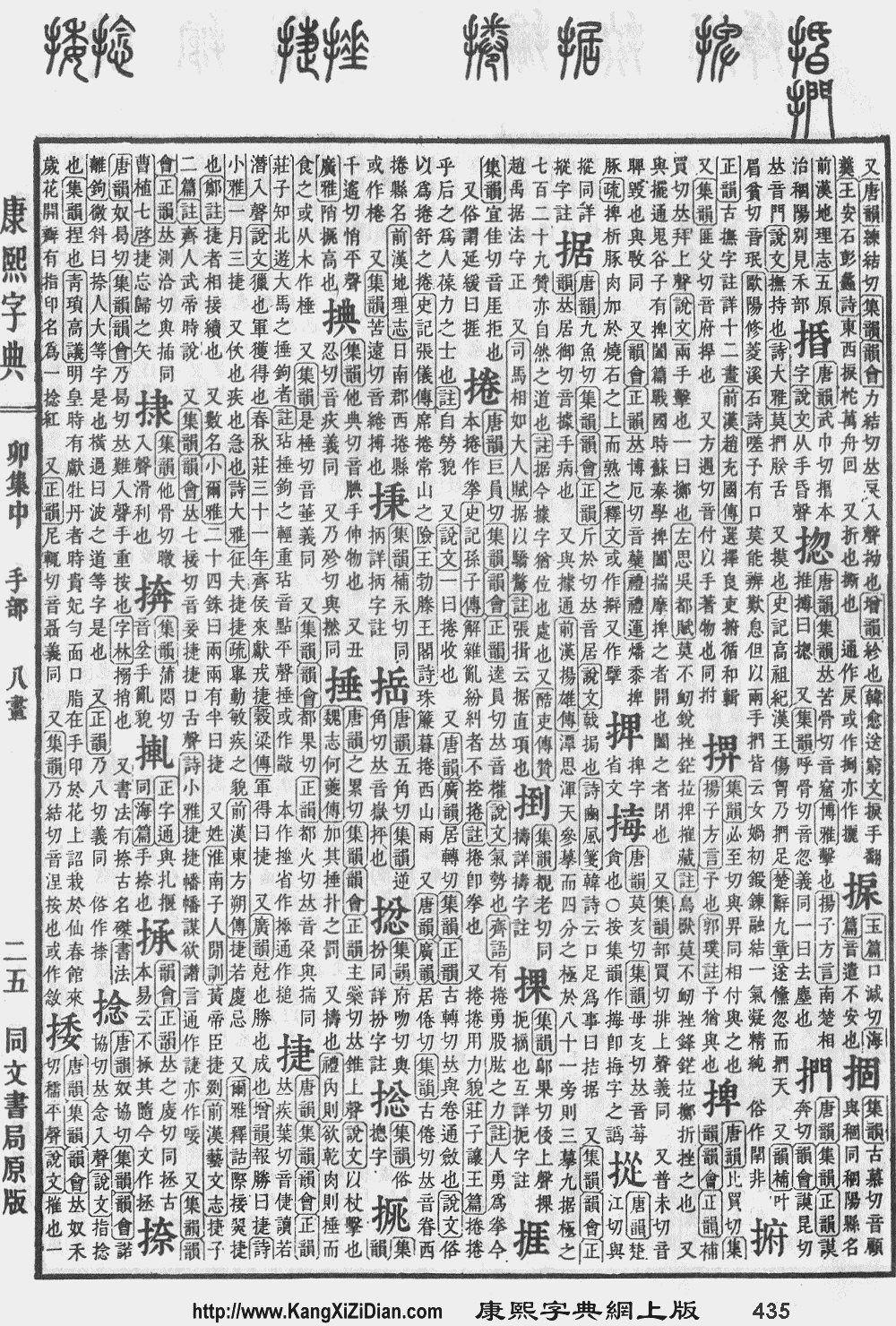
  • KangXi: page 435, character 23
  • Dai Kanwa Jiten: character 12215
  • Dae Jaweon: page 785, character 7
  • Hanyu Da Zidian (first edition): volume 3, page 1897, character 13
  • Unihan data for U+6376

Chinese

trad. 捶
simp. # 捶
alternative forms 搥
𢴹

Glyph origin

Historical forms of the character 捶
Shuowen Jiezi (compiled in Han)
Small seal script

Phono-semantic compound (形聲, OC *tjolʔ) : semantic 手 (“hand”) + phonetic 垂 (OC *djol).

Pronunciation


Rime
Character 捶
Reading # 1/1
Initial (聲) 章 (23)
Final (韻) 支 (12)
Tone (調) Rising (X)
Openness (開合) Closed
Division (等) III
Fanqie 之累切
Reconstructions
Zhengzhang
Shangfang
/t͡ɕiuᴇX/
Pan
Wuyun
/t͡ɕʷiɛX/
Shao
Rongfen
/t͡ɕjuɛX/
Edwin
Pulleyblank
/cwiə̆X/
Li
Rong
/t͡ɕiueX/
Wang
Li
/t͡ɕǐweX/
Bernard
Karlgren
/t͡ɕwie̯X/
Expected
Mandarin
Reflex
zhuǐ
Expected
Cantonese
Reflex
zeoi2
Baxter–Sagart system 1.1 (2014)
Character 捶
Reading # 1/1
Modern
Beijing
(Pinyin)
chuí
Middle
Chinese
‹ tsyweX ›
Old
Chinese
/*tojʔ/
English to beat

Notes for Old Chinese notations in the Baxter–Sagart system:

* Parentheses "()" indicate uncertain presence;
* Square brackets "[]" indicate uncertain identity, e.g. *[t] as coda may in fact be *-t or *-p;
* Angle brackets "<>" indicate infix;
* Hyphen "-" indicates morpheme boundary;

* Period "." indicates syllable boundary.
Zhengzhang system (2003)
Character 捶
Reading # 1/1
No. 1674
Phonetic
component
垂
Rime
group
歌
Rime
subdivision
3
Corresponding
MC rime
捶
Old
Chinese
/*tjolʔ/

Definitions

捶

  1. to strike (with a stick); to beat (with the fists); to lash
  2. to pound

Compounds

  • 倒枕捶床
  • 打枕捶床
  • 捶丸 (chuíwán)
  • 捶子
  • 捶床拍枕
  • 捶打
  • 捶拊
  • 捶楚
  • 捶背
  • 捶胸 (chuíxiōng)
  • 捶胸跌足
  • 捶腰
  • 搔耳捶胸
  • 泣血捶膺
  • 捶床搗枕/捶床捣枕
  • 捶撻/捶挞
  • 捶檯拍凳/捶台拍凳
  • 捶胸跌腳/捶胸跌脚
  • 捶胸頓腳/捶胸顿脚
  • 捶胸頓足/捶胸顿足
  • 鑪捶/𬬻捶
  • 頓足捶胸/顿足捶胸

Japanese

Kanji

捶

(uncommon “Hyōgai” kanji)

  1. This term needs a translation to English. Please help out and add a translation, then remove the text {{rfdef}}.

Readings

  • Go-on: すい (sui)
  • Kan-on: すい (sui)
  • Kun: むちうつ (muchiutsu, 捶つ); うつ (utsu); つく (tsuku)

Korean

Hanja

捶 • (chu) (hangeul 추, revised chu, McCune–Reischauer ch'u, Yale chwu)

  1. This term needs a translation to English. Please help out and add a translation, then remove the text {{rfdef}}.

Vietnamese

Han character

捶: Hán Nôm readings: chúi, chúy/chuý, chùy/chuỳ, dồi, thùy/thuỳ, trùy/truỳ

  1. This term needs a translation to English. Please help out and add a translation, then remove the text {{rfdef}}.
This article is issued from Wiktionary. The text is licensed under Creative Commons - Attribution - Sharealike. Additional terms may apply for the media files.