垂
| ||||||||
Translingual
| Stroke order | |||
|---|---|---|---|
 | |||
Han character
垂 (Kangxi radical 32, 土+5, 8 strokes, cangjie input 竹十廿一 (HJTM), four-corner 20104)
Derived characters
References
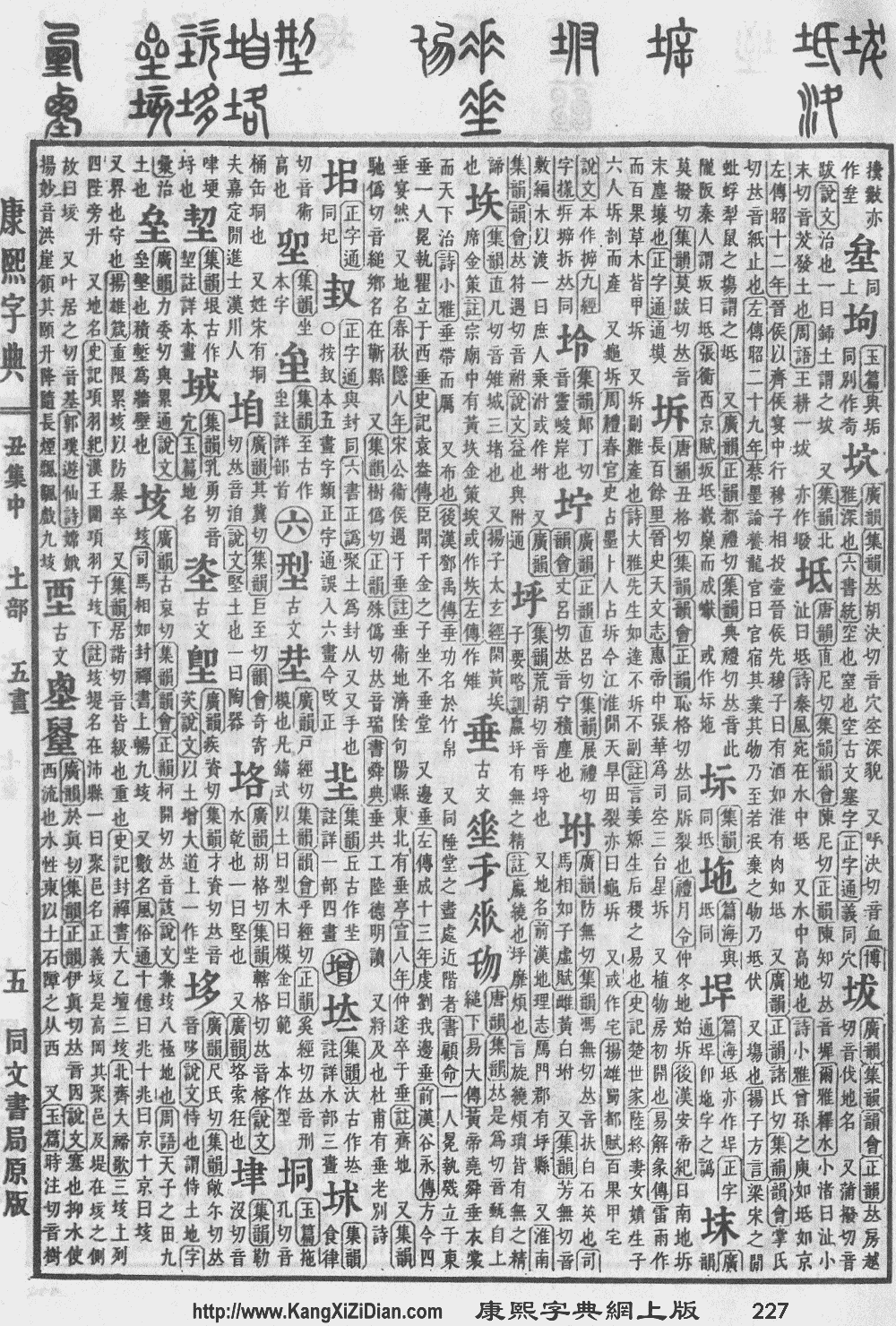
- KangXi: page 227, character 16
- Dai Kanwa Jiten: character 5012
- Dae Jaweon: page 463, character 2
- Hanyu Da Zidian (first edition): volume 1, page 432, character 5
- Unihan data for U+5782
Chinese
| trad. | 垂 | |
|---|---|---|
| simp. # | 垂 | |
| alternative forms | ||
Glyph origin
| Historical forms of the character 垂 | ||
|---|---|---|
| Spring and Autumn | Shuowen Jiezi (compiled in Han) | Liushutong (compiled in Ming) |
| Bronze inscriptions | Small seal script | Transcribed ancient scripts |
 |
 |
 |
Etymology
May be from Proto-Sino-Tibetan *(d/n)waj (“to hang from; to cling to; creeper”) (STEDT), whence Burmese တွယ် (twai, “to cling”). May be related to 睡 (OC *djols, “to sleep”), 朵 (OC *toːlʔ, “to hang from a tree; classifier for blossoms”), 橢 (OC *l̥ʰoːlʔ, “oblong; oval”), 惰 (OC *l'oːlʔ, *l'oːls, “lazy”) and 蕊 (OC *ŋljolʔ, *ŋljulʔ, “reproductive organ of flower”).
Pronunciation
Definitions
垂
Compounds
Derived terms from 垂
|
|
|
References
- “Query for 垂”, in 臺灣閩南語常用詞辭典 [Dictionary of Frequently-Used Taiwan Minnan], Ministry of Education, R.O.C., 2011.
Japanese
Readings
Noun
垂 • (shide)
- zigzag-shaped paper streamer often used to adorn Shinto-related objects
- hornbeam plant
Alternative forms
- 四手 (shide)
Compounds
- 垂直 (suichoku): vertical, perpendicular
- 垂線 (suisen): perpendicular line
- 懸垂 (kensui): suspension, pendency
- 垂れ下がる (taresagaru): hang, dangle
- 雨垂れ (amadare): raindrops
- 垂らす (tarasu): hang down
- 髪を垂らす (kamiotarasu): let one's hair hang down
- 垂れ (tare): sauce, gravy
- 胡麻垂れ (gomadare): sesame sauce
- 糞っ垂れ (kusottare): vulgar epithet
- しみっ垂れ (shimittare): stinginess, miser
Korean
Hanja
垂 (eum 수 (su))
- This term needs a translation to English. Please help out and add a translation, then remove the text
{{rfdef}}.
This article is issued from Wiktionary. The text is licensed under Creative Commons - Attribution - Sharealike. Additional terms may apply for the media files.