枯
| ||||||||
Translingual
| Stroke order | |||
 | |||
Han character
枯 (Kangxi radical 75, 木+5, 9 strokes, cangjie input 木十口 (DJR), four-corner 44960, composition ⿰木古)
References
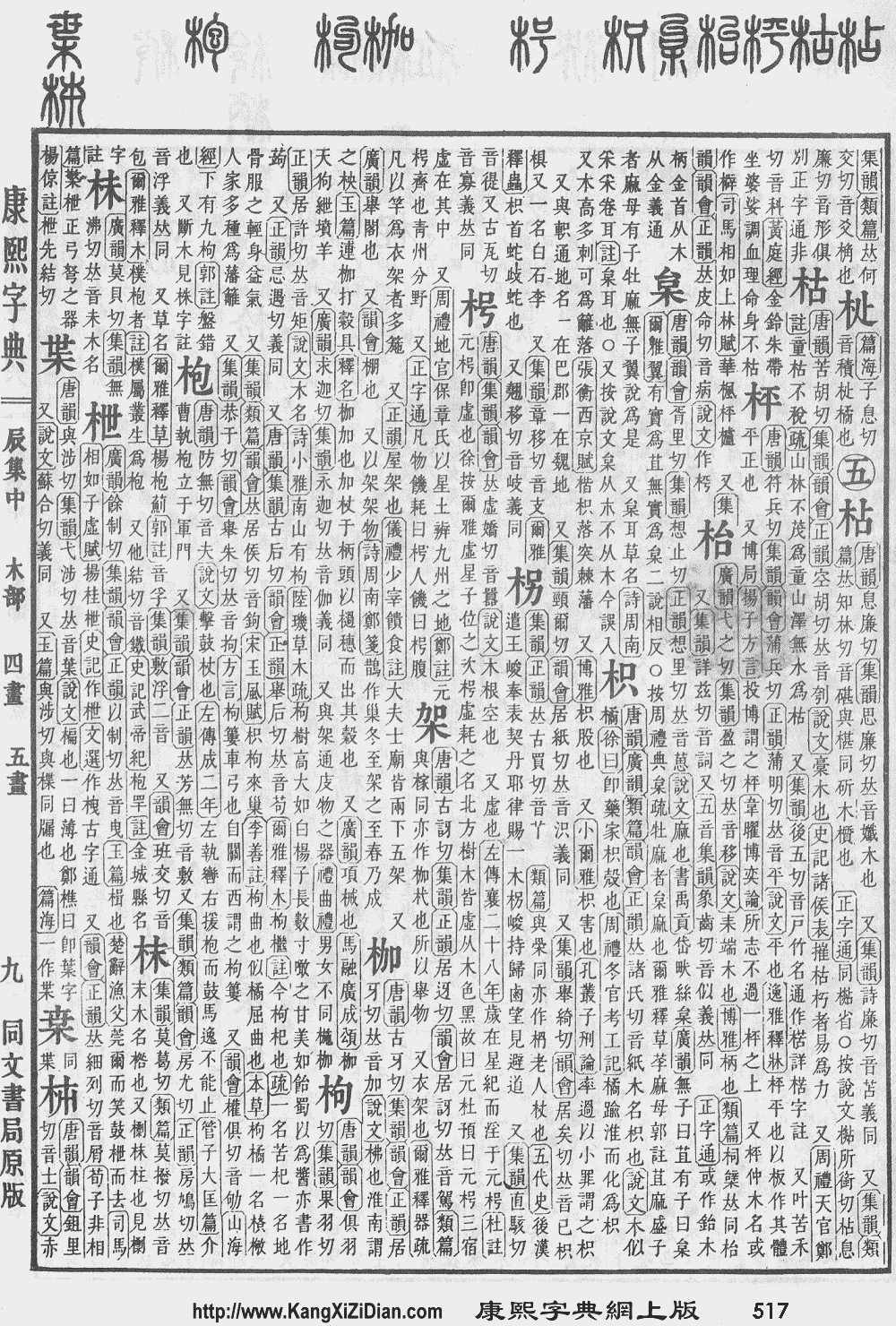
- KangXi: page 517, character 3
- Dai Kanwa Jiten: character 14579
- Dae Jaweon: page 904, character 18
- Hanyu Da Zidian (first edition): volume 2, page 1178, character 3
- Unihan data for U+67AF
Chinese
| simp. and trad. |
枯 | |
|---|---|---|
Glyph origin
| Historical forms of the character 枯 |
|---|
| Shuowen Jiezi (compiled in Han) |
| Small seal script |
 |
Characters in the same phonetic series (古) (Zhengzhang, 2003)
| Old Chinese | |
|---|---|
| 箇 | *kaːls |
| 個 | *kaːls |
| 居 | *kɯ, *kas |
| 橭 | *kaː, *kʰaː |
| 嫴 | *kaː |
| 姑 | *kaː |
| 辜 | *kaː |
| 酤 | *kaː, *kaːs, *ɡaːʔ |
| 蛄 | *kaː |
| 鴣 | *kaː |
| 沽 | *kaː, *kaːʔ, *kaːs |
| 盬 | *kaː, *kaːʔ |
| 古 | *kaːʔ |
| 罟 | *kaːʔ |
| 估 | *kaːʔ |
| 鈷 | *kaːʔ |
| 詁 | *kaːʔ |
| 牯 | *kaːʔ |
| 故 | *kaːs |
| 固 | *kaːs |
| 稒 | *kaːɡs |
| 痼 | *kaːɡs |
| 錮 | *kaːɡs |
| 鯝 | *kaːɡs |
| 棝 | *kaːɡs |
| 凅 | *kaːɡs |
| 枯 | *kʰaː |
| 軲 | *kʰaː |
| 跍 | *kʰaː |
| 骷 | *kʰaː |
| 苦 | *kʰaːʔ, *kʰaːs |
| 葫 | *qʰaː, *ɡaː |
| 餬 | *ɡaː |
| 瑚 | *ɡaː |
| 湖 | *ɡaː |
| 鶘 | *ɡaː |
| 猢 | *ɡaː |
| 醐 | *ɡaː |
| 糊 | *ɡaː |
| 箶 | *ɡaː |
| 蝴 | *ɡaː |
| 胡 | *ɡaː |
| 瓳 | *ɡaː |
| 怙 | *ɡaːʔ |
| 祜 | *ɡaːʔ |
| 岵 | *ɡaːʔ |
| 婟 | *ɡaːʔ, *ɡaːɡs |
| 楛 | *ɡaːʔ |
| 据 | *ka |
| 裾 | *ka |
| 琚 | *ka |
| 椐 | *ka, *kas, *kʰa |
| 鶋 | *ka |
| 蜛 | *ka |
| 崌 | *ka |
| 涺 | *ka |
| 腒 | *ka, *ɡa |
| 鋸 | *kas |
| 倨 | *kas |
| 踞 | *kas |
| 涸 | *ɡaːɡ |
Phono-semantic compound (形聲, OC *kʰaː) : semantic 木 (“tree”) + phonetic 古 (OC *kaːʔ).
Etymology
Apparently Austroasiatic; compare Khmer ខះ (khah, “to dry up; to wither”) (Schuessler, 2007), which is from Proto-Mon-Khmer *ckəh (“dry”).
Pronunciation
Definitions
枯
- (of plants, etc.) dry; withered
- 行冬令,則草木蚤枯,後乃大水,敗其城郭。 [Classical Chinese, trad.]
- From: The Book of Rites, c. 4th – 2nd century BCE
- Xíng dōng lìng, zé cǎomù zǎo kū, hòu nǎi dàshuǐ, bài qí chéngguō. [Pinyin]
- If the proceedings proper to winter were observed, all plants and trees would wither early, and afterwards, there would be great floods, destroying city and suburban walls.
行冬令,则草木蚤枯,后乃大水,败其城郭。 [Classical Chinese, simp.]
- (of wells, rivers, etc.) dried out
- (of muscle) withered; decayed
- boring; uninteresting; dry
- 枯燥 ― kūzào ― dull; boring
- (dialect) dregs
- (traditional Chinese medicine) partial paralysis
- a surname
Compounds
Derived terms from 枯
Japanese
Korean
Vietnamese
Glyph origin (Nom)
Phono-semantic compound (形聲, OC *kʰaː) : semantic 木 (mộc, “wood, tree”) + phonetic 古 (cổ).
Han character
枯: Hán Việt readings: khô[1][2][3][4][5][6]
枯: Nôm readings: khô[1][2][3], gỗ[1][2], khò[3], khua[3]
References
- Nguyễn (2014).
- Nguyễn et al. (2009).
- Trần (2004).
- Trần (1999).
- Nguyễn (1974).
- Thiều Chửu (1942).
This article is issued from Wiktionary. The text is licensed under Creative Commons - Attribution - Sharealike. Additional terms may apply for the media files.