移
| ||||||||
Translingual
Han character
移 (Kangxi radical 115, 禾+6, 11 strokes, cangjie input 竹木弓戈弓 (HDNIN), four-corner 27927, composition ⿰禾多)
Descendants
References
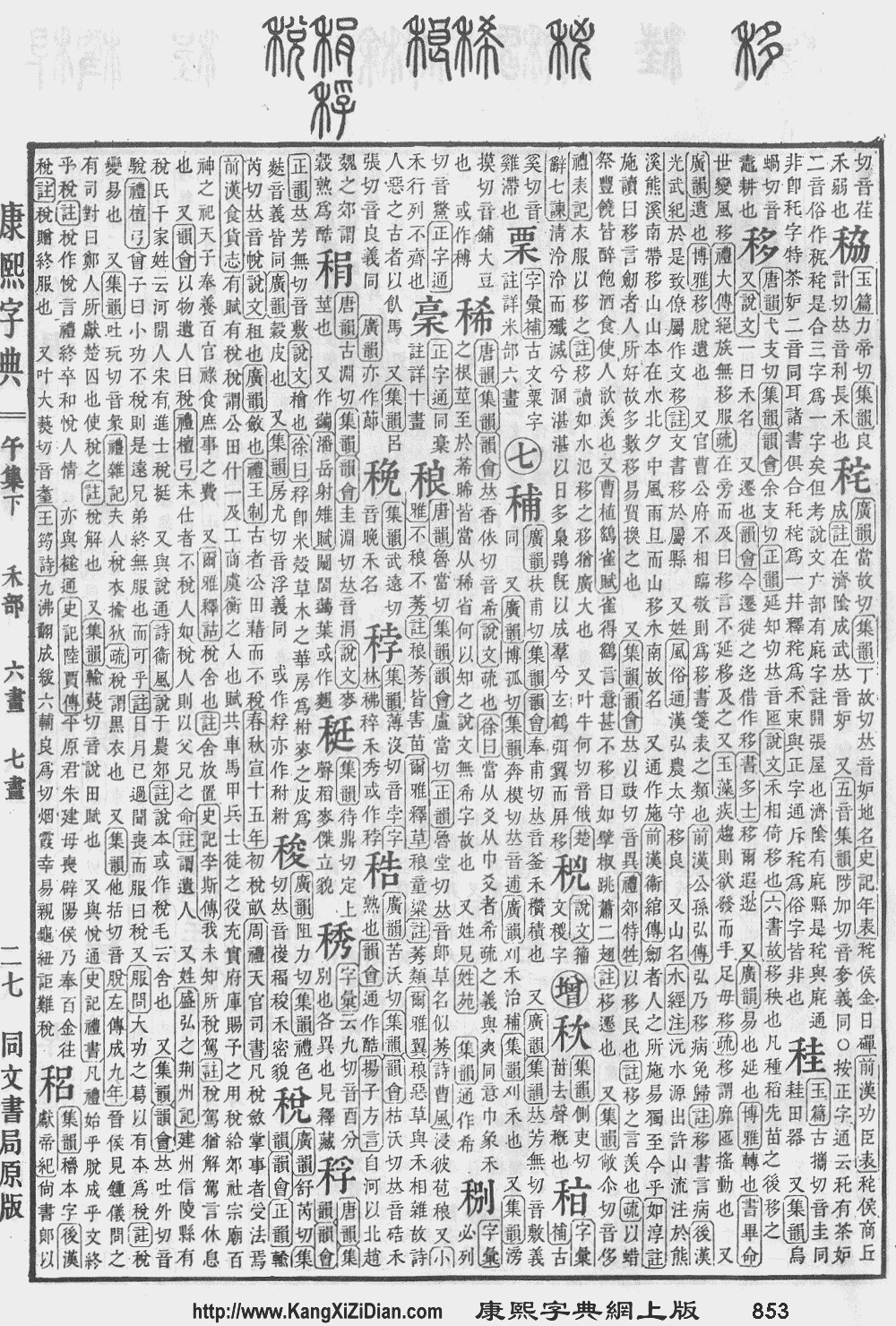
- KangXi: page 853, character 4
- Dai Kanwa Jiten: character 25045
- Dae Jaweon: page 1277, character 11
- Hanyu Da Zidian (first edition): volume 4, page 2603, character 20
- Unihan data for U+79FB
Chinese
| trad. | 移 | |
|---|---|---|
| simp. # | 移 | |
| alternative forms | ||
Glyph origin
Characters in the same phonetic series (多) (Zhengzhang, 2003)
| Old Chinese | |
|---|---|
| 多 | *ʔl'aːl |
| 哆 | *ʔl'aːlʔ, *ʔl'aːls, *ʔr'aːls, *hr'aːl, *l̥ʰjaːlʔ, *l̥ʰjalʔ, *l̥ʰjɯs |
| 跢 | *ʔl'aːls, *ʔl'aːds |
| 痑 | *ʔl'aːls, *l̥ʰaːl, *l̥ʰaːn |
| 爹 | *daːʔ, *tjaː |
| 陊 | *l'aːlʔ, *l'alʔ |
| 橠 | *naːlʔ |
| 袲 | *naːlʔ, *l̥ʰjalʔ, *lal |
| 奓 | *ʔr'aːl, *ʔr'aːls |
| 栘 | *ɦljeːl, *lal |
| 黟 | *ʔleːl, *ʔlil |
| 趍 | *sʰlo, *l'al |
| 誃 | *l'al, *l̥ʰjalʔ |
| 簃 | *l'al, *lal |
| 眵 | *ʔljjal, *l̥ʰjal |
| 恀 | *ʔljalʔ, *l̥ʰjalʔ, *ɦljalʔ |
| 侈 | *l̥ʰjalʔ |
| 姼 | *l̥ʰjalʔ, *ɦljal, *ɦljalʔ |
| 鉹 | *l̥ʰjalʔ, *lal |
| 垑 | *l̥ʰjalʔ |
| 袳 | *l̥ʰjalʔ |
| 卶 | *l̥ʰjals, *hljals |
| 宜 | *ŋral |
| 誼 | *ŋrals |
| 竩 | *ŋrals |
| 移 | *lal |
| 迻 | *lal |
| 扅 | *lal |
| 拸 | *lal, *lalʔ |
| 熪 | *lal |
| 謻 | *lal |
| 蛥 | *ɢljad |
Phono-semantic compound (形聲, OC *lal) : semantic 禾 + phonetic 多 (OC *ʔl'aːl).
Etymology
From Proto-Sino-Tibetan *g/m/s-laj ~ r/s-lej ~ b-rej (“to change, exchange, buy”). Compare also Tibetan རྗེ་བ་ (rje ba, “to change, barter”) and Burmese လှယ် (hlai, “to exchange”).
Characters 易 (OC *leɡ, “to change”) and 賜 (OC *sleːɡs, “to give”) are derivates of it.
Pronunciation
Synonyms
- (to change):
Synonyms of 移
- (to move):
Dialectal synonyms of 移 (“to move (an object)”) [map]
| Variety | Location | Words |
|---|---|---|
| Formal (Written Standard Chinese) | 移, 挪, 移動, 挪動 | |
| Mandarin | Taiwan | 移, 挪 |
| Singapore | 移 | |
| Cantonese | Guangzhou | 移, 喐, 褪 |
| Hong Kong | 移, 喐, 褪 | |
| Taishan | 移 | |
| Hakka | Meixian | 徙, 移 |
| Miaoli (N. Sixian) | 徙 | |
| Pingtung (Neipu; S. Sixian) | 徙 | |
| Hsinchu County (Zhudong; Hailu) | 徙 | |
| Taichung (Dongshi; Dabu) | 徙 | |
| Hsinchu County (Qionglin; Raoping) | 徙 | |
| Yunlin (Lunbei; Zhao'an) | 徙 | |
| Min Nan | Xiamen | 徙 |
| Quanzhou | 徙 | |
| Zhangzhou | 徙 | |
| Tainan | 徙 | |
| Penang (Hokkien) | 徙 | |
| Singapore (Hokkien) | 徙 | |
| Jieyang | 徙 | |
| Singapore (Teochew) | 徙 | |
Compounds
Derived terms from 移
|
|
|
Japanese
Readings
Pronunciation
- IPA(key): [i]
Noun
移 • (i)
Synonyms
- 移し文 (utsushibumi)
See also
- 牒 (chō)
Derived terms
Derived terms
- 転移 (ten'i): transition; transference
- 移転 (iten): transfer
- 変移 (hen'i): to change, shift, alterate, transmutate, transubstantiate
- 移管 (ikan): transfer
- 移植 (ishoku): transplantation
- 移譲 (ijō): transfer
- 移動 (idō): move
- 移入 (inyū): populate
- 移民 (imin): immigration
Korean
Compounds
- 이앙법 (移秧法, iangbeop, “rice transplanting”)
Vietnamese
Alternative forms
Han character
移: Hán Việt readings: di, dời, rời, chòm, đệm, xờm, day, dây, dê, giay, sỉ, xỉ
移: Nôm readings: đưa
References
This article is issued from Wiktionary. The text is licensed under Creative Commons - Attribution - Sharealike. Additional terms may apply for the media files.