隹
| ||||||||
| ||||||||
Translingual
| Stroke order (Sans-serif) | |||
|---|---|---|---|
.gif) | |||
| Stroke order | |||
|---|---|---|---|
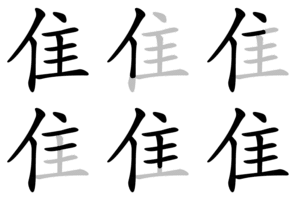 | |||

Han character
隹 (Kangxi radical 172, 隹+0, 8 strokes, cangjie input 人土 (OG) or X人土 (XOG), four-corner 20214/20215, composition ⿰亻⿱亠龶(GHT) or ⿰亻⿻主一(GHT) or ⿰亻⿳丿一龶(JK))
- Kangxi radical #172, ⾫.
Usage notes
This character is used mostly as a character component. Note that, in Japanese and Korean scripts, the dot stroke (㇔) atop the radical (隹) is written from top-right to bottom-left (instead of top-left to bottom-right) as found in the Kangxi dictionary.
Derived characters
- Appendix:Chinese radical/隹
- 倠, 准, 唯, 堆, 婎, 𡹐, 𡿾, 帷, 惟, 推, 淮, 猚, 陮, 進, 𢜐, 㫿, 椎, 𣨫, 㲝, 焳, 𤙵, 琟, 脽, 𤽼, 睢, 碓, 稚, 𧚮, 䊒, 維(维), 𫄻, 𦑏, 𬚟, 𦩏, 蜼, 𧣽, 誰(谁), 𧳞, 趡, 踓, 𨌴, 醀, 𨲈, 𪟦, 𪻉, 錐(锥), 𪹰, 䨀, 𩋘, 𩜑, 騅(骓), 魋, 䱦, 鵻, 𪍇, 𥽀, 𪏌, 𤒂, 䶆, 𪘮
- 𠃲, 𢽝, 𬆨, 𧡖, 顀, 䳡, 𪕪, 售, 𢛧, 𤊙, 焦, 𪂣, 奞, 寉, 崔, 萑, 㮅, 𫁒, 䍜, 𥯄, 𦋜, 翟, 霍, 瞿, 𫻼, 截, 㕍, 㢈, 痽, 𪋇, 龨, 閵(𫔴), 暹, 嵟, 奪, 奮
References
- KangXi: page 1364, character 5
- Dai Kanwa Jiten: character 41937
- Dae Jaweon: page 1867, character 22
- Hanyu Da Zidian (first edition): volume 6, page 4090, character 1
- Unihan data for U+96B9
Chinese
| simp. and trad. |
隹 | |
|---|---|---|
| 2nd round simp. | ⿰亻⿻二乚 | |
Glyph origin
| Historical forms of the character 隹 | ||||||||||||||||||||||
|---|---|---|---|---|---|---|---|---|---|---|---|---|---|---|---|---|---|---|---|---|---|---|
| Shang | Western Zhou | Shuowen Jiezi (compiled in Han) | Liushutong (compiled in Ming) | |||||||||||||||||||
| Oracle bone script | Bronze inscriptions | Small seal script | Transcribed ancient scripts | |||||||||||||||||||
 |
 |
 |
 | |||||||||||||||||||
|||
|
References: Mostly from Richard Sears' Chinese Etymology site (authorisation),
| ||||||||||||||||||||||


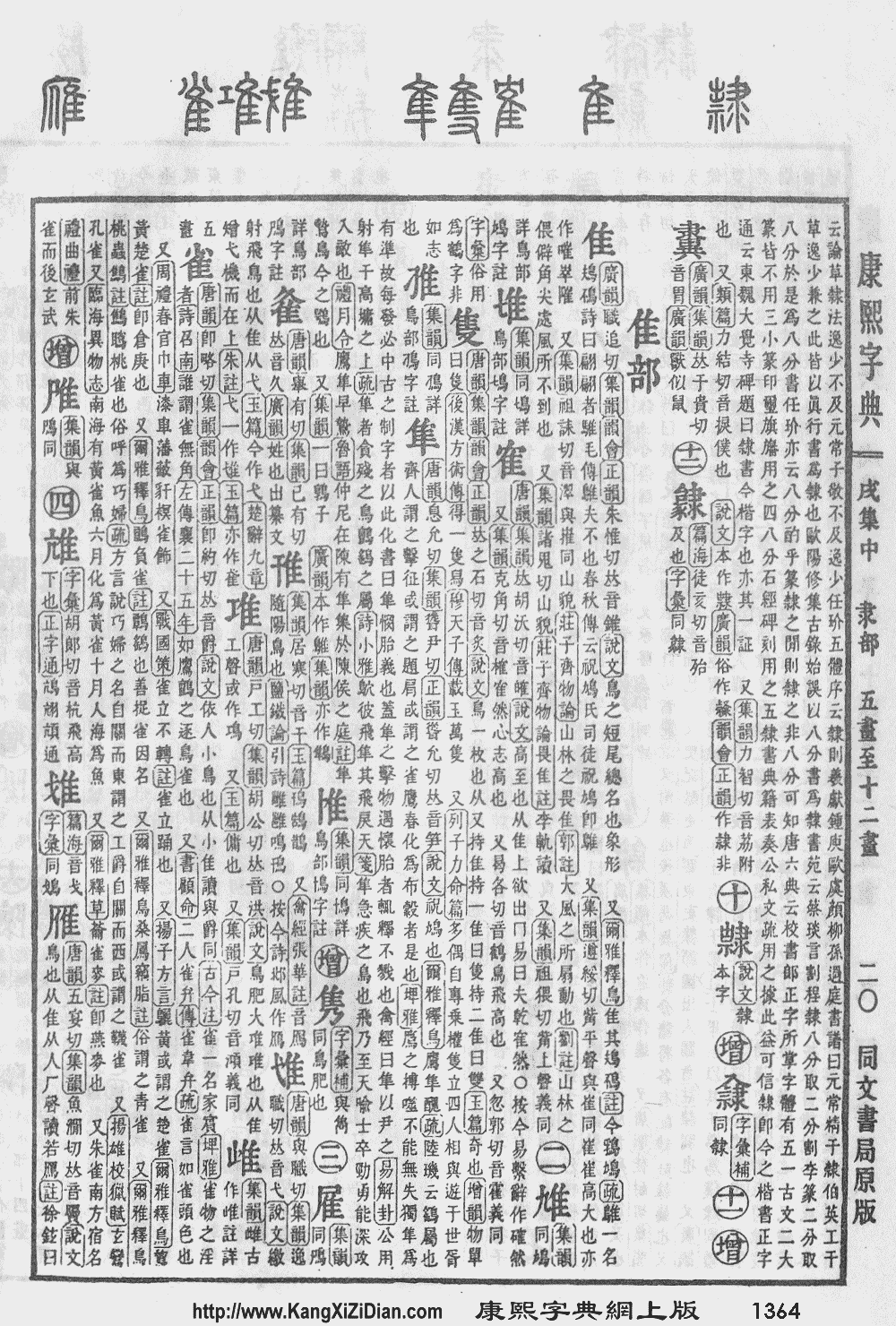
Pictogram (象形) : a short‐tailed bird (e.g. a sparrow). Compare 鳥.
Etymology
Perhaps from Proto-Sino-Tibetan *twil; compare Tibetan [script needed] (mčʰil-ba, “a little bird”) (Schuessler, 2007).
Cognate with 鵻 (OC *sɢʷinʔ, *tjul) "a kind of bird (turtle-dove?)" > 騅 (OC *tjul) "horse of that bird's color > horse of mixed grey and white color".
Pronunciation
Japanese
Korean
Hanja
隹 (eum 추 (chu))
- This term needs a translation to English. Please help out and add a translation, then remove the text
{{rfdef}}.
Vietnamese
Han character
隹: Hán Nôm readings: chuy
- This term needs a translation to English. Please help out and add a translation, then remove the text
{{rfdef}}.