厭
See also: 厌
| ||||||||
Translingual
Han character
厭 (Kangxi radical 27, 厂+12, 14 strokes, cangjie input 一日月大 (MABK), four-corner 71234, composition ⿸厂猒)
Derived terms
References
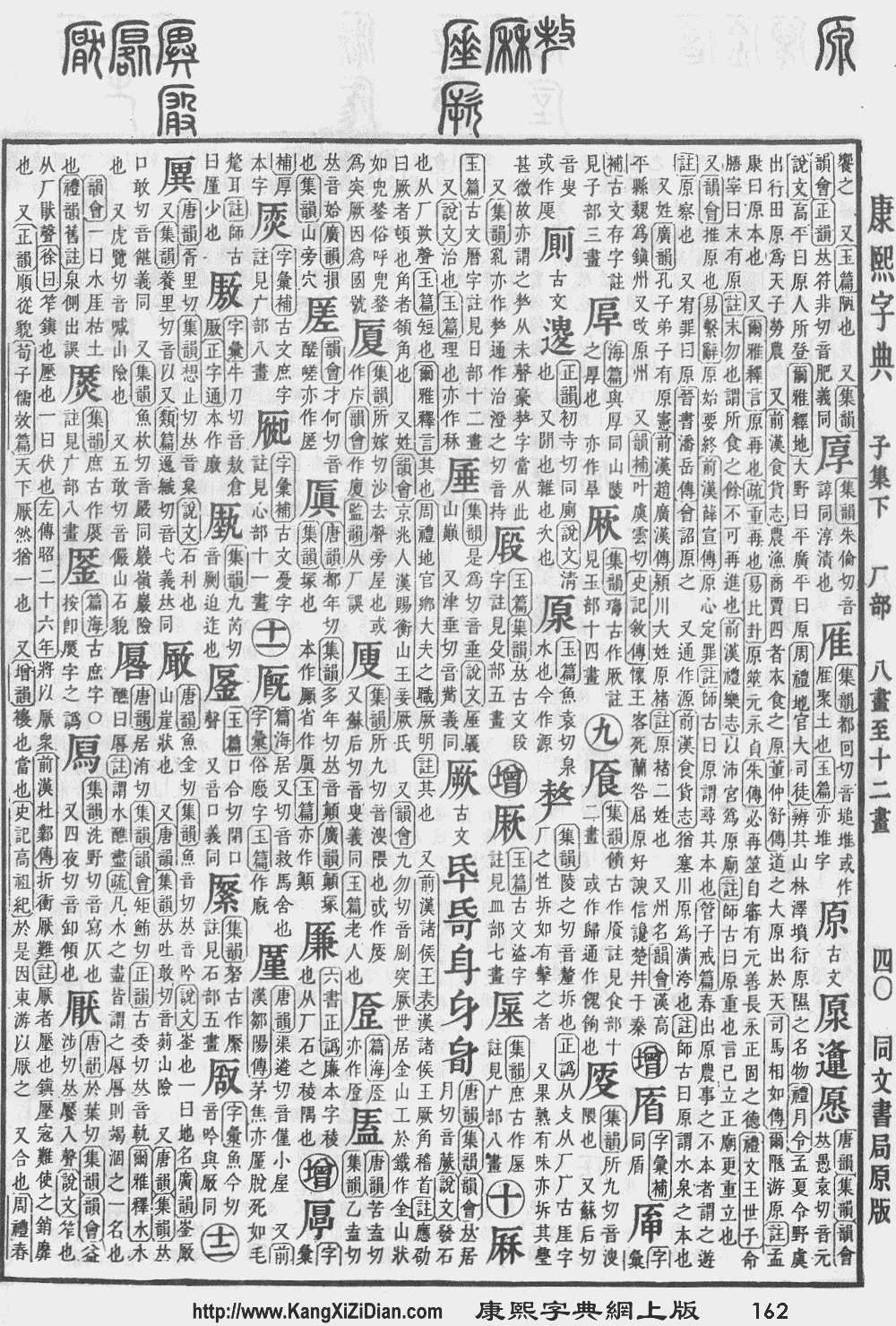
- KangXi: page 162, character 51
- Dai Kanwa Jiten: character 3025
- Dae Jaweon: page 370, character 30
- Hanyu Da Zidian (first edition): volume 1, page 78, character 3
- Unihan data for U+53AD
Chinese
Glyph origin
| Historical forms of the character 厭 | ||
|---|---|---|
| Western Zhou | Warring States | Shuowen Jiezi (compiled in Han) |
| Bronze inscriptions | Chu slip and silk script | Small seal script |
 |
 |
 |
Characters in the same phonetic series (猒) (Zhengzhang, 2003)
Phono-semantic compound (形聲, OC *qemʔ, *qems, *qeb) : semantic 厂 + phonetic 猒 (OC *qem, *qems).
Pronunciation
Definitions
厭
- to be satisfied; to be sated
- 姜氏何厭之有 [Classical Chinese, trad.]
- From: Commentary of Zuo, c. 4th century BCE, translation from Zuozhuan: Commentary on the "Spring and Autumn Annals" (2017), by Stephen Durrant, Wai-yee Li and David Schaberg
- Jiāng Shì hé yàn zhī yǒu [Pinyin]
- How will Lady Jiang ever be satisfied?
姜氏何厌之有 [Classical Chinese, simp.]
- to be fed up with; to grow bored of; to become tired of
- to detest; to dislike; to hate
- (dialectal Wu) naughty
Synonyms
Dialectal synonyms of 膩 (“to be sick of; to be tired of”) [map]
| Variety | Location | Words |
|---|---|---|
| Formal (Written Standard Chinese) | 膩, 厭倦 | |
| Mandarin | Taiwan | 膩 |
| Singapore | 膩 | |
| Cantonese | Guangzhou | 厭1 |
| Hong Kong | 厭1 | |
| Hakka | Meixian | 膩 |
| Min Nan | Taipei | 厭2 GT |
| Singapore (Hokkien) | 厭2 | |
| Manila (Hokkien) | 厭2 | |
| Shantou | 飫 | |
| Jieyang | 厭2 | |
| Singapore (Teochew) | 厭2 | |
| Wu | Wenzhou | 㾯 |
| Note | GT - General Taiwanese (no specific region identified) | |
Dialectal synonyms of 頑皮 (“naughty”) [map]
Compounds
|
Pronunciation
Definitions
厭
Synonyms
Dialectal synonyms of 累 (“tired”) [map]
Dialectal synonyms of 膩 (“to be sick of; to be tired of”) [map]
| Variety | Location | Words |
|---|---|---|
| Formal (Written Standard Chinese) | 膩, 厭倦 | |
| Mandarin | Taiwan | 膩 |
| Singapore | 膩 | |
| Cantonese | Guangzhou | 厭1 |
| Hong Kong | 厭1 | |
| Hakka | Meixian | 膩 |
| Min Nan | Taipei | 厭2 GT |
| Singapore (Hokkien) | 厭2 | |
| Manila (Hokkien) | 厭2 | |
| Shantou | 飫 | |
| Jieyang | 厭2 | |
| Singapore (Teochew) | 厭2 | |
| Wu | Wenzhou | 㾯 |
| Note | GT - General Taiwanese (no specific region identified) | |
Japanese
Readings
- Go-on: えん (en)←えん (en, historical)←えむ (emu, ancient); よう (yō)←えふ (efu, historical)
- Kan-on: えん (en)←えん (en, historical)←えむ (emu, ancient); よう (yō)←えふ (efu, historical)
- Kan’yō-on: おん (on)←おん (on, historical)←おむ (omu, ancient)
- On: あん (an)←あん (an, historical)←あむ (amu, ancient); おう (ō)←おふ (ofu, historical); ゆう (yū)←いふ (ifu, historical)
- Kun: あきる (akiru, 厭きる); いとう (itō, 厭う)←いとふ (itofu, 厭ふ, historical); いとわしい (itowashii, 厭わしい); いや (iya, 厭); おさえる (osaeru, 厭える)←おさへる (osaferu, 厭へる, historical); きらう (kirau, 厭う)←きらふ (kirafu, 厭ふ, historical)
Etymology 1
| Kanji in this term |
|---|
| 厭 |
| あき Hyōgaiji |
| kun’yomi |
| Alternative spellings |
|---|
| 厭き 飽 飽き |
Shared root with 秋 (aki, "autumn"). Current meaning possibly arising from metaphorical use of the meaning "autumn".
Noun
厭 • (aki)
Etymology 2
| Kanji in this term |
|---|
| 厭 |
| いや Hyōgaiji |
| kun’yomi |
| For pronunciation and definitions of 厭 – see the following entry. | ||
| ||
| (This term, 厭, is an alternative (uncommon) spelling of the above term.) |
Korean
Etymology
From Middle Chinese 厭 (MC ʔiᴇmH).
| Historical readings |
|---|
|
Pronunciation
- (SK Standard/Seoul) IPA(key): [jɘ(ː)m]
- Phonetic hangul: [염(ː)]
- Though still prescribed in Standard Korean, most speakers in both Koreas no longer distinguish vowel length.
Vietnamese
This article is issued from Wiktionary. The text is licensed under Creative Commons - Attribution - Sharealike. Additional terms may apply for the media files.