貶
See also: 贬
| ||||||||
Translingual
Han character
貶 (Kangxi radical 154, 貝+5, 12 strokes, cangjie input 月金竹戈人 (BCHIO), four-corner 62837, composition ⿰貝乏)
Derived characters
- 𠍥, 𠹰, 𢵉, 𧒅
References
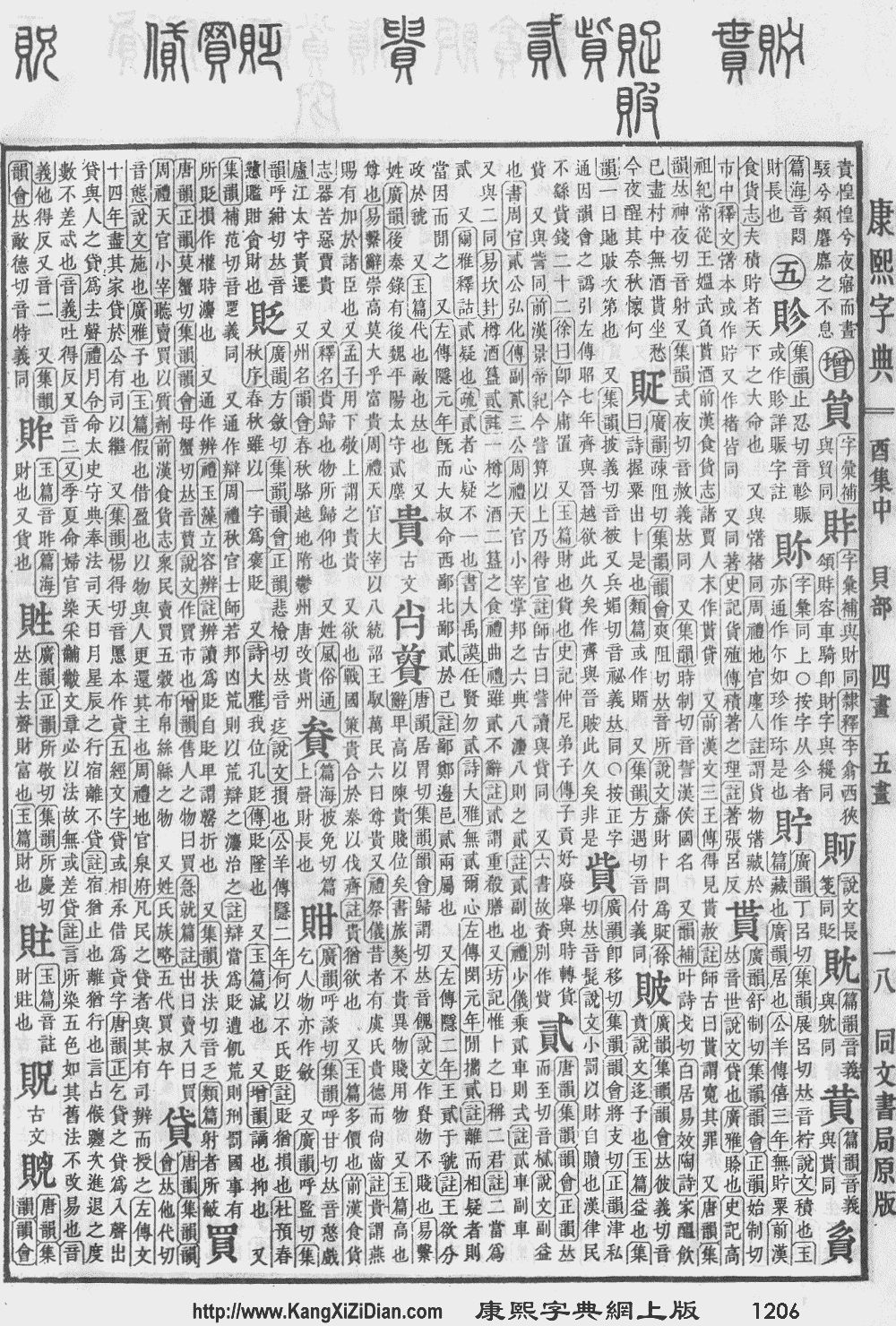
- KangXi: page 1206, character 20
- Dai Kanwa Jiten: character 36707
- Dae Jaweon: page 1669, character 8
- Hanyu Da Zidian (first edition): volume 6, page 3628, character 3
- Unihan data for U+8CB6
Chinese
| trad. | 貶 | |
|---|---|---|
| simp. | 贬 | |
Glyph origin
Characters in the same phonetic series (乏) (Zhengzhang, 2003)
Phono-semantic compound (形聲, OC *promʔ) : semantic 貝 (“shell”) + phonetic 乏 (OC *bob).
Pronunciation
Definitions
貶
- to reduce; to lower
- 貶食省用,務穡勸分。 [Classical Chinese, trad.]
- From: Commentary of Zuo, c. 4th century BCE
- Biǎn shí xǐng yòng, wùsè quànfēn. [Pinyin]
- (please add an English translation of this example)
贬食省用,务穑劝分。 [Classical Chinese, simp.]
- (literary) to demote
- 一不朝,則貶其爵,再不朝,則削其地。 [Classical Chinese, trad.]
- From: Mencius, c. 4th century BCE, translated based on James Legge's version
- Yī bù cháo, zé biǎn qí jué, zài bù cháo, zé xuē qí dì. [Pinyin]
- If a prince once omitted his attendance at court, he was punished by degradation of rank; if he did so a second time, he was deprived of a portion of his territory.
一不朝,则贬其爵,再不朝,则削其地。 [Classical Chinese, simp.]
- to vilify; to censure; to criticize
- (grammar) negative polarity
Antonyms
- (to vilify): 褒 (bāo)
Compounds
Japanese
Kanji
貶
- This term needs a translation to English. Please help out and add a translation, then remove the text
{{rfdef}}.
Readings
Korean
Hanja
貶 • (pyeom) (hangeul 폄, revised pyeom, McCune–Reischauer p'yŏm, Yale phyem)
- This term needs a translation to English. Please help out and add a translation, then remove the text
{{rfdef}}.
Vietnamese
This article is issued from Wiktionary. The text is licensed under Creative Commons - Attribution - Sharealike. Additional terms may apply for the media files.