射
| ||||||||
Translingual
Han character
射 (Kangxi radical 41, 寸+7, 10 strokes, cangjie input 竹竹木戈 (HHDI), four-corner 24200, composition ⿰身寸)
References
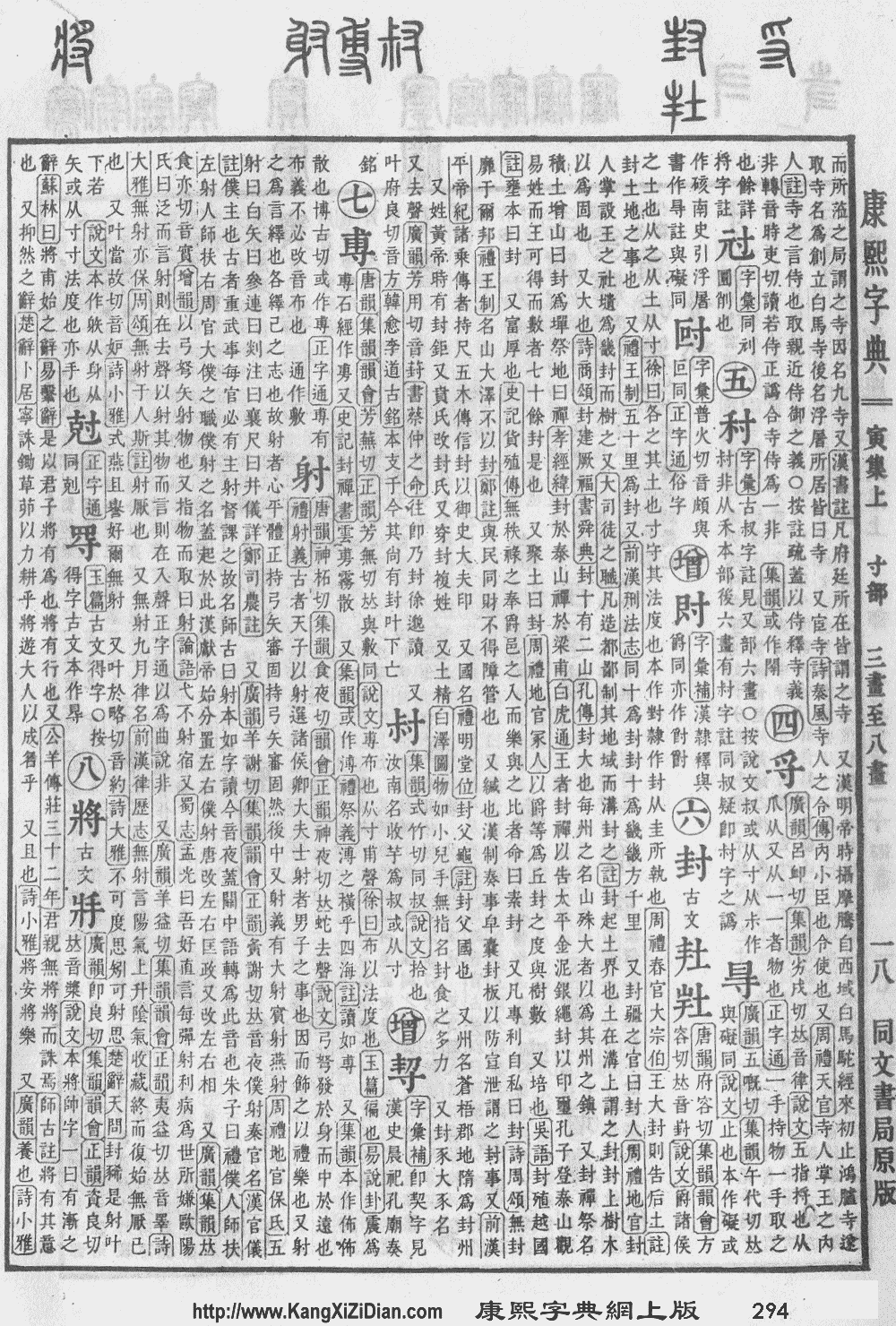
- KangXi: page 294, character 13
- Dai Kanwa Jiten: character 7434
- Dae Jaweon: page 582, character 8
- Hanyu Da Zidian (first edition): volume 1, page 506, character 10
- Unihan data for U+5C04
Chinese
| trad. | 射 | |
|---|---|---|
| simp. # | 射 | |
| alternative forms | 䠶 𢎤 𨉛 𨈡 | |
Glyph origin
| Historical forms of the character 射 | |
|---|---|
| Shang | Western Zhou |
| Oracle bone script | Bronze inscriptions |
 |
 |
Characters in the same phonetic series (射) (Zhengzhang, 2003)
In the oracle bone script, an ideogrammic compound (會意) : 弓 (“bow”) + 矢 (“arrow”) – to shoot a bow.
In the bronze inscriptions, a hand (又) drawing the bowstring was added. Later the bow and arrow on the left became 身 before or during the clerical script period, and the hand came to be written 寸.
Etymology
From Proto-Sino-Tibetan *g/b/m-la-y (“bow, arrow”) (STEDT; Schuessler, 2007). Cognate with Lashi mjo³³ ʃɿ⁵⁵ (“arrow”), Achang kaŋ³⁵ m̥ʐua³¹ (“arrow”) and Shixing lɛ⁵⁵ si³³ (“arrow”).
Pronunciation 1
Definitions
射
Compounds
Derived terms from 射
|
|
|
Pronunciation 2
Pronunciation 3
Pronunciation 4
Definitions
射
- Used in 無射/无射.
- † Alternative form of 斁/𭣧 (yì, “to detest; to be weary of”).
- 式燕且譽、好爾無射。 [Pre-Classical Chinese, trad.]
- From: The Classic of Poetry, c. 11th – 7th centuries BCE, translated based on James Legge's version
- Shì yàn qiě yù, hǎo ěr wú yì. [Pinyin]
- We will feast, and I will praise her. 'I love you, and will never be weary of you.'
式燕且誉、好尔无射。 [Pre-Classical Chinese, simp.]
Compounds
Derived terms from 射
|
|
References
- “射”, in 漢語多功能字庫 (Multi-function Chinese Character Database), 香港中文大學 (the Chinese University of Hong Kong), 2014–
Japanese
Readings
- Go-on: じゃ (ja)←じや (zya, historical); や (ya); やく (yaku)
- Kan-on: しゃ (sha, Jōyō)←しや (sya, historical); や (ya); えき (eki)
- On: せき (seki)
- Kun: いる (iru, 射る, Jōyō)←いる (iru, 射る, historical)←𛀆る (yiru, 射る, ancient); あてる (ateru, 射てる); さす (sasu, 射す); いとう (itō)←いたふ (itafu, historical); あきる (akiru)
- Nanori: い (i); いり (iri)
Korean
Etymology 1
From Middle Chinese 射 (MC ʑiaH).
| Historical readings |
|---|
|
Pronunciation
- (SK Standard/Seoul) IPA(key): [sʰa̠]
- Phonetic hangul: [사]
Compounds
Compounds
- 발사 (發射, balsa)
- 사격 (射擊, sagyeok)
- 주사 (注射, jusa)
- 반사 (反射, bansa)
- 난사 (亂射, nansa)
- 사수 (射手, sasu)
- 복사 (輻射, boksa)
- 일사 (日射, ilsa)
- 사행 (射倖, sahaeng)
- 사영 (射影, sayeong)
- 방사 (放射, bangsa)
- 사정 (射精, sajeong)
- 사살 (射殺, sasal)
- 투사 (投射, tusa)
- 사간 (射干, sagan)
- 사적 (射的, sajeok)
- 사출 (射出, sachul)
- 기사 (騎射, gisa)
- 분사 (噴射, bunsa)
- 사각 (射角, sagak)
- 조사 (照射, josa)
Etymology 2
From Middle Chinese 射 (MC ʑiᴇk̚).
| Historical readings |
|---|
|
Pronunciation
- (SK Standard/Seoul) IPA(key): [sʰʌ̹k̚]
- Phonetic hangul: [석]
Compounds
Compounds
- 석복/사복 (射覆, seokbok/sabok)
- 석부 (射復, seokbu)
- 석중 (射中, seokjung)
- 익불사숙 (弋不射宿, ikbulsasuk)
Etymology 3
From Middle Chinese 射 (MC jiaH).
| Historical readings |
|---|
|
Pronunciation
- (SK Standard/Seoul) IPA(key): [ja̠]
- Phonetic hangul: [야]
Hanja
Compounds
Compounds
- 복야 (僕射, bogya)
- 상서복야 (尙書僕射, sangseobogya)
Etymology 4
From Middle Chinese 射 (MC jiᴇk̚).
| Historical readings |
|---|
|
Pronunciation
- (SK Standard/Seoul) IPA(key): [jʌ̹k̚]
- Phonetic hangul: [역]
Compounds
Compounds
- 무역 (無射, muyeok)
Vietnamese
This article is issued from Wiktionary. The text is licensed under Creative Commons - Attribution - Sharealike. Additional terms may apply for the media files.