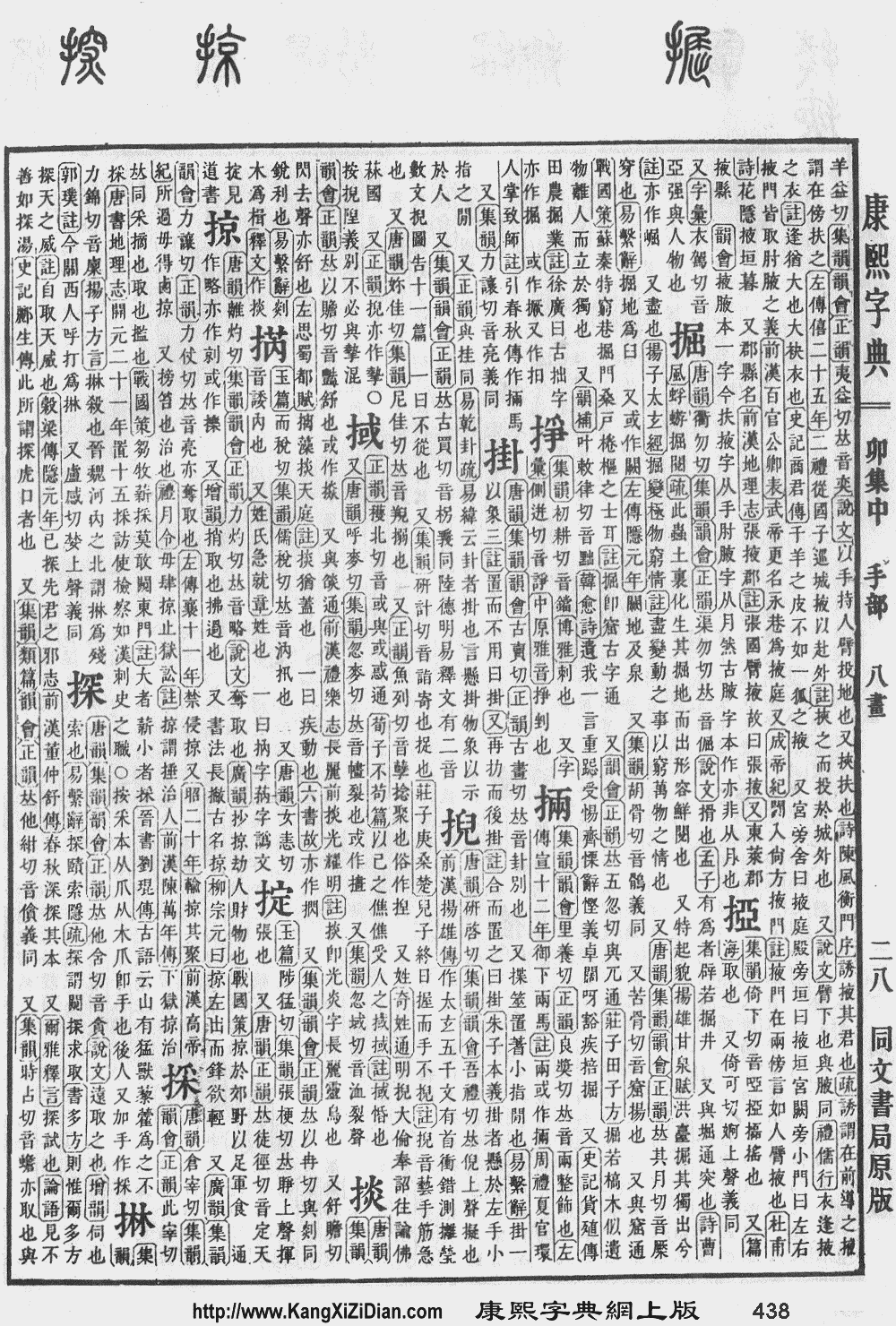
採

See also: 采
採 U+63A1, 採
CJK UNIFIED IDEOGRAPH-63A1
← 掠
[U+63A0]
CJK Unified Ideographs 探 →
[U+63A2]

Translingual

Han character

採 (Kangxi radical 64, 手+8, 11 strokes, cangjie input 手月木 (QBD), four-corner 52094, composition ⿰扌采)

References

  • KangXi: page 438, character 12
  • Dai Kanwa Jiten: character 12274
  • Dae Jaweon: page 788, character 10
  • Hanyu Da Zidian (first edition): volume 3, page 1901, character 1
  • Unihan data for U+63A1

Chinese

trad. 採
simp. 采*

Glyph origin

Phono-semantic compound (形聲, OC *sʰɯːʔ) : semantic 扌 (“hand”) + phonetic 采 (OC *sʰɯːʔ, “to pick”). Originally written 采.

Etymology

See 采 (OC *sʰɯːʔ).

Pronunciation


Rime
Character 採
Reading # 1/1
Initial (聲) 清 (14)
Final (韻) 咍 (41)
Tone (調) Rising (X)
Openness (開合) Open
Division (等) I
Fanqie 倉宰切
Baxter tshojX
Reconstructions
Zhengzhang
Shangfang
/t͡sʰʌiX/
Pan
Wuyun
/t͡sʰəiX/
Shao
Rongfen
/t͡sʰɒiX/
Edwin
Pulleyblank
/t͡sʰəjX/
Li
Rong
/t͡sʰᴀiX/
Wang
Li
/t͡sʰɒiX/
Bernard
Karlgren
/t͡sʰɑ̆iX/
Expected
Mandarin
Reflex
cǎi
Expected
Cantonese
Reflex
coi2
Baxter–Sagart system 1.1 (2014)
Character 採
Reading # 1/1
Modern
Beijing
(Pinyin)
cǎi
Middle
Chinese
‹ tshojX ›
Old
Chinese
/*s.r̥ˁəʔ/
English gather, pluck

Notes for Old Chinese notations in the Baxter–Sagart system:

* Parentheses "()" indicate uncertain presence;
* Square brackets "[]" indicate uncertain identity, e.g. *[t] as coda may in fact be *-t or *-p;
* Angle brackets "<>" indicate infix;
* Hyphen "-" indicates morpheme boundary;

* Period "." indicates syllable boundary.
Zhengzhang system (2003)
Character 採
Reading # 1/1
No. 1073
Phonetic
component
采
Rime
group
之
Rime
subdivision
0
Corresponding
MC rime
采
Old
Chinese
/*sʰɯːʔ/
Notes 俗採字見史記

Definitions

採

  1. to pick; to pluck
  2. to select; to choose; to pick
  3. to gather; to collect
  4. to mine; to dig
  5. to pull; to drag
  6. Alternative form of 睬 (cǎi, “to pay attention to”).

Compounds

Japanese

Shinjitai 採
Kyūjitai
[1]

採󠄁
採+&#xE0101;?
(Adobe-Japan1)
採󠄃
採+&#xE0103;?
(Hanyo-Denshi)
(Moji_Joho)
The displayed kanji may be different from the image due to your environment.
See here for details.

Kanji

採

(grade 5 “Kyōiku” kanji)

  1. to gather, to collect, to take

Readings

References

  1. 1914, 漢和大辭書 (Kanwa Dai Jisho, “The Great Kanji-Japanese Dictionary”) (in Japanese), page 961 (paper), page 530 (digital), Tōkyō: 興文社 (Kōbunsha)

Korean

Hanja

採 • (chae) (hangeul 채, revised chae, McCune–Reischauer ch'ae, Yale chay)

  1. This term needs a translation to English. Please help out and add a translation, then remove the text {{rfdef}}.

Vietnamese

Han character

採: Hán Nôm readings: thái, thám, thăm, thớm, xăm, xom, xái, thải, thảy, trảy, trẩy, tảy

  1. This term needs a translation to English. Please help out and add a translation, then remove the text {{rfdef}}.
This article is issued from Wiktionary. The text is licensed under Creative Commons - Attribution - Sharealike. Additional terms may apply for the media files.