檻
See also: 槛
| ||||||||
Translingual
Han character
檻 (Kangxi radical 75, 木+14, 18 strokes, cangjie input 木尸戈廿 (DSIT) or 木尸一廿 (DSMT), four-corner 48917, composition ⿰木監)
Derived characters
- 𡅋
References
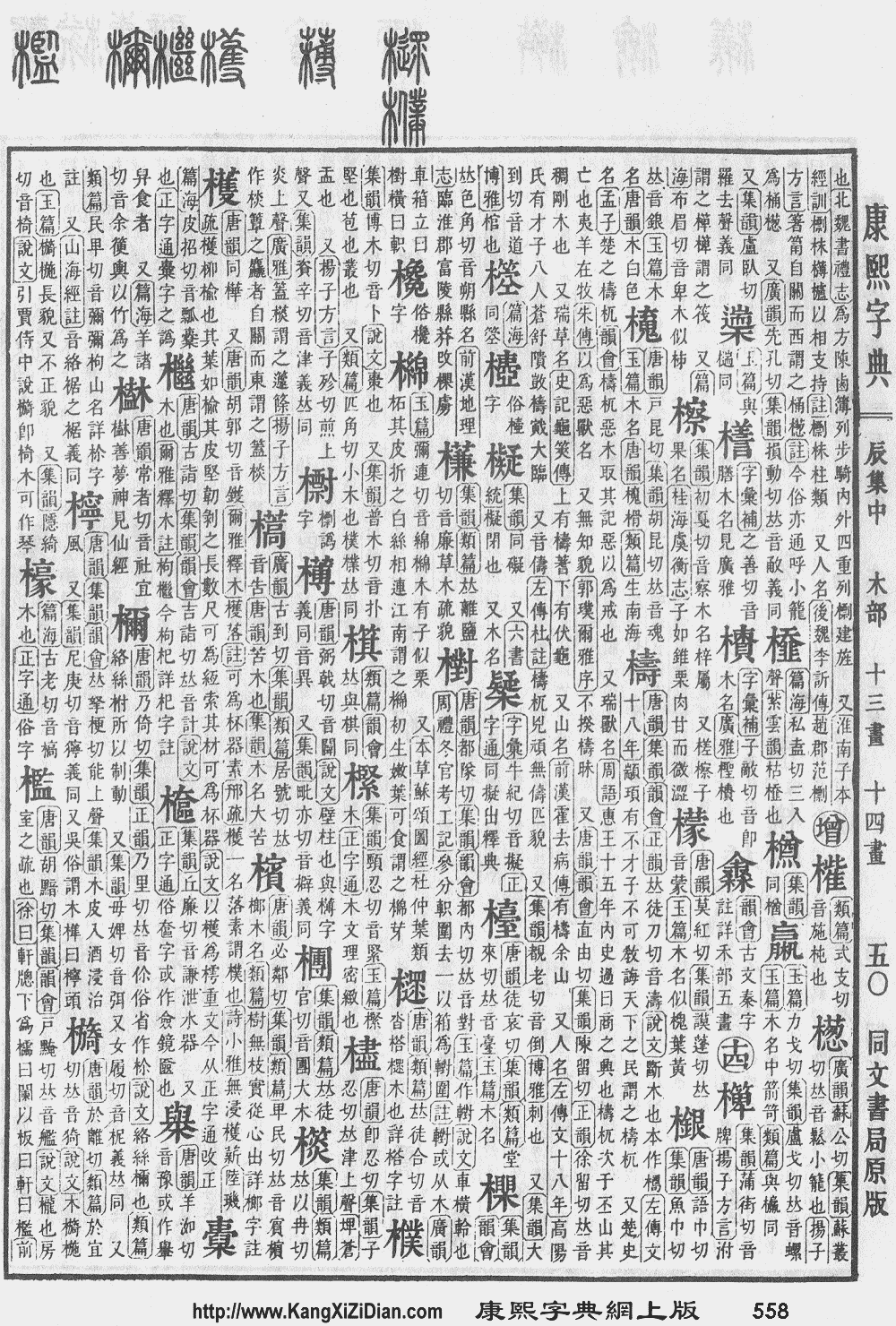
- KangXi: page 558, character 47
- Dai Kanwa Jiten: character 15745
- Dae Jaweon: page 948, character 16
- Hanyu Da Zidian (first edition): volume 2, page 1307, character 14
- Unihan data for U+6ABB
Chinese
| trad. | 檻 | |
|---|---|---|
| simp. | 槛 | |
Glyph origin
Characters in the same phonetic series (監) (Zhengzhang, 2003)
| Old Chinese | |
|---|---|
| 藍 | *ɡ·raːm |
| 襤 | *ɡ·raːm |
| 籃 | *ɡ·raːm |
| 懢 | *ɡ·raːm, *ɡ·raːms |
| 儖 | *ɡ·raːm |
| 蘫 | *ɡ·raːm, *qʰlaːms |
| 攬 | *ɡ·raːmʔ |
| 欖 | *ɡ·raːmʔ |
| 覽 | *ɡ·raːmʔ |
| 爁 | *ɡ·raːmʔ, *ɡ·raːms, *ɡ·rams |
| 擥 | *ɡ·raːmʔ |
| 灠 | *ɡ·raːmʔ |
| 濫 | *ɡ·raːms, *ɡraːmʔ |
| 嚂 | *ɡ·raːms, *kʰlaːms, *qʰlaːmʔ |
| 纜 | *ɡ·raːms |
| 監 | *kraːm, *kraːms |
| 礛 | *kraːm |
| 鑑 | *kraːm, *kraːms, *kraːms |
| 艦 | *ɡraːmʔ |
| 檻 | *ɡraːmʔ, *ɡraːms |
| 壏 | *ɡraːmʔ |
| 轞 | *ɡraːmʔ |
| 鹽 | *ɡ·lam, *ɡ·lams |
Phono-semantic compound (形聲, OC *ɡraːmʔ, *ɡraːms) : semantic 木 + phonetic 監 (OC *kraːm, *kraːms).
Etymology
Proto-Sino-Tibetan *kram (“fence, garden”). Cognate with Burmese ခြံ (hkram, “fence; garden; to surround”). Also compare Tibetan ཁྲམ (khram, “notched wood”) (> ཁྲམ་ཁ (khram kha, “cut, notch [in wood]”), ཁྲམ་ཤིང (khram shing, “tallystick”)).
Pronunciation 1
Definitions
檻
Pronunciation 2
Synonyms
Synonyms of 檻
References
- “檻”, in 漢語多功能字庫 (Multi-function Chinese Character Database), 香港中文大學 (the Chinese University of Hong Kong), 2014–
Japanese
Kanji
檻
- This term needs a translation to English. Please help out and add a translation, then remove the text
{{rfdef}}.
Readings
- Go-on: げん (gen)←けん (ken, historical)←げむ (gemu, ancient)
- Kan-on: かん (kan)←かん (kan, historical)←かむ (kamu, ancient)
- Kun: おり (ori, 檻)←をり (wori, 檻, historical); てすり (tesuri); いたがこい (itagakoi, 檻い)←いたがこひ (itagakofi, 檻ひ, historical); おばしま (obashima)
Korean
Hanja
檻 (eum 함 (ham))
- This term needs a translation to English. Please help out and add a translation, then remove the text
{{rfdef}}.
Vietnamese
This article is issued from Wiktionary. The text is licensed under Creative Commons - Attribution - Sharealike. Additional terms may apply for the media files.