濫
See also: 滥
| ||||||||
| ||||||||
Translingual
Han character
濫 (Kangxi radical 85, 水+14 in Chinese, 水+15 in Japanese, 17 strokes in Chinese, 18 strokes in Japanese, cangjie input 水尸戈廿 (ESIT) or 水尸一廿 (ESMT), four-corner 38117, composition ⿰氵監)
References
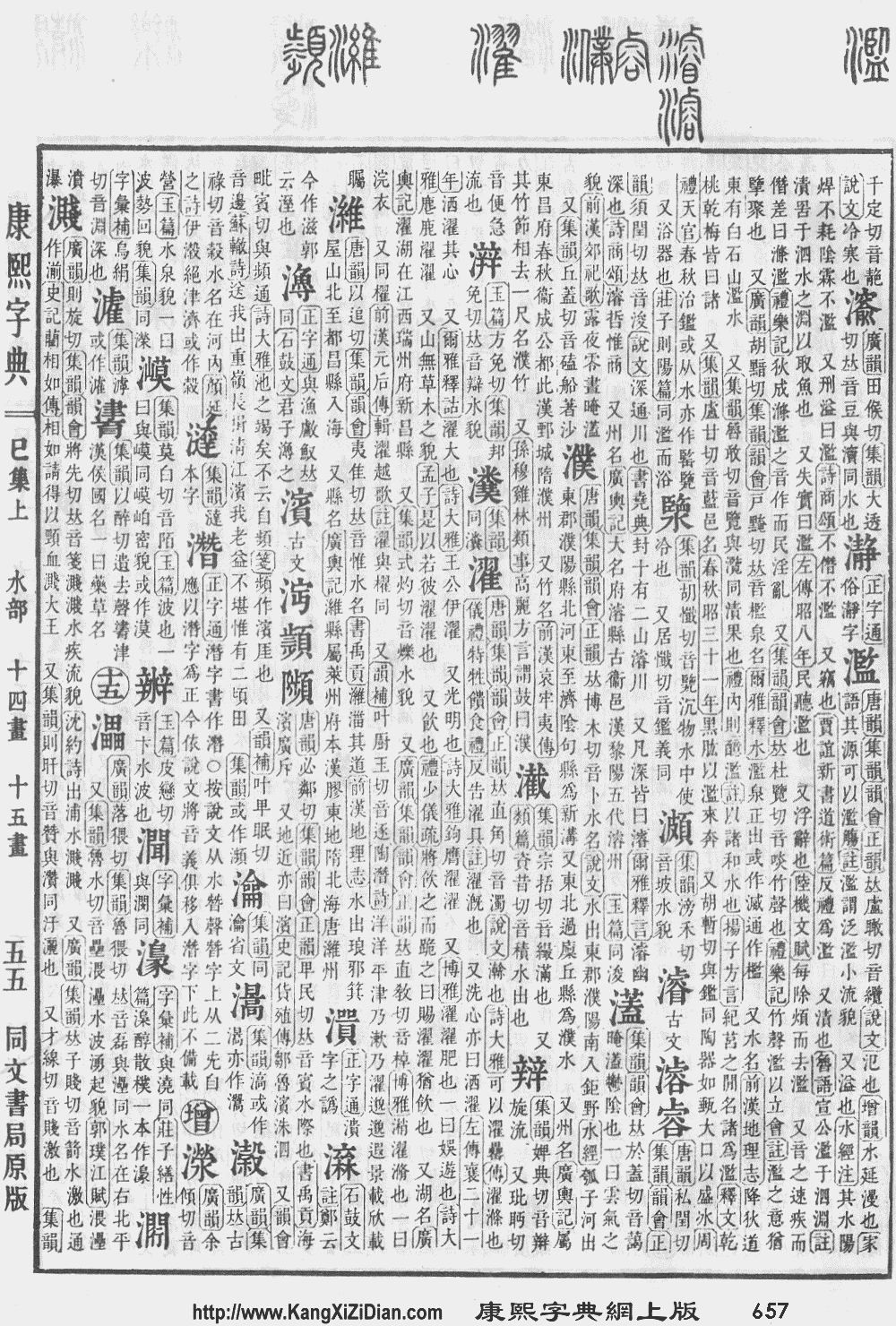
- KangXi: page 657, character 3
- Dai Kanwa Jiten: character 18521
- Dae Jaweon: page 1067, character 8
- Hanyu Da Zidian (first edition): volume 3, page 1766, character 9
- Unihan data for U+6FEB
- Unihan data for U+F922
Chinese
Glyph origin
Characters in the same phonetic series (監) (Zhengzhang, 2003)
| Old Chinese | |
|---|---|
| 藍 | *ɡ·raːm |
| 襤 | *ɡ·raːm |
| 籃 | *ɡ·raːm |
| 懢 | *ɡ·raːm, *ɡ·raːms |
| 儖 | *ɡ·raːm |
| 蘫 | *ɡ·raːm, *qʰlaːms |
| 攬 | *ɡ·raːmʔ |
| 欖 | *ɡ·raːmʔ |
| 覽 | *ɡ·raːmʔ |
| 爁 | *ɡ·raːmʔ, *ɡ·raːms, *ɡ·rams |
| 擥 | *ɡ·raːmʔ |
| 灠 | *ɡ·raːmʔ |
| 濫 | *ɡ·raːms, *ɡraːmʔ |
| 嚂 | *ɡ·raːms, *kʰlaːms, *qʰlaːmʔ |
| 纜 | *ɡ·raːms |
| 監 | *kraːm, *kraːms |
| 礛 | *kraːm |
| 鑑 | *kraːm, *kraːms, *kraːms |
| 艦 | *ɡraːmʔ |
| 檻 | *ɡraːmʔ, *ɡraːms |
| 壏 | *ɡraːmʔ |
| 轞 | *ɡraːmʔ |
| 鹽 | *ɡ·lam, *ɡ·lams |
Phono-semantic compound (形聲, OC *ɡ·raːms, *ɡraːmʔ) : semantic 水 (“water”) + phonetic 監 (OC *kraːm, *kraːms).
Pronunciation 1
| trad. | 濫 | |
|---|---|---|
| simp. | 滥 | |
| 2nd round simp. | 㳕 | |
Synonyms
Dialectal synonyms of 濕 (“wet”) [map]
Compounds
Japanese
Readings
Pronunciation
- IPA(key): [ɾã̠ɴ]
Usage notes
In modern Japanese, 濫 is mostly replaced by 乱, due to the deprecation of non-tōyō kanji caused by the Japanese script reform.
Korean
Etymology
From Middle Chinese 濫 (MC lɑmH).
| Historical Readings | ||
|---|---|---|
| Dongguk Jeongun Reading | ||
| Dongguk Jeongun, 1448 | Recorded as Middle Korean 람〮 (Yale: lám) in Dongguk Jeongun (東國正韻 / 동국정운), 1448. | |
| Middle Korean | ||
| Text | Eumhun | |
| Gloss (hun) | Reading | |
| Hunmong Jahoe, 1527 | 넘〯ᄯᅵᆯ 람〮 | Recorded as Middle Korean 람〮 (lám) (Yale: lám) in Hunmong Jahoe (訓蒙字會 / 훈몽자회), 1527. |
Pronunciation
- (initial position)
- (SK Standard/Seoul) IPA(key): [na̠(ː)m]
- Phonetic hangul: [남(ː)]
- Though still prescribed in Standard Korean, most speakers in both Koreas no longer distinguish vowel length.
- (non-initial position)
- (SK Standard/Seoul) IPA(key): [ɾa̠m]
- Phonetic hangul: [람]
Vietnamese
This article is issued from Wiktionary. The text is licensed under Creative Commons - Attribution - Sharealike. Additional terms may apply for the media files.