畔
| ||||||||
Translingual
Han character
畔 (Kangxi radical 102, 田+5, 10 strokes, cangjie input 田火手 (WFQ), four-corner 69050, composition ⿰田半)
Derived characters
References
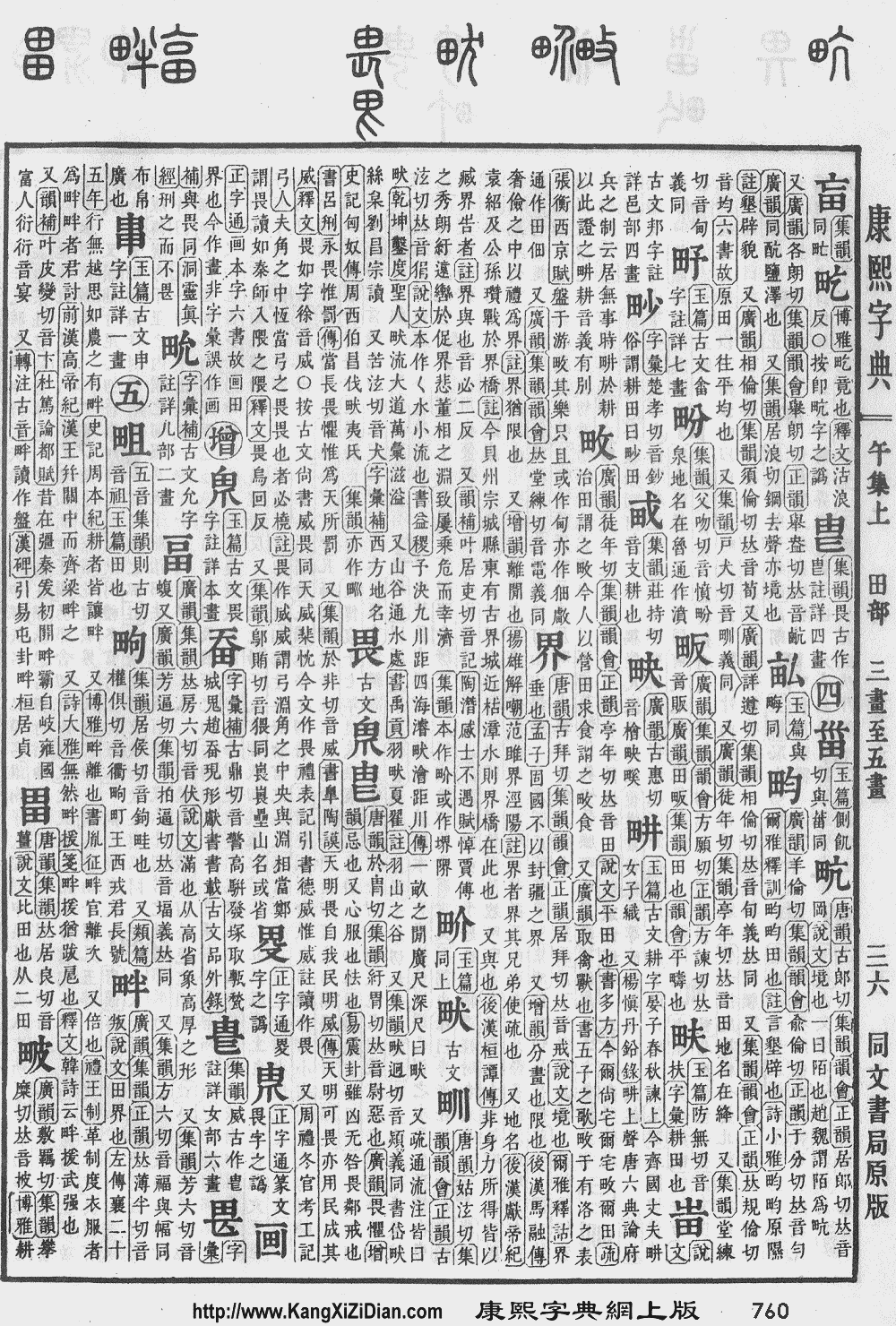
- KangXi: page 760, character 37
- Dai Kanwa Jiten: character 21801
- Dae Jaweon: page 1170, character 23
- Hanyu Da Zidian (first edition): volume 4, page 2539, character 1
- Unihan data for U+7554
Chinese
| simp. and trad. |
畔 | |
|---|---|---|
Glyph origin
| Historical forms of the character 畔 | |
|---|---|
| Warring States | Shuowen Jiezi (compiled in Han) |
| Chu slip and silk script | Small seal script |
 |
 |
Characters in the same phonetic series (半) (Zhengzhang, 2003)
Phono-semantic compound (形聲, OC *baːns) : semantic 田 (“field”) + phonetic 半 (OC *paːns).
Pronunciation
Definitions
畔
- boundary path dividing fields
- boundary; limit
- side; beside; to the side
- 耳畔 ― ěrpàn ― the rim of one's ears
- (obsolete) Alternative form of 叛 (pàn, “to rebel”).
- 燕人畔。王曰:「吾甚慚於孟子。」 [Classical Chinese, trad.]
- From: Mencius, c. 4th century BCE, translated based on James Legge's version
- Yānrén pàn. Wáng yuē: “Wú shèn cán yú Mèngzǐ.” [Pinyin]
- The people of Yan having rebelled, the King of Qi said, "I feel very much ashamed when I think of Mencius."
燕人畔。王曰:“吾甚惭于孟子。” [Classical Chinese, simp.]
Usage notes
Xiandai Hanyu Guifan Cidian (《现代汉语规范词典》) proscribes the use of the pronunciation bàn.
Pronunciation
Japanese
| Shinjitai | 畔 | |
| Kyūjitai [1] |
畔󠄁 畔+ 󠄁?(Adobe-Japan1) |
 |
| 畔󠄃 畔+ 󠄃?(Hanyo-Denshi) (Moji_Joho) | ||
| The displayed kanji may be different from the image due to your environment. See here for details. | ||
Readings
Etymology 1
| Kanji in this term |
|---|
| 畔 |
| あぜ Grade: S |
| kun’yomi |
| For pronunciation and definitions of 畔 – see the following entry. | ||
| ||
| (This term, 畔, is an alternative spelling of the above term.) |
Etymology 2
| Kanji in this term |
|---|
| 畔 |
| あ Grade: S |
| kun’yomi |
| For pronunciation and definitions of 畔 – see the following entry. | ||
| ||
| (This term, 畔, is an alternative spelling of the above term.) |
References
- “畔”, in 漢字ぺディア (Kanjipedia) (in Japanese), 日本漢字能力検定協会, 2015—2023
Korean
Hanja
畔 • (ban) (hangeul 반, revised ban, McCune–Reischauer pan, Yale pan)
- This term needs a translation to English. Please help out and add a translation, then remove the text
{{rfdef}}.
Vietnamese
This article is issued from Wiktionary. The text is licensed under Creative Commons - Attribution - Sharealike. Additional terms may apply for the media files.