素

素 U+7D20, 素
CJK UNIFIED IDEOGRAPH-7D20
← 紟
[U+7D1F]
CJK Unified Ideographs 紡 →
[U+7D21]

Translingual

Han character

素 (Kangxi radical 120, 糸+4, 10 strokes, cangjie input 手一女戈火 (QMVIF), four-corner 50903, composition ⿱龶糸)

See also

References

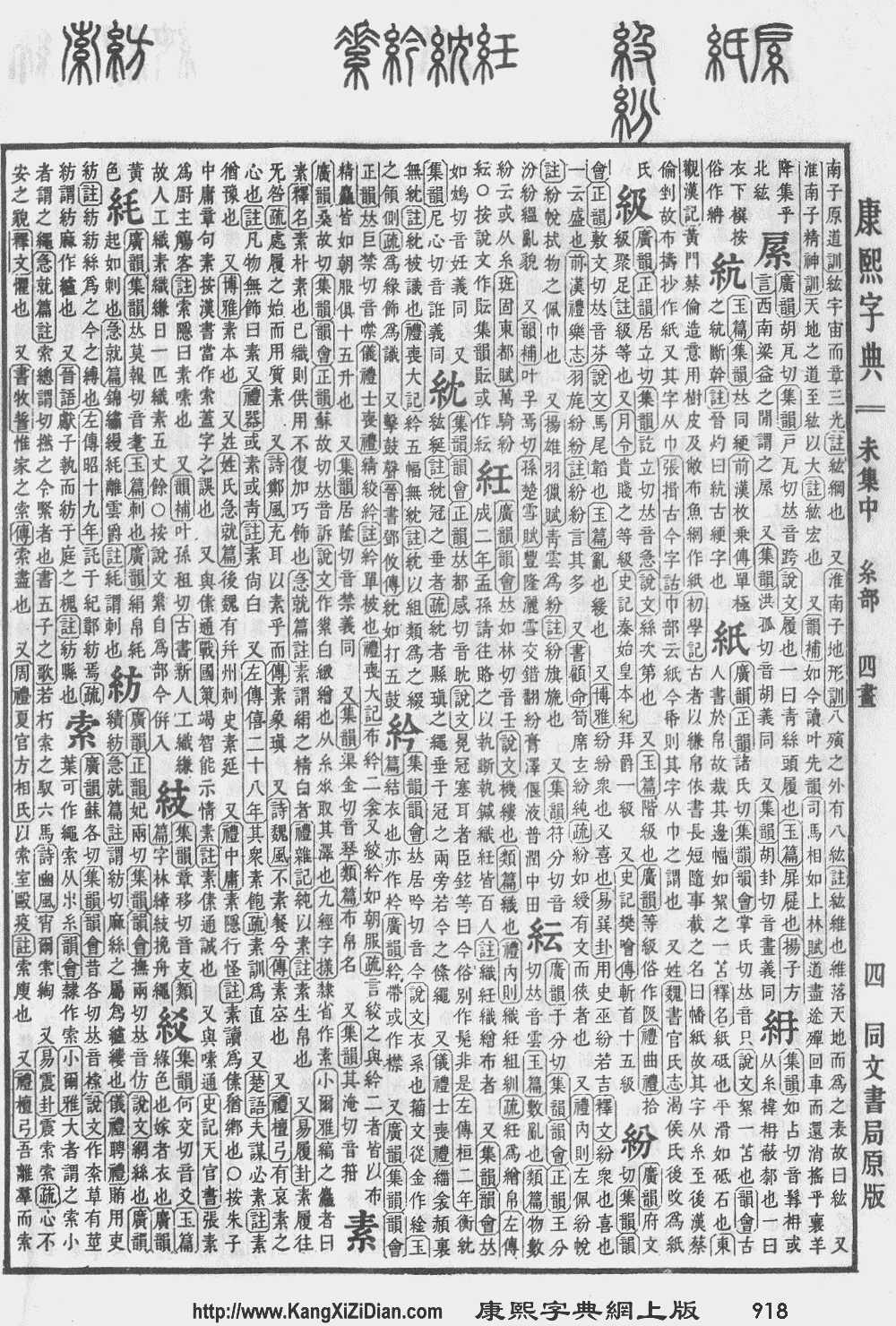
  • KangXi: page 918, character 11
  • Dai Kanwa Jiten: character 27300
  • Dae Jaweon: page 1348, character 7
  • Hanyu Da Zidian (first edition): volume 5, page 3368, character 3
  • Unihan data for U+7D20

Chinese

simp. and trad.
素

Glyph origin

Historical forms of the character 素
Western Zhou Shuowen Jiezi (compiled in Han) Liushutong (compiled in Ming)
Bronze inscriptions Small seal script Transcribed ancient scripts

Pictogram (象形) – hands 廾 braiding thread 糸.

In modern form, top component looks like 生 without the diagonal stroke – compare 責, 青.

Etymology

Probably cognate with Burmese စက်စက် (cakcak, “sparkling, glistening, freshly”). Compare with Burmese သား (sa:) (as in ရိုးသား (rui:sa:, “simple, honest”) and သားနား (sa:na:, “grand”)).

Pronunciation


  • Dialectal data
Variety Location 素
Mandarin Beijing /su⁵¹/
Harbin /su⁵³/
Tianjin /su⁵³/
Jinan /su²¹/
Qingdao /su⁴²/
Zhengzhou /su³¹²/
Xi'an /su⁴⁴/
Xining /ɕy²¹³/
Yinchuan /su¹³/
Lanzhou /su¹³/
Ürümqi /su²¹³/
Wuhan /səu³⁵/
Chengdu /su¹³/
Guiyang /su²¹³/
Kunming /su²¹²/
Nanjing /su⁴⁴/
Hefei /su⁵³/
Jin Taiyuan /su⁴⁵/
Pingyao /səu³⁵/
Hohhot /su⁵⁵/
Wu Shanghai /su³⁵/
Suzhou /səu⁵¹³/
Hangzhou /su⁴⁴⁵/
Wenzhou /sɤu⁴²/
Hui Shexian /su³²⁴/
Tunxi /səu⁴²/
Xiang Changsha /səu⁵⁵/
Xiangtan /səɯ⁵⁵/
Gan Nanchang /su⁴⁵/
Hakka Meixian /sz̩⁵³/
Taoyuan /su⁵⁵/
Cantonese Guangzhou /sou³³/
Nanning /ɬu³³/
Hong Kong /sou³³/
Min Xiamen (Min Nan) /sɔ²¹/
Fuzhou (Min Dong) /sou²¹²/
Jian'ou (Min Bei) /su³³/
Shantou (Min Nan) /su²¹³/
Haikou (Min Nan) /so³⁵/
/to³⁵/

Rime
Character 素
Reading # 1/1
Initial (聲) 心 (16)
Final (韻) 模 (23)
Tone (調) Departing (H)
Openness (開合) Open
Division (等) I
Fanqie 桑故切
Baxter suH
Reconstructions
Zhengzhang
Shangfang
/suoH/
Pan
Wuyun
/suoH/
Shao
Rongfen
/soH/
Edwin
Pulleyblank
/sɔH/
Li
Rong
/soH/
Wang
Li
/suH/
Bernard
Karlgren
/suoH/
Expected
Mandarin
Reflex
sù
Expected
Cantonese
Reflex
sou3
Baxter–Sagart system 1.1 (2014)
Character 素
Reading # 1/1
Modern
Beijing
(Pinyin)
sù
Middle
Chinese
‹ suH ›
Old
Chinese
/*[s]ˁak-s/
English white silk

Notes for Old Chinese notations in the Baxter–Sagart system:

* Parentheses "()" indicate uncertain presence;
* Square brackets "[]" indicate uncertain identity, e.g. *[t] as coda may in fact be *-t or *-p;
* Angle brackets "<>" indicate infix;
* Hyphen "-" indicates morpheme boundary;

* Period "." indicates syllable boundary.
Zhengzhang system (2003)
Character 素
Reading # 1/1
No. 12099
Phonetic
component
素
Rime
group
魚
Rime
subdivision
0
Corresponding
MC rime
訴
Old
Chinese
/*saːs/

Definitions

素

  1. † white silk
  2. † silk or paper used for writing
  3. white
    素面  ―  sùmiàn  ―  unadorned face; face without makeup
    素服  ―  sùfú  ―  white mourning clothes
  4. plain
    素淨/素净  ―  sùjìng  ―  plain and neat
  5. vegetarian (food)
    素菜  ―  sùcài  ―  vegetable dish; vegetarian dish
    吃素  ―  chīsù  ―  to live on a vegetarian diet; to be a vegetarian
    素食  ―  sùshí  ―  vegetarian foods; to maintain a vegetarian diet
  6. original; unprocessed
    素材  ―  sùcái  ―  source material
    素質/素质  ―  sùzhì  ―  nature
  7. usually; always; all along
    平素  ―  píngsù  ―  normally; usually
    素不往來/素不往来  ―  sù bù wǎnglái  ―  have never had contact with each other
    武漢素稱「九省通衢」。 [MSC, trad.]
    武汉素称“九省通衢”。 [MSC, simp.]
    Wǔhàn sù chēng “jiǔshěng tōngqú”. [Pinyin]
    Wuhan has always been called "the thoroughfare of the nine provinces".
  8. element
    元素  ―  yuánsù  ―  element
    維生素/维生素  ―  wéishēngsù  ―  vitamin
    色素  ―  sèsù  ―  pigment
  9. (mathematics) prime
    素數/素数  ―  sùshù  ―  prime number
    互素  ―  hùsù  ―  coprime; relatively prime

Compounds

References

Japanese

Kanji

素

(grade 5 “Kyōiku” kanji)

  1. basic
  2. plain

Readings

Compounds

Derived terms

Etymology 1

Kanji in this term
素
す
Grade: 5
on’yomi

Derived from Middle Chinese 素 (MC suoH).

Pronunciation

Noun

素(す) • (su) ←す (su)?

  1. unadorned state
  2. (cooking) essence
    ご飯(はん)の素(す)
    gohan no su
    rice flavoring / seasoning

Pronunciation

Adjective

素(そ) • (so) -na (adnominal 素(そ)な (so na), adverbial 素(そ)に (so ni))

  1. plain
  2. (mathematics) prime (having no factors but 1 and itself)
    互(たが)いに素(そ)
    tagai ni so
    mutually prime

References

  1. 2006, 大辞林 (Daijirin), Third Edition (in Japanese), Tōkyō: Sanseidō, →ISBN

Korean

Etymology

From Middle Chinese 素 (MC suoH). Recorded as Middle Korean 소 (swo) (Yale: swo) in Hunmong Jahoe (訓蒙字會 / 훈몽자회), 1527.

Pronunciation

  • (element; basis):
  • (plain; white):
    • (SK Standard/Seoul) IPA(key): [sʰo̞(ː)]
    • Phonetic hangul: [소(ː)]
      • Though still prescribed in Standard Korean, most speakers in both Koreas no longer distinguish vowel length.

Hanja

Wikisource 素 (eumhun 흴 소 (huil so))
素 (eumhun 본디 소 (bondi so))

  1. Hanja form? of 소 (“plain; white”).
  2. Hanja form? of 소 (“element; basis”).

Compounds

References

  • 국제퇴계학회 대구경북지부 (國際退溪學會 大邱慶北支部) (2007). Digital Hanja Dictionary, 전자사전/電子字典.

Vietnamese

Han character

素: Nôm readings: tố[1], tó[2]

  1. (dated) chữ Hán form of tố (“clean, white”).
  2. chữ Hán form of tố (“element, basis”).

Compounds

References

  1. Trần (1999).
  2. Trần (2004).
This article is issued from Wiktionary. The text is licensed under Creative Commons - Attribution - Sharealike. Additional terms may apply for the media files.