蟻
| ||||||||
Translingual
| Stroke order | |||
|---|---|---|---|
 | |||
Han character
蟻 (Kangxi radical 142, 虫+13, 19 strokes, cangjie input 中戈廿土戈 (LITGI), four-corner 58153, composition ⿰虫義)
References
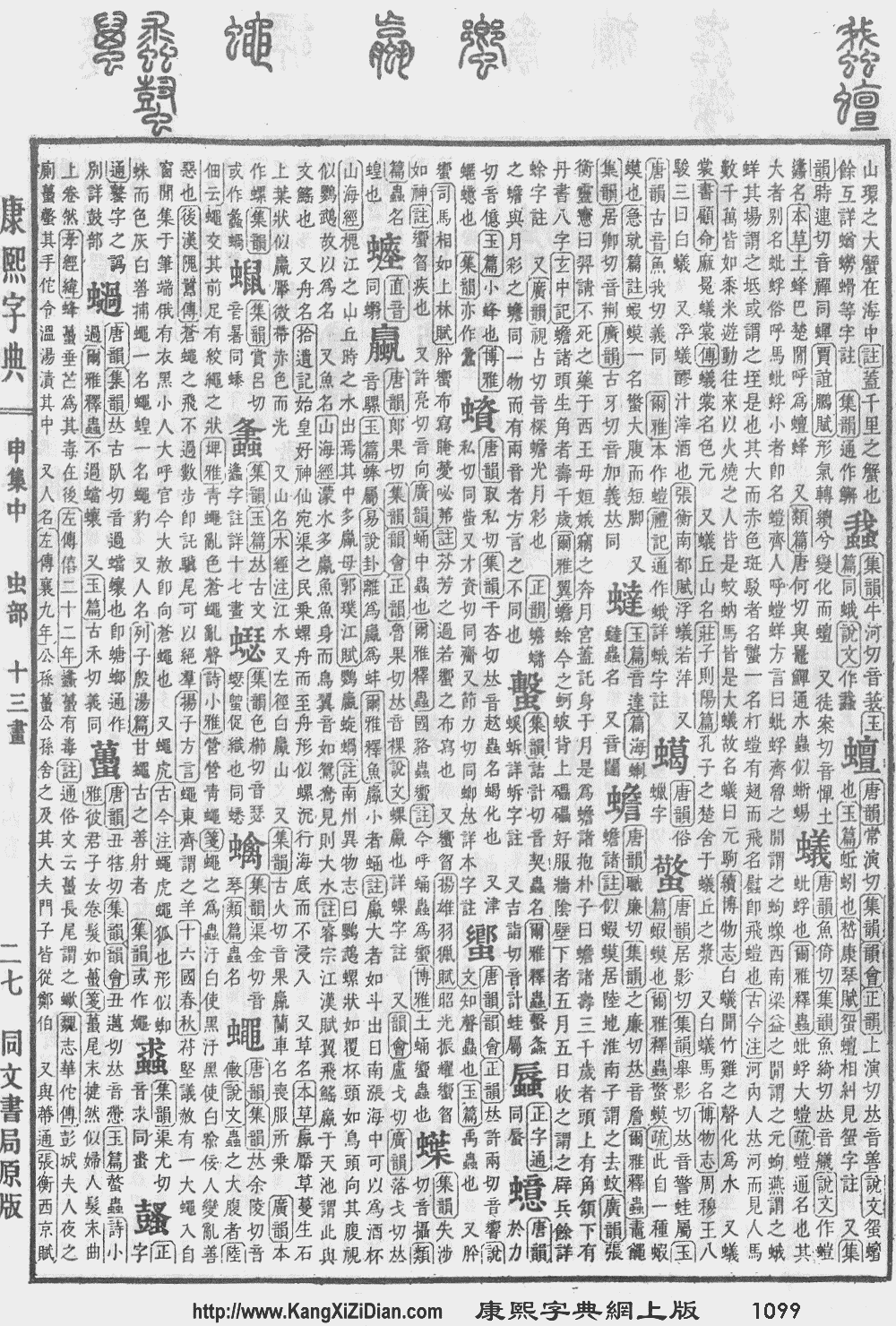
- KangXi: page 1099, character 3
- Dai Kanwa Jiten: character 33672
- Dae Jaweon: page 1563, character 8
- Hanyu Da Zidian (first edition): volume 4, page 2898, character 11
- Unihan data for U+87FB
Chinese
| trad. | 蟻 | |
|---|---|---|
| simp. | 蚁 | |
| alternative forms | 螘/𰲹 蛾 | |
Glyph origin
Phono-semantic compound (形聲, OC *ŋralʔ) : semantic 虫 (“insect”) + phonetic 義 (OC *ŋrals).
Etymology
Pronunciation
Definitions
蟻
- ant
- 人如極細極細的蟻 從來難敵時代的洗禮 [Literary Cantonese, trad.]
- From: 2022, 林家謙 [Terence Lam], lyrics by 黃偉文 [Wyman Wong], 邊一個發明了ENCORE
- jan4 jyu4 gik6 sai3 gik6 sai3 dik1 ngai5, cung4 loi4 naan4 dik6 si4 doi6 dik1 sai2 lai5 [Jyutping]
- People are teeny-tiny ants; they can hardly ever go against the test of time
人如极细极细的蚁 从来难敌时代的洗礼 [Literary Cantonese, simp.]
- foam or sediment in wine
- humble, inconsiderable
- black
- in an assembled manner
- a surname
Synonyms
Compounds
Japanese
Alternative forms
- 螘 (rare)
Etymology 1
| Kanji in this term |
|---|
| 蟻 |
| ぎ Hyōgaiji |
| on’yomi |
From Middle Chinese 蟻 (ngjeX). Compare modern Cantonese reading ngai5.
Pronunciation
- IPA(key): [ɡʲi]
Usage notes
This reading is only found in compounds. When the character is used on its own, it is always read as the kun'yomi of ari.
Derived terms
- 蟻群 (gigun): a group of ants
- 蟻径 (gikei): a narrow road or path (from the way that ants tend to travel in single file)
- 蟻穴 (giketsu): an anthill, a hole dug by ants; a very small fault or mistake
- 蟻蚕 (gisan): a silkworm that has just hatched from its egg (from the superficial similarity to an ant)
- 蟻酸 (gisan): formic acid
- 蟻酸塩 (gisan'en): formate
- 蟻集, 蟻聚 (gishū): a large grouping, as of many ants
- 蟻走感 (gisōkan): formication: a feeling as of many bugs crawling on one's skin
- 蟻付 (gifu): a large grouping or gathering of people, much as ants will gather around something sweet
- 蟻封 (gihō): an anthill
- 蟻量 (giryō): “ant-weight”: the weight of a silkworm just after hatching from its egg (see 蟻蚕 above)
- 蟻垤 (gitetsu): an anthill
Etymology 2
| Kanji in this term |
|---|
| 蟻 |
| あり Hyōgaiji |
| kun’yomi |
Unknown. From Old Japanese, but ultimate derivation remains a mystery. There are potentially interesting similarities to Korean 아리 (ari, “leg”) and 아래 (arae, “below, beneath”), but evidence is lacking.
Idioms
- 蟻の這い出る隙間もない (ari no haideru sukima mo nai): “not even a crack wide enough for an ant to crawl through” → without a gap, close, tight
- 蟻の熊野参り (ari no Kumano-mairi), 蟻の伊勢参り (ari no Ise-mairi), 蟻の百度参り (ari no hyakudo-mairi), 蟻の堂参り (ari no dō-mairi), 蟻の物参り (ari no mono-mairi): “an ants' pilgrimage to Kumano / Ise / the hundred shrines and temples / the temples / the holy sites” → a metaphor likening ants in single file to a procession of pilgrims; alternately, a metaphor for a large group of people moving in single file
- 蟻の一穴 (ari no ikketsu): “a single ant-hole” → a metaphor for the way a tiny thing can cause grave consequences; compare a stitch in time saves nine
- 蟻の穴から堤も崩れる (ari no ana kara tsutsumi mo kuzureru), 蟻の穴より堤の崩れ (ari no ana yori tsutsumi no kuzure): “even a dike can fall apart due to an ant-hole” → a metaphor for the way a tiny thing can cause grave consequences; compare a stitch in time saves nine
- 蟻の甘きにつく如し (ari no amaki ni tsuku gotoshi): “just like ants drawn to a sweet” → a metaphor for the way that people are drawn to profitable things; compare like a moth to a flame, of nearly opposite meaning
- 蟻の思いも天に届く (ari no omoi mo ten ni todoku), 蟻の思いも天に昇る (ari no omoi mo ten ni noboru): “even an ant's thoughts can reach / rise to the heavens” → no matter how humble or lowly, if one tries hard enough, one's wishes can still be heard by the gods in heaven; compare where there's a will, there's a way
- 蟻の塔を組む如し (ari no tō o kumu gotoshi): “just like building an ant tower [anthill]” → even great deeds can be accomplished through patient work; compare a journey of a thousand miles begins with a single step
Derived terms
- 蟻の塔 (ari no tō): an “ant tower” → an anthill
- 蟻塚 (arizuka): an anthill
- 蟻の塔草 (ari no tō-gusa): a kind of seaberry, Haloragis micrantha
- 蟻の塔草科 (ari no tō-gusa ka): the seaberry family, Haloragaceae
- 蟻の子 (ari no ko): an ant, particularly one without wings; an ant egg or larva
Etymology 3
| Kanji in this term |
|---|
| 蟻 |
| ありのこ Hyōgaiji |
| kun’yomi |
Compound of 蟻 (ari, “ant”) + の (no, possessive particle) + 子 (ko, “child; small thing”).
Alternative forms
Pronunciation
- IPA(key): [a̠ɾʲino̞ko̞]
Noun
蟻 • (arinoko)
Usage notes
The spelling of 蟻 for ari no ko is generally only seen in old texts. In modern Japanese, this term is much more commonly spelled as 蟻の子.
References
- 2006, 大辞林 (Daijirin), Third Edition (in Japanese), Tōkyō: Sanseidō, →ISBN
- Unknown (794), Yoshinori Kobayashi, editor, Shin'yaku Kegonkyō Ongi Shiki (Kojisho Ongi Shūsei) (in Japanese), volume 1, Kyūko Shoin, published 1978, →ISBN.
Korean
Etymology
From Middle Chinese 蟻 (MC ŋˠiᴇX).
| Historical Readings | ||
|---|---|---|
| Dongguk Jeongun Reading | ||
| Dongguk Jeongun, 1448 | ᅌᅴᆼ〯 (Yale: ngǔy) | |
| Middle Korean | ||
| Text | Eumhun | |
| Gloss (hun) | Reading | |
| Hunmong Jahoe, 1527 | 가야미〮 (Yale: kàyàmí) | 의〯 (Yale: ǔy) |
Pronunciation
- (SK Standard/Seoul) IPA(key): [ɰi]
- Phonetic hangul: [의]
Compounds
Northern Amami-Oshima
Oki-No-Erabu
Pronunciation
- IPA(key): /ˀani/
Southern Amami-Oshima
Vietnamese
Yonaguni
Pronunciation
- IPA(key): /ˀaja/