躺
| ||||||||
Translingual
Han character
躺 (Kangxi radical 158, 身+8, 15 strokes, cangjie input 竹竹火月口 (HHFBR), four-corner 29427, composition ⿰身尚)
References
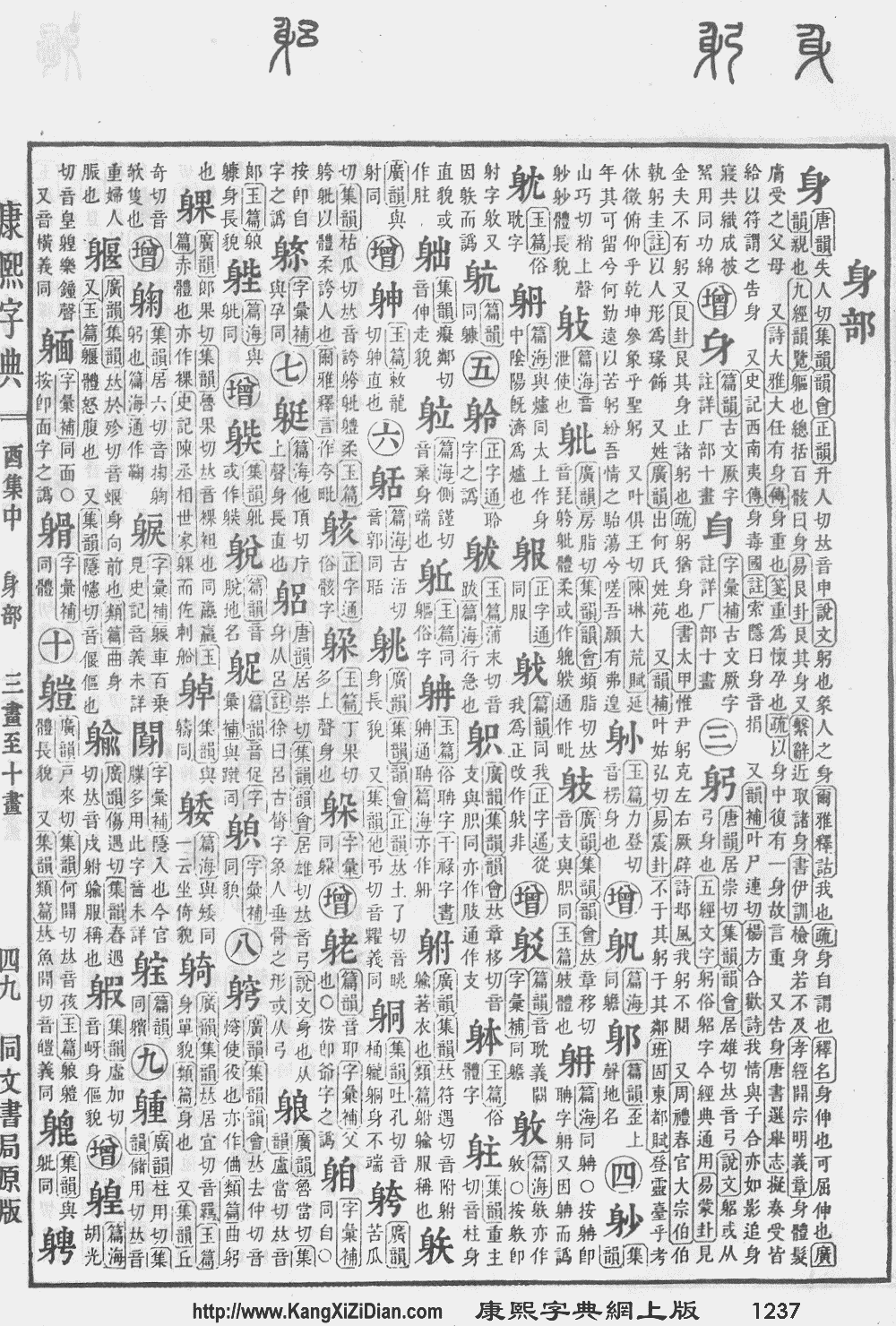
- KangXi: not present, would follow page 1237, character 58
- Dai Kanwa Jiten: character 38110
- Dae Jaweon: page 1711, character 39
- Hanyu Da Zidian (first edition): volume 6, page 3811, character 12
- Unihan data for U+8EBA
Chinese
| trad. | 躺 | |
|---|---|---|
| simp. # | 躺 | |
Glyph origin
Characters in the same phonetic series (尚) (Zhengzhang, 2003)
| Old Chinese | |
|---|---|
| 當 | *taːŋ, *taːŋs |
| 襠 | *taːŋ |
| 鐺 | *taːŋ, *sʰraːŋ |
| 簹 | *taːŋ |
| 璫 | *taːŋ |
| 檔 | *taːŋ, *taːŋs |
| 儅 | *taːŋ, *taːŋs |
| 蟷 | *taːŋ |
| 擋 | *taːŋʔ, *taːŋs |
| 黨 | *taːŋʔ, *tʰaːŋʔ |
| 讜 | *taːŋʔ |
| 欓 | *taːŋʔ |
| 譡 | *taːŋs |
| 闣 | *taːŋs |
| 瓽 | *taːŋs |
| 鏜 | *tʰaːŋ |
| 闛 | *tʰaːŋ, *daːŋ |
| 鼞 | *tʰaːŋ |
| 曭 | *tʰaːŋʔ |
| 儻 | *tʰaːŋʔ, *tʰaːŋs |
| 戃 | *tʰaːŋʔ |
| 矘 | *tʰaːŋʔ |
| 爣 | *tʰaːŋʔ |
| 攩 | *hl'aːŋʔ, *ɦʷlaːŋʔ, *ɦʷlaːŋs |
| 淌 | *tʰaːŋʔ |
| 倘 | *tʰaːŋʔ |
| 躺 | *tʰaːŋʔ |
| 趟 | *tʰaːŋs, *rtaːŋ, *rtaːŋs |
| 堂 | *daːŋ |
| 坣 | *daːŋ |
| 棠 | *daːŋ |
| 糛 | *daːŋ |
| 螳 | *daːŋ |
| 隚 | *daːŋ |
| 橖 | *daːŋ |
| 掌 | *tjaŋʔ |
| 廠 | *tʰjaŋʔ, *tʰjaŋs |
| 敞 | *tʰjaŋʔ |
| 僘 | *tʰjaŋʔ |
| 氅 | *tʰjaŋʔ |
| 常 | *djaŋ |
| 嘗 | *djaŋ |
| 裳 | *djaŋ |
| 徜 | *djaŋ |
| 尚 | *djaŋ, *djaŋs |
| 甞 | *djaŋ |
| 鋿 | *djaŋ |
| 嫦 | *djaŋ |
| 償 | *djaŋ, *djaŋs |
| 賞 | *hjaŋʔ |
| 瞠 | *rtʰaːŋ |
| 撐 | *rtʰaːŋ |
| 樘 | *rtʰaːŋ |
| 橕 | *rtʰaːŋ |
| 牚 | *rtʰaːŋs |
| 埫 | *tʰoŋʔ |
Phono-semantic compound (形聲, OC *tʰaːŋʔ) : semantic 身 (“body”) + phonetic 尚 (OC *djaŋ, *djaŋs).
Etymology
(This etymology is missing or incomplete. Please add to it, or discuss it at the Etymology scriptorium.)
Pronunciation
Synonyms
Dialectal synonyms of 躺 (“to lie; to recline”) [map]
| Variety | Location | Words |
|---|---|---|
| Formal (Written Standard Chinese) | 躺 | |
| Mandarin | Beijing | 躺, 歪 |
| Taiwan | 躺 | |
| Jinan | 躺 | |
| Xi'an | 睡, 躺 | |
| Wuhan | 睡 | |
| Chengdu | 躺, 睡 | |
| Guilin | 躺 | |
| Yangzhou | 躺, 睡 | |
| Hefei | 睡, 躺 | |
| Singapore | 躺 | |
| Cantonese | Guangzhou | 瞓 |
| Hong Kong | 瞓 | |
| Yangjiang | 睡 | |
| Singapore (Guangfu) | 瞓 | |
| Gan | Nanchang | 睏 |
| Hakka | Meixian | 眠, 抗 |
| Miaoli (N. Sixian) | 睡 | |
| Pingtung (Neipu; S. Sixian) | 眠 | |
| Hsinchu County (Zhudong; Hailu) | 睡 | |
| Taichung (Dongshi; Dabu) | 睡 | |
| Hsinchu County (Qionglin; Raoping) | 睡 | |
| Jin | Taiyuan | 躺, 睡 |
| Min Bei | Jian'ou | 倒 |
| Min Dong | Fuzhou | 倒 |
| Min Nan | Xiamen | 倒 |
| Quanzhou | 倒 | |
| Zhangzhou | 倒 | |
| Penang (Hokkien) | 倒 | |
| Singapore (Hokkien) | 倒 | |
| Chaozhou | 倒 | |
| Wu | Suzhou | 睏 |
| Wenzhou | 翻, 倒 | |
| Xiang | Changsha | 睏 |
| Shuangfeng | 睏 | |
See also
- (to lie face down) 趴 (pā)
Japanese
Kanji
躺
- This term needs a translation to English. Please help out and add a translation, then remove the text
{{rfdef}}.
Vietnamese
Han character
躺: Hán Nôm readings: thưỡng, thảng
- This term needs a translation to English. Please help out and add a translation, then remove the text
{{rfdef}}.
This article is issued from Wiktionary. The text is licensed under Creative Commons - Attribution - Sharealike. Additional terms may apply for the media files.