霉
See also: 黴
| ||||||||
Translingual
Han character
霉 (Kangxi radical 173, 雨+7, 15 strokes, cangjie input 一月人田卜 (MBOWY), four-corner 10507, composition ⿱⻗每)
Related characters
- 黴 (Traditional form of 霉)
References
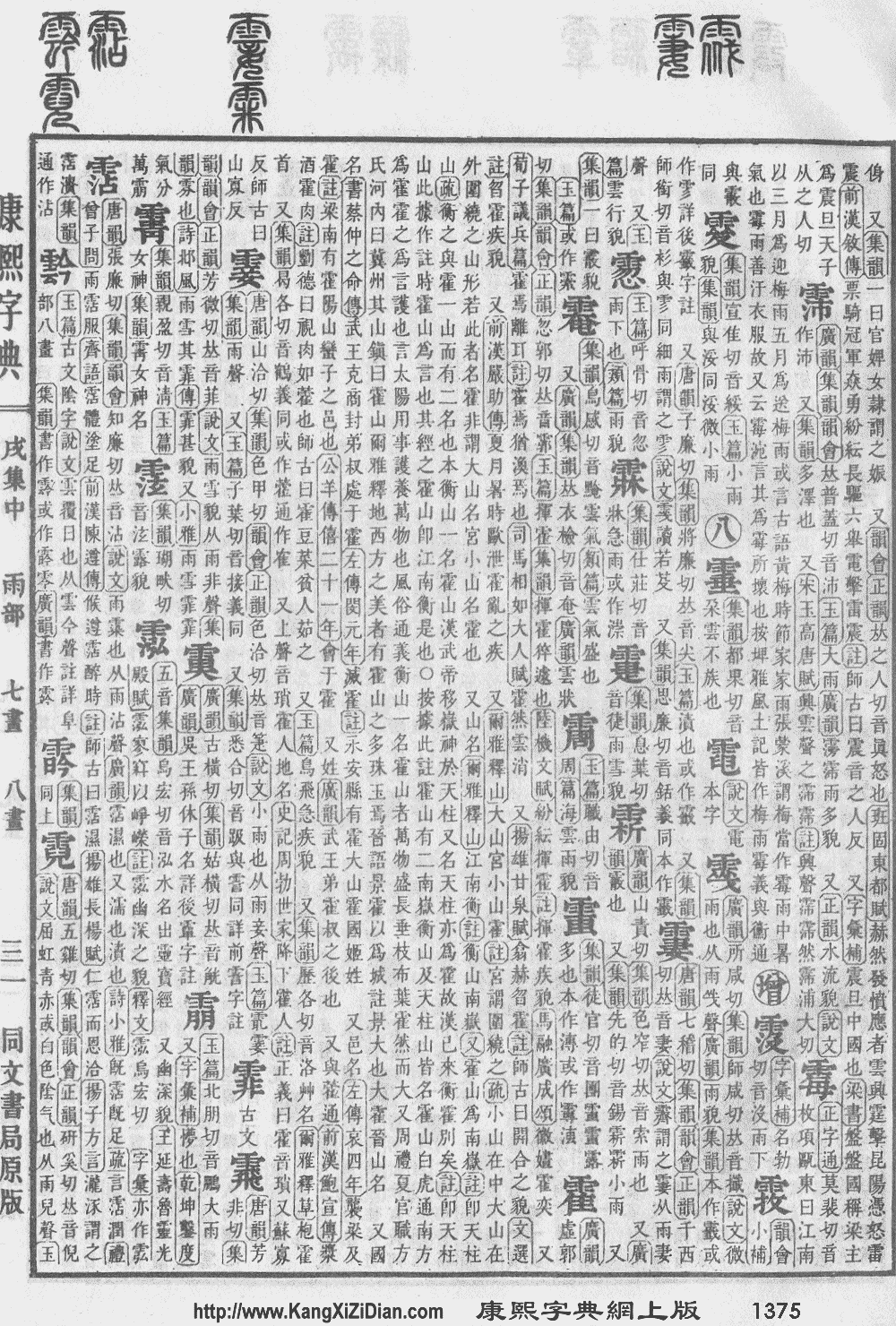
- KangXi: page 1375, character 2
- Dai Kanwa Jiten: character 42302
- Dae Jaweon: page 1884, character 2
- Hanyu Da Zidian (first edition): volume 6, page 4065, character 1
- Unihan data for U+9709
Chinese
| trad. | 霉 | |
|---|---|---|
| simp. # | 霉 | |
Glyph origin
Characters in the same phonetic series (母) (Zhengzhang, 2003)
| Old Chinese | |
|---|---|
| 脢 | *mɯːs, *mɯː, *mɯːs |
| 挴 | *mlɯːʔ, *mɯːʔ |
| 海 | *hmlɯːʔ |
| 毐 | *ʔmɯː, *ʔmɯːʔ |
| 呣 | *mɯ |
| 拇 | *mɯʔ |
| 母 | *mɯʔ |
| 胟 | *mɯʔ |
| 姆 | *mɯʔ, *mɯs, *maːʔ |
| 畮 | *mɯʔ |
| 踇 | *mɯʔ |
| 苺 | *mɯs, *mɯːʔ, *mɯːs |
| 莓 | *mɯs, *mɯː, *mɯːs |
| 敏 | *mrɯʔ, *mrɯŋʔ |
| 鰵 | *mrɯŋʔ |
| 慜 | *mrɯŋʔ |
| 毋 | *ma |
| 梅 | *mɯː |
| 酶 | *mɯː |
| 鋂 | *mɯː |
| 每 | *mɯːʔ |
| 毎 | *mɯːs |
| 痗 | *mɯːs, *hmɯːs |
| 晦 | *hmɯːs |
| 誨 | *hmɯːs |
| 悔 | *hmɯːʔ, *hmɯːs |
| 霉 | *mrɯl |
Phono-semantic compound (形聲, OC *mrɯl) : semantic 雨 (“rain”) + phonetic 每 (OC *mɯːʔ).
Pronunciation
Compounds
References
- Dictionary of Chinese Character Variants (教育部異體字字典), A04480
- “霉”, in 漢語多功能字庫 (Multi-function Chinese Character Database), 香港中文大學 (the Chinese University of Hong Kong), 2014–
Glyph origin
Designated as the simplified form of 黴 in the Chinese Character Simplification Scheme (漢字簡化方案) (1956).
Definitions
| For pronunciation and definitions of 霉 – see 黴 (“mold; mildew; must”). (This character, 霉, is the simplified and variant form of 黴.) |
Notes:
|
Japanese
Korean
Hanja
霉 • (mae) (hangeul 매, revised mae, McCune–Reischauer mae, Yale may)
- This term needs a translation to English. Please help out and add a translation, then remove the text
{{rfdef}}.
Vietnamese
Han character
- This term needs a translation to English. Please help out and add a translation, then remove the text
{{rfdef}}.
References
This article is issued from Wiktionary. The text is licensed under Creative Commons - Attribution - Sharealike. Additional terms may apply for the media files.