屑
| ||||||||
Translingual
Han character
屑 (Kangxi radical 44, 尸+7, 10 strokes, cangjie input 尸火月 (SFB), four-corner 77227, composition ⿸尸肖)
References
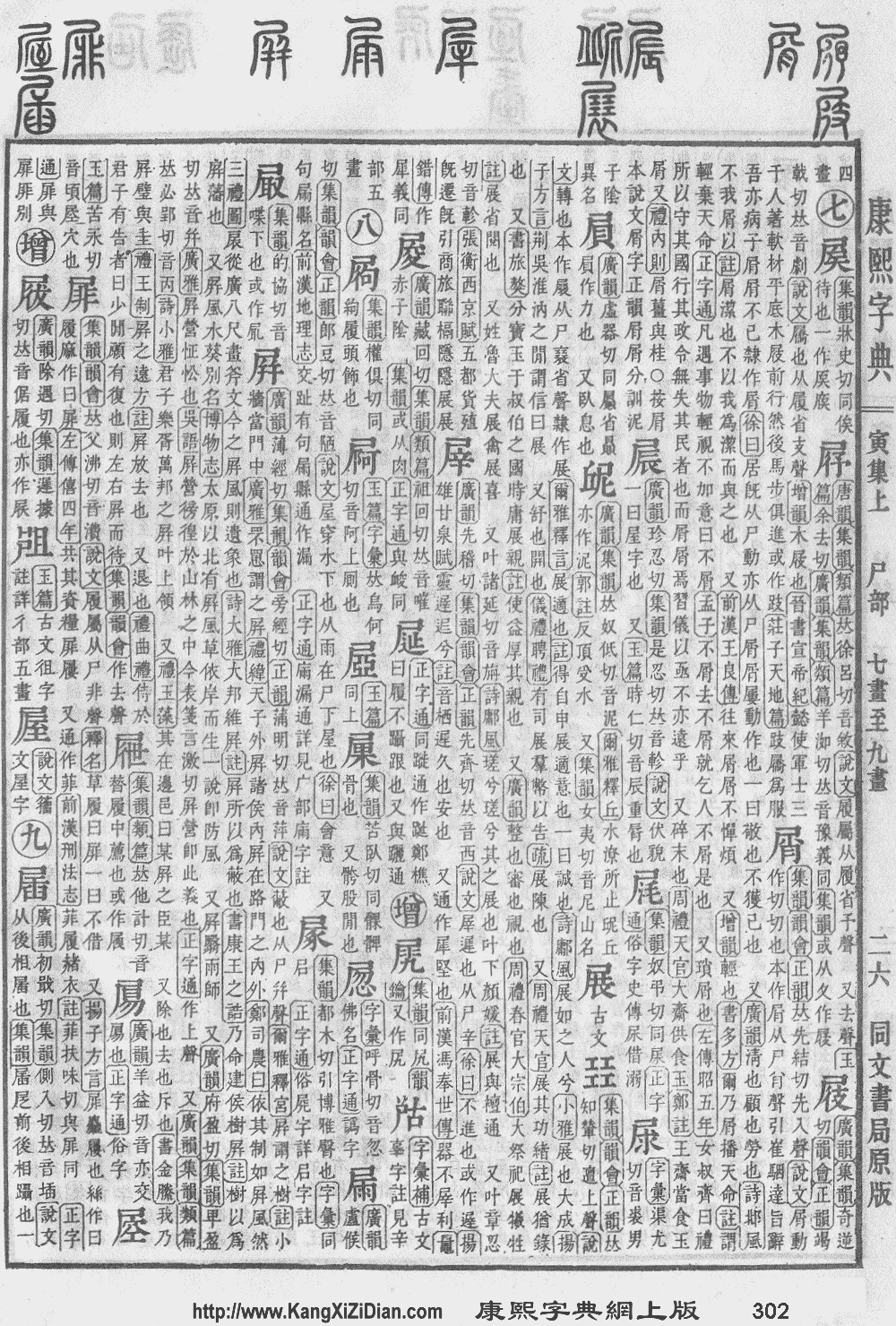
- KangXi: page 302, character 4
- Dai Kanwa Jiten: character 7709
- Dae Jaweon: page 599, character 17
- Hanyu Da Zidian (first edition): volume 2, page 975, character 5
- Unihan data for U+5C51
Chinese
Glyph origin
| Historical forms of the character 屑 |
|---|
| Shuowen Jiezi (compiled in Han) |
| Small seal script |
 |
Characters in the same phonetic series (佾) (Zhengzhang, 2003)
Originally written 㞕.
Etymology 1
| trad. | 屑 | |
|---|---|---|
| simp. # | 屑 | |
| alternative forms | 㞕 | |
Wang (1982) compares it to 細 (OC *snɯːls, “fine”), 碎 (OC *suːds, “shattered; fragmented”).
Pronunciation
Definitions
屑
- bits; scraps; crumbs; fragments
- 2016, 張晏榕, 《動畫導論:美學與實務》 [An Introduction to Animation: Aesthetics and Practices], 全華圖書, →ISBN, page 249:
- 銅也是一種可以考慮的材質(圖8.6),比較容易取得,價格也比較便宜,加工比較容易,因為夠軟,而且銅雖然較軟,可是在磨擦加熱的時候會產生韌性,用鋁做爲材質,既輕又硬,然相對的就脆,當材質脆的時候,磨損就會變成粉末,會有很多屑,銅就不會。 [MSC, trad.]
- Tóng yě shì yī zhǒng kěyǐ kǎolǜ de cáizhì (tú 8.6), bǐjiào róngyì qǔdé, jiàgé yě bǐjiào piányí, jiāgōng bǐjiào róngyì, yīnwèi gòu ruǎn, érqiě tóng suīrán jiào ruǎn, kěshì zài mócā jiārè de shíhòu huì chǎnshēng rènxìng, yòng lǚ zuòwéi cáizhì, jì qīng yòu yìng, rán xiàngduì de jiù cuì, dāng cáizhì cuì de shíhòu, mósǔn jiù huì biànchéng fěnmò, huì yǒu hěnduō xiè, tóng jiù bùhuì. [Pinyin]
- (please add an English translation of this example)
铜也是一种可以考虑的材质(图8.6),比较容易取得,价格也比较便宜,加工比较容易,因为够软,而且铜虽然较软,可是在磨擦加热的时候会产生韧性,用铝做为材质,既轻又硬,然相对的就脆,当材质脆的时候,磨损就会变成粉末,会有很多屑,铜就不会。 [MSC, simp.]
-
- (literary, or in compounds) trifling; trivial
- (chiefly in the negative) to be worth doing
- 不屑 ― bùxiè ― not worth doing
- 不屑一顧/不屑一顾 ― bùxièyīgù ― displeasing to look at, "to not be worth one glance"
Synonyms
- (bits): (Cantonese) 碎 (suì)
- (trifling):
Compounds
Pronunciation
Japanese
Readings
Etymology
| Kanji in this term |
|---|
| 屑 |
| くず Jinmeiyō |
| kun’yomi |
(This etymology is missing or incomplete. Please add to it, or discuss it at the Etymology scriptorium.)
Noun
Derived terms
Korean
Hanja
屑 • (seol) (hangeul 설, revised seol, McCune–Reischauer sŏl, Yale sel)
- This term needs a translation to English. Please help out and add a translation, then remove the text
{{rfdef}}.
Vietnamese
This article is issued from Wiktionary. The text is licensed under Creative Commons - Attribution - Sharealike. Additional terms may apply for the media files.