種
| ||||||||
Translingual
Han character
種 (Kangxi radical 115, 禾+9, 14 strokes, cangjie input 竹木竹十土 (HDHJG), four-corner 22914, composition ⿰禾重)
Derived characters
- 𭢸, 𮃲, 𡽯, 𧀑, 𥵾, 㘒
References
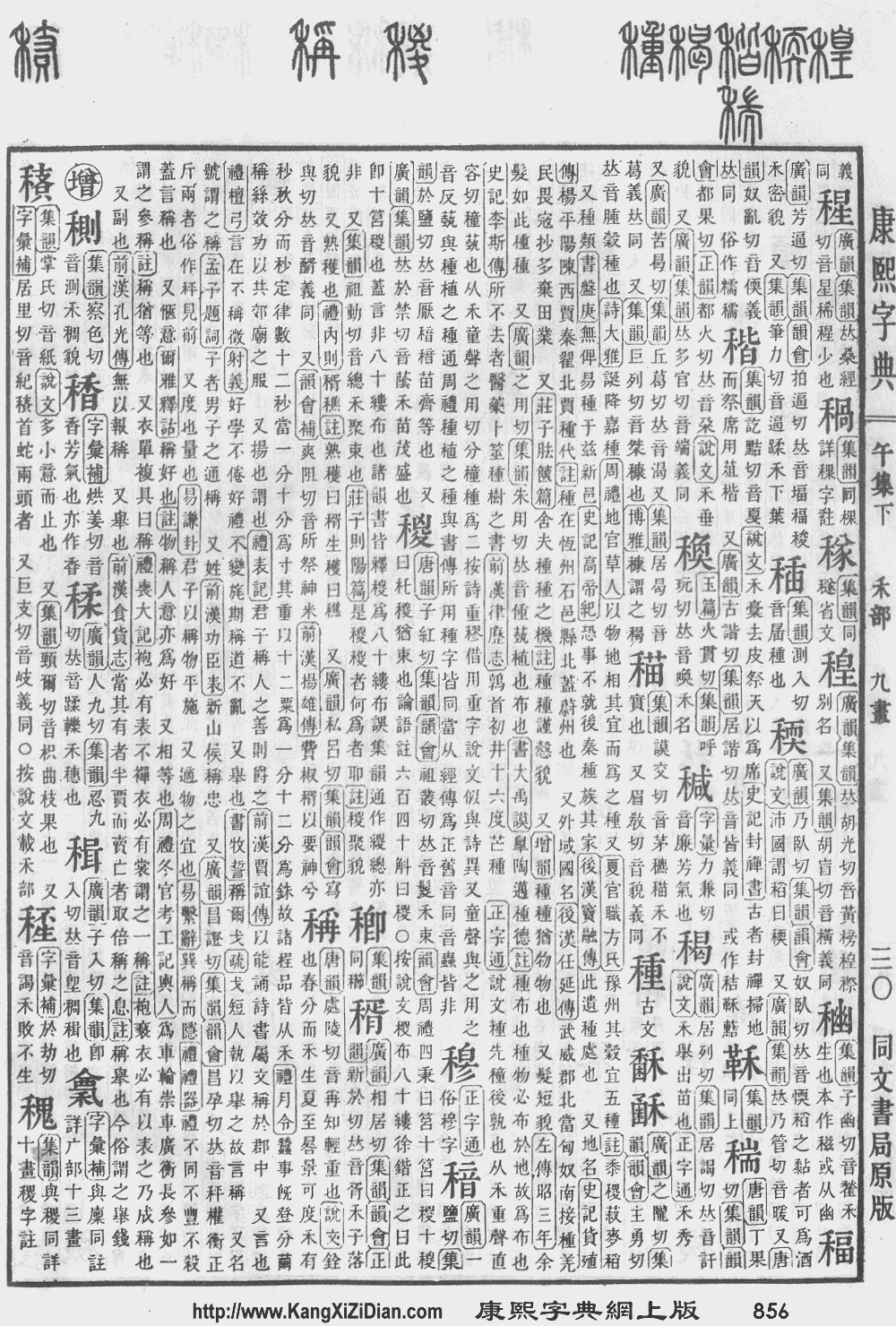
- KangXi: page 856, character 16
- Dai Kanwa Jiten: character 25174
- Dae Jaweon: page 1281, character 33
- Hanyu Da Zidian (first edition): volume 4, page 2617, character 17
- Unihan data for U+7A2E
Chinese
| trad. | 種 | |
|---|---|---|
| simp. | 种* | |
| alternative forms | 穜 𥡰 𥢖 𦔉 | |
Glyph origin
| Historical forms of the character 種 |
|---|
| Shuowen Jiezi (compiled in Han) |
| Small seal script |
 |
| Old Chinese | |
|---|---|
| 撞 | *rdoːŋ, *rdoːŋs |
| 幢 | *rdoːŋ, *rdoːŋs |
| 橦 | *rdoːŋ, *doːŋ, *tjoŋ |
| 噇 | *rdoːŋ |
| 𩪘 | *rdoːŋ |
| 艟 | *rdoːŋs, *tʰjoŋ |
| 憧 | *rdoːŋs, *tʰjoŋ |
| 畽 | *tʰoːnʔ, *tʰuːnʔ |
| 董 | *toːŋʔ |
| 蕫 | *toːŋʔ, *doːŋ |
| 箽 | *toːŋʔ |
| 懂 | *toːŋʔ |
| 湩 | *toːŋs, *tuːŋʔ, *toŋs |
| 曈 | *tʰoːŋ, *tʰoːŋʔ, *doːŋ |
| 童 | *doːŋ |
| 僮 | *doːŋ |
| 瞳 | *doːŋ |
| 罿 | *doːŋ, *tʰjoŋ |
| 犝 | *doːŋ |
| 潼 | *doːŋ, *tʰjoŋ |
| 穜 | *doːŋ, *doŋ |
| 動 | *doːŋʔ |
| 慟 | *doːŋs |
| 堹 | *toŋs |
| 諥 | *toŋs |
| 蹱 | *tʰoŋ, *tʰoŋs, *tjoŋ |
| 重 | *doŋ, *doŋʔ, *doŋs |
| 緟 | *doŋ, *doŋs |
| 蝩 | *doŋ |
| 褈 | *doŋ, *tʰjoŋ |
| 鐘 | *tjoŋ, *tjoŋ |
| 鍾 | *tjoŋ |
| 籦 | *tjoŋ |
| 種 | *tjoŋʔ, *tjoŋs |
| 腫 | *tjoŋʔ |
| 踵 | *tjoŋʔ |
| 歱 | *tjoŋʔ |
| 喠 | *tjoŋʔ, *tʰjoŋʔ |
| 偅 | *tjoŋs |
| 衝 | *tʰjoŋ |
| 揰 | *tʰjoŋs |
| 尰 | *djoŋʔ |
Phono-semantic compound (形聲, OC *tjoŋʔ, *tjoŋs) : semantic 禾 + phonetic 重 (OC *doŋ, *doŋʔ, *doŋs).
Etymology
Perhaps Sino-Tibetan: Chepang [script needed] (tuŋʔ-, “to plant”), दुङ् (duŋ, “shoot; sprout”), दुङ्सा (duŋ-, “to sprout; to grow”). Compare 腫 (OC *tjoŋʔ, “to swell”) and 踵 (OC *tjoŋʔ, “heel”).
Related to Proto-Vietic *k-coːŋʔ (“seed”) (Vietnamese giống (“seed”)), which is likely a loanword from Chinese (Wang, 1948).
Pronunciation 2 (“to sow; to plant”) is the exoactive derivation of pronunciation 1 (“seed”).
Pronunciation 1
Definitions
種
Synonyms
- (kind):
| Variety | Location | Words |
|---|---|---|
| Formal (Written Standard Chinese) | 種, 類 | |
| Mandarin | Taiwan | 種 |
| Malaysia | 種 | |
| Singapore | 種 | |
| Cantonese | Guangzhou | 種, 隻 |
| Hong Kong | 種, 隻 | |
| Min Nan | Tainan | 種, 款 |
| Penang (Hokkien) | 種 | |
| Singapore (Hokkien) | 種, 款 | |
| Manila (Hokkien) | 款 | |
- (guts):
Compounds
See also
Pronunciation 2
Definitions
種
Synonyms
- (to cultivate):
Compounds
Pronunciation 3
References
- “種”, in 漢語多功能字庫 (Multi-function Chinese Character Database), 香港中文大學 (the Chinese University of Hong Kong), 2014–
Japanese
Readings
Compounds
Related terms
Alternative forms
- (bloodline, lineage): 胤
Noun
種 • (tane)
- a seed
- Synonym: 種子 (shushi)
- a pit or stone in a fruit
- Synonym: [[{{{2}}}#Japanese|{{{2}}}]] (sane)
- a gamete (reproductive cell such as a spermatozoan or egg)
- a lineage, bloodline
- an origin, cause
- the materials or ingredients from which something is made
- capital, funds, seed money
- Synonyms: 元金 (gankin, motokin), 元手 (motode)
Derived terms
- 種明かし (taneakashi)
- 種井 (tanei), 種井 (tanai)
- 種板 (taneita)
- 種芋 (taneimo)
- 種牛 (taneushi)
- 種馬 (taneuma)
- 種選び (tane erabi)
- 種下ろし (tane-oroshi)
- 種案山子 (tane kakashi)
- 種貸し (tanekashi)
- 種子島 (Tanegashima)
- 種紙 (tanegami)
- 種川 (Tanekawa)
- 種変り (tane-gawari), 種変わり (tane-gawari)
- 種切れ (tanegire)
- 種菌 (tanekin)
- 種麹 (tane kōji)
- 種肥 (tanegoe)
- 種差 (Tanesashi)
- 種字 (taneji)
- 種酢 (tanezu)
- 種銭 (tanesen)
- 種田 (taneda)
- 種卵 (tane tamago)
- 種俵 (tane-dawara)
- 種違い (tanechigai)
- 種付け (tanetsuke)
- 種付け (tanetsuke)
- 種漬 (tanetsuke), 種漬け (tanetsuke)
- 種土 (tanetsuchi)
- 種壺 (tanetsubo)
- 種取り (tanetori)
- 種無し (tanenashi)
- 種蠅 (tanebae)
- 種子鋏 (tane‐basami)
- 種腹 (tanehara)
- 種版 (taneban), 種板 (taneban)
- 種火 (tanebi)
- 種浸し (tane hitashi)
- 種瓢 (tane fukube)
- 種豚 (tanebuta)
- 種本 (tanehon)
- 種蒔き (tanemaki), 種播き (tanemaki)
- 種繭 (tanemayu)
- 種雌牛 (tane mesuushi)
- 種物 (tanemono)
- 種籾 (tanemomi)
- 種屋 (taneya)
- 種山 (Taneyama)
- 種綿 (tanewata)
- 煎り種 (iridane), 炒り種 (iridane)
- 噂の種 (uwasa no tane)
- 粔籹種 (okoshi-dane)
- 御種人参 (otane ninjin)
- 柿の種 (kaki no tane)
- 菓子種 (kashidane)
- ガラス種 (garasu-dane)
- 変り種 (kawari-dane), 変わり種 (kawari-dane)
- 客種 (kyaku-dane)
- 黒種 (kurodane)
- 黒種子草 (kurotanesō)
- 子種 (kodane)
- 零れ種 (koboredane)
- 質種 (shichidane)
- 癪の種 (shaku no tane)
- 新聞種 (shinbun-dane)
- 鮨種 (sushidane)
- 頭痛の種 (zutsū no tane)
- 西洋種 (seiyō‐dane)
- 艶種 (tsuyadane)
- 特種 (tokudane)
- 菜種 (natane)
- 生種 (namadane)
- 話の種 (hanashi no tane)
- 花種 (hanadane)
- パン種 (pan-dane)
- 火種 (hidane)
- 人種 (hitodane)
- 一粒種 (hitotsubu-dane)
- 服種 (bukudane)
- フシギダネ (Fushigidane)
- 混じり種 (majiridane), 雑じり種 (majiridane)
- 飯の種 (meshi no tane)
- 元種 (motodane)
- 物種 (monodane)
- 籾種 (momidane)
- 矢種 (yadane)
- 斎種 (yudane)
- 綿種 (watadane)
- 椀種 (wandane)
Idioms
- 種が割れる (tane ga wareru, “crack seeds → realize truth”)
- 種を蒔く (tane o maku, “sow seeds → make a cause”)
- 種を宿す (tane o yadosu, “plant a seed → conceive”)
Proverbs
- 種も仕掛けもない (tane mo shikake mo nai)
- 商いは草の種 (akinai wa kusa no tane, “trade is a grass seed”)
- 苦は楽の種 (ku wa raku no tane, “pain is the seed of suffering → hardship leads to happiness”)
- 権兵衛が種まきゃ烏がほじくる (Gonbē ga tane makya karasu ga hojikuru)
- 品玉も種から (shinadama mo tane kara, “seeds from above → nothing is done without preparation”)
- 生業は草の種 (sugiwai wa kusa no tane, “livelihood is a seed of grass”)
- 貧は菩提の種富は輪廻の絆 (hin wa bodai no tane tomi wa rinne no kizuna, “poverty leads to awakening, wealth bonds to rebirth”)
- 蒔かぬ種は生えぬ (makanu tane wa haenu, “unplanted seed does not grow → no merit without effort”)
- 楽は苦の種苦は楽の種 (raku wa ku no tane ku wa raku no tane, “pleasure is the seed of pain, pain is the seed of pleasure → something must come from something”)
Etymology 2
| Kanji in this term |
|---|
| 種 |
| くさ Grade: 4 |
| kun’yomi |
From Old Japanese.
Possibly derived from or cognate with 草 (kusa, “grass”), from the way grass is grown from seeds, hence their origin.
Alternative forms
- (cause of something): 草
Pronunciation
- Pitch accent for counter unknown.
Derived terms
- 種種 (kusagusa), 種々 (kusagusa)
- 遊び種 (asobi-gusa)
- 扱い種 (atsukaigusa)
- 言い種 (iigusa)
- 思い種 (omoigusa)
- 託ち種 (kakochigusa)
- 語り種 (katarigusa), 語らい種 (kataraigusa)
- 言種 (kotogusa)
- 言の葉種 (kotonoha-gusa)
- 仕種 (shigusa), 為種 (shigusa)
- 質種 (shichigusa)
- 偲ぶ種 (shinobu-gusa)
- 謗り種 (soshirigusa)
- 染め種 (somekusa)
- 力種 (chikaragusa)
- 千種 (chikusa), 千種 (chigusa)
- 茶飲み種 (chanomi-gusa)
- 手種 (tegusa)
- 慰み種 (nagusami-gusa)
- 慰め種 (nagusame‐gusa)
- 七種 (nanakusa)
- 祓種 (harae-gusa)
- 燃え種 (moekusa)
- 弄び種 (moteasobi-gusa), 玩び種 (moteasobi-gusa)
- もて悩み種 (motenayami-gusa)
- 物種 (monogusa)
- 催し種 (moyōshi-gusa)
- 焼き種 (yakikusa)
- 忘れ種 (wasure-gusa)
- 笑い種 (waraigusa)
- 笑われ種 (waraware-gusa)
Derived terms
Etymology 3
| Kanji in this term |
|---|
| 種 |
| くさわい Grade: 4 |
| kun’yomi |
⟨kusa papi1⟩ → * /kusapapʲi/ → /kusafafi/ → /kusawawʲi/ → /kusawai/
Compound of 種 (kusa, “origin; type”) + 這い (hai, “widely spread out”), the 連用形 (ren'yōkei, “stem or continuative form”) 這う (hau, “to spread out widely”).
Alternative forms
- 種わい
Noun
Etymology 4
| Kanji in this term |
|---|
| 種 |
| しゅ Grade: 4 |
| on’yomi |
/t͡ɕɨu/ → /ɕʲu/ → /ɕu/
From Middle Chinese 種 (MC t͡ɕɨoŋX).
Noun
種 • (shu)
Derived terms
Korean
Etymology 1
From Middle Chinese 種 (MC t͡ɕɨoŋX, “seed”).
| Historical Readings | ||
|---|---|---|
| Dongguk Jeongun Reading | ||
| Dongguk Jeongun, 1448 | 죠ᇰ〯 (Yale: cyǒng) | |
| Middle Korean | ||
| Text | Eumhun | |
| Gloss (hun) | Reading | |
| Hunmong Jahoe, 1527 | ᄡᅵ〮 (Yale: psí) | 죠ᇰ〯 (Yale: cyǒng) |
Pronunciation
- (seed; kernel):
- (SK Standard/Seoul) IPA(key): [t͡ɕo̞ŋ]
- Phonetic hangul: [종]
- (kind; sort; etc.):
- (SK Standard/Seoul) IPA(key): [t͡ɕo̞(ː)ŋ]
- Phonetic hangul: [종(ː)]
- Though still prescribed in Standard Korean, most speakers in both Koreas no longer distinguish vowel length.
Compounds
- 모종 (某種, mojong)
- 을종 (乙種, euljong)
- 아종 (亞種, ajong)
- 업종 (業種, eopjong)
- 각종 (各種, gakjong)
- 일종 (一種, iljong)
- 인종 (人種, injong)
- 종류 (種類, jongnyu)
- 특종 (特種, teukjong)
- 종목 (種目, jongmok)
- 변종 (變種, byeonjong)
- 직종 (職種, jikjong)
- 종자 (種子, jongja)
- 종족 (種族, jongjok)
- 멸종 (滅種, myeoljong)
- 토종 (土種, tojong)
- 동종 (同種, dongjong)
- 종종 (種種, jongjong)
- 품종 (品種, pumjong)
- 순종 (純種, sunjong)
- 신종 (新種, sinjong)
- 종묘 (種苗, jongmyo)
- 잡종 (雜種, japjong)
- 별종 (別種, byeoljong)
- 수종 (樹種, sujong)
- 갑종 (甲種, gapjong)
- 희종 (稀種, huijong)
- 어종 (魚種, eojong)
- 종별 (種別, jongbyeol)
- 차종 (車種, chajong)
- 채종 (採種, chaejong)
- 채종 (菜種, chaejong)
- 역종 (役種, yeokjong)
- 곡종 (穀種, gokjong)
- 과종 (果種, gwajong)
- 다종 (多種, dajong)
- 물종 (物種, muljong)
- 반종 (半種, banjong)
- 병종 (兵種, byeongjong)
- 본종 (本種, bonjong)
- 이종 (異種, ijong)
- 재종 (材種, jaejong)
- 절종 (絶種, jeoljong)
- 타종 (他種, tajong)
- 혈종 (血種, hyeoljong)
- 화종 (花種, hwajong)
- 양종 (良種, yangjong)
- 기종 (機種, gijong)
- 단종 (斷種, danjong)
- 독종 (毒種, dokjong)
- 묘종 (苗種, myojong)
- 범종 (犯種, beomjong)
Etymology 2
From Middle Chinese 種 (MC t͡ɕɨoŋH, “sow”).
| Historical Readings | ||
|---|---|---|
| Dongguk Jeongun Reading | ||
| Dongguk Jeongun, 1448 | 죠ᇰ〮 (Yale: cyóng) | |
| Middle Korean | ||
| Text | Eumhun | |
| Gloss (hun) | Reading | |
| Hunmong Jahoe, 1527 | 시믈 (Yale: sìmùl) | 죠ᇰ〮 (Yale: cyóng) |
Pronunciation
- (SK Standard/Seoul) IPA(key): [t͡ɕo̞ŋ]
- Phonetic hangul: [종]
Hanja
Compounds
Vietnamese
Han character
種: Hán Việt readings: chủng (
種: Nôm readings: giống[1][2][3][6][5][4][7], chỏng[3][6][5][4][7], chõng[1][5][4][7], chủng[2][3][6][7], trồng[1][2][3], chổng[6][7], truồng[1], giuống[7]
Compounds
- 芒種 (Mang chủng)
References
- Nguyễn (2014).
- Nguyễn et al. (2009).
- Trần (2004).
- Génibrel (1898).
- Bonet (1899).
- Hồ (1976).
- Taberd & Pigneau de Béhaine (1838).