魚
| ||||||||
| ||||||||
Translingual
| Stroke order | |||
|---|---|---|---|
 | |||
| Stroke order (Japan) | |||
|---|---|---|---|
 | |||
| Stroke order | |||
|---|---|---|---|
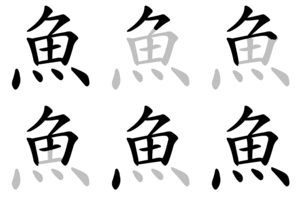 | |||
Han character
魚 (Kangxi radical 195, 魚+0, 11 strokes, cangjie input 弓田火 (NWF), four-corner 27336, composition ⿳⺈田灬)
- Kangxi radical #195, ⿂.
Derived characters
Related characters
References
- KangXi: page 1465, character 1
- Dai Kanwa Jiten: character 45956
- Dae Jaweon: page 1998, character 1
- Hanyu Da Zidian (first edition): volume 7, page 4674, character 1
- Unihan data for U+9B5A
Chinese
| trad. | 魚 | |
|---|---|---|
| simp. | 鱼 | |
| alternative forms | 𤉯 𤋳 𩵋 𮫬 | |
Glyph origin
| Historical forms of the character 魚 | |||
|---|---|---|---|
| Shang | Western Zhou | Shuowen Jiezi (compiled in Han) | Liushutong (compiled in Ming) |
| Oracle bone script | Bronze inscriptions | Small seal script | Transcribed ancient scripts |
 |
 |
 |
 |
Pictogram (象形) – a fish.
Etymology
From Proto-Sino-Tibetan *s-ŋja. Cognate with 漁 (OC *ŋa, “to fish”).
Pronunciation
Definitions
魚
Synonyms
Compounds
|
|
|
Descendants
References
- “魚”, in 漢語多功能字庫 (Multi-function Chinese Character Database), 香港中文大學 (the Chinese University of Hong Kong), 2014–
- “Entry #8109”, in 臺灣閩南語常用詞辭典 [Dictionary of Frequently-Used Taiwan Minnan] (in Chinese and Min Nan), Ministry of Education, R.O.C., 2011.
Japanese
Readings
- Go-on: ご (go)
- Kan-on: ぎょ (gyo, Jōyō)←ぎよ (gyo, historical)
- Kun: うお (uo, 魚, Jōyō)←うを (wo, 魚, historical); さかな (sakana, 魚, Jōyō)
- Nanori: い (i); いお (io)←いを (iwo, historical); お (o)←を (wo, historical); な (na)
Compounds
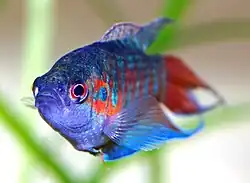
Derived terms
- 魚市場 (uo ichiba, “fish market”)
- 魚河岸 (uogashi, “riverside fish market”)
- 魚心 (uogokoro)
- うお座 (Uo-za)
- 魚印 (uojirushi)
- 魚釣り (uotsuri)
- 魚屋 (uoya)
- 青魚 (aouo)
- 活け魚 (ikeuo, “live fish and shellfish kept in a tank in a restaurant”)
- 海魚 (umiuo)
- 大魚 (ōuo)
- 鰹 (katsuo)
- 雷魚 (kaminariuo)
- 川魚 (kawauo, “river fish; freshwater fish”)
- 氷の魚 (kōri no uo)
- 山椒魚 (sanshōuo)
- 白魚 (shirauo, “icefish”)
- 棘魚 (togeuo, “stickleback fish”)
- 飛び魚 (tobiuo, “flying fish”)
- 針魚 (hariuo), 針魚 (hario)
- 針魚 (hariyo)
- 氷魚 (hiuo)
- 藻魚 (mouo)
Idioms
- 魚と水 (uo to mizu)
- 魚の木に登る如し (uo no ki ni noboru gotoshi)
- 魚の水を得たよう (uo no mizu o etayou)
- 魚の水を離れたよう (uo no mizu o hanaretayou)
Proverbs
- 魚の釜中に遊ぶが若し (uo no fuchū ni asobu ga gotoshi)
- 魚の目に水見えず (uo no me ni mizu miezu)
- 魚は鯛 (uo wa tai)
- 魚を得て筌を忘る (uo o ete uke o wasuru)
Etymology 2
| Kanji in this term |
|---|
| 魚 |
| いお Grade: 2 |
| irregular |
/uwo/ → /iwo/ → /io/
Alteration of older uo, appearing from roughly the Heian period.
Still used today in some dialects.[1]
Pronunciation
- IPA(key): [io̞]
Derived terms
- 魚亀 (iogame)
- 魚鋤 (iosuki)
- 魚捕り (iotori)
- 魚の目 (io no me), 魚目 (iome)
- 上げ魚 (ageio)
- 氷の魚 (kōri no io)
- 雀魚 (suzumeio)
- 針魚 (hariio)
- 干魚 (hiio)
- 藻魚 (moio)
Etymology 3
| Kanji in this term |
|---|
| 魚 |
| さかな Grade: 2 |
| kun’yomi |


Cognate with 肴 (sakana, “side dish of meat or vegetables usually served with alcoholic beverages”), itself a compound of Old Japanese-derived elements 酒 (saka, unbound apophonic form of sake2, “alcoholic beverage, especially sake”) + 肴, 菜, 魚 (na, “generic term for a side dish, especially vegetables, fish, or other meat”).[1]
Noun
魚 • (sakana)
- a fish, especially when used as food
- 庭で美味しい魚を食べた。
- Niwa de oishii sakana o tabeta.
- I ate a delicious fish in the garden.
- 2000 January 27, “レインボー・フィッシュ [Rainbow Fish]”, in Vol.7, Konami:
- 世にも珍しい七色の魚。捕まえるのはかなり難しい。
- Yonimo mezurashii nanairo no sakana. Tsukamaeru no wa kanari muzukashii.
- An extremely rare seven-colored fish. It is quite difficult to catch.
- 世にも珍しい七色の魚。捕まえるのはかなり難しい。
- 2011 May 14, “半魚獣・フィッシャービースト [Semi-Ichthyobestia Fisherbeast]”, in Beginner's Edition 1, Konami:
- 陸では獣のように、海では魚のように素早く攻撃する。
- Riku de wa kemono no yō ni, umi de wa sakana no yō ni subayaku kōgeki suru.
- Like a beast on land, like a fish in the sea, he attacks swiftly.
- 陸では獣のように、海では魚のように素早く攻撃する。
- 庭で美味しい魚を食べた。
- a side dish, specifically referring to fish
- Synonym: お菜 (okazu)
Usage notes
This is now the most common general word for fish in modern standard Japanese.
Derived terms
- 青魚 (aozakana)
- 生き魚 (ikizakana)
- 川魚 (kawazakana)
- 小魚 (kozakana)
- 下魚 (gezakana, “inferior fish, cheap fish”)
- 魚釣り (sakanatsuri)
- 魚屋 (sakanaya, “fishmonger, fish store/shop”)
- 魚河岸 (sakanagashi, “riverside fish market”)
- 塩魚 (shiozakana)
- 年取り魚 (toshitorizakana)
- 生魚 (namazakana)
- 煮魚 (nizakana)
- 干魚 (hizakana)
- 焼き魚 (yakizakana)
Pronunciation
- IPA(key): [ɡʲo̞]
Derived terms
- 魚影 (gyoei)
- 魚塩 (gyoen)
- 魚価 (gyoka)
- 魚介 (gyokai)
- 魚目 (gyomoku)
- 魚綾 (gyoryū)
- 魚綾 (gyoryō), 魚陵 (gyoryō), 魚竜 (gyoryō)
- 魚鱗 (gyorin)
- 魚類 (gyorui)
- 海魚 (kaigyo)
- 活魚 (katsugyo)
- 乾魚 (kangyo)
- 金魚 (kingyo)
- 水魚 (suigyo)
- 成魚 (seigyo)
- 鮮魚 (sengyo)
- 大魚 (taigyo)
- 稚魚 (chigyo)
- 人魚 (ningyo)
- 白魚 (hakugyo)
- 木魚 (mokugyo)
- 養魚 (yōgyo)
- 熱帯魚 (nettaigyo)
Korean
Etymology
From Middle Chinese 魚 (MC ŋɨʌ).
| Historical Readings | ||
|---|---|---|
| Dongguk Jeongun Reading | ||
| Dongguk Jeongun, 1448 | ᅌᅥᆼ (Yale: ngè) | |
| Middle Korean | ||
| Text | Eumhun | |
| Gloss (hun) | Reading | |
| Hunmong Jahoe, 1527 | 고기〮 (Yale: kwòkí) | 어 (Yale: è) |
Pronunciation
- (SK Standard/Seoul) IPA(key): [ʌ̹]
- Phonetic hangul: [어]
Compounds
Okinawan
Kanji
魚
Compounds
- 飛魚 (tubū)
Etymology 1
/ʔiu/ → /ʔiːu/ → /ʔiju/
Shift from iu below.
Derived terms
- 魚売やー (iyu uyā)
- 魚肉 (iyushishi)
- 魚天麩羅 (iyu tinpura)
- 魚ぬ目 (iyu nu mī)
- 魚市 (iyumachi, “fishmarket”)
- 鯉魚 (kūiyu)
- 下がい魚 (sagaīyu, “fish that is no longer fresh”)
- 田魚 (tāiyu, “crucian carp”)
- 太刀ぬ魚 (tachi nu iyu)
Etymology 2
Cognate with Old Japanese 魚 (uwo).
Compare modern dialectal mainland Japanese 魚 (io), first appearing in print and becoming common from the Heian period, but likely extant earlier.
Pronunciation
- IPA(key): [ʔiu]
References
- “いう・いゆ【魚】” in JLect - Japonic Languages and Dialects Database Dictionary, 2019.
Old Japanese
Etymology 1
(This etymology is missing or incomplete. Please add to it, or discuss it at the Etymology scriptorium.)
Descendants
- Japanese: 魚 (uo, io)
Etymology 2
Cognate with 肴 (na, “side dish”),[1][2][3] by extension that can refer to any kind of meat.
Noun
魚 (na) (kana な)
- a fish, especially when used as food
- c. 759, Man'yōshū (book 5, poem 869, first variant), text here
- 多良志比賣可尾能美許等能奈都良須等美多多志世利斯 伊志遠多礼美吉
- tarasi pi1me1 kami2 no2 mi-ko2to2 no2 na turasu to2 mi1-tatasi serisi isi wo tare mi1ki1
- Who saw the rock that rose up against us as we tried to catch the fish [or “catching sweetfishes”] belonging to the empress?
- c. 759, Man'yōshū (book 5, poem 869, first variant), text here
Descendants
- Japanese: 魚 (sakana)
References
- 1988, 国語大辞典(新装版) (Kokugo Dai Jiten, Revised Edition) (in Japanese), Tōkyō: Shogakukan
- 1995, 大辞泉 (Daijisen) (in Japanese), Tōkyō: Shogakukan, →ISBN
- 2006, 大辞林 (Daijirin), Third Edition (in Japanese), Tōkyō: Sanseidō, →ISBN
Vietnamese
Han character
魚: Hán Việt readings: ngư (
魚: Nôm readings: ngơ[1][2][3][4], ngư[1][2][3], ngớ[1][4], ngừ[3][4]
References
- Nguyễn (2014).
- Nguyễn et al. (2009).
- Trần (2004).
- Hồ (1976).
Yonaguni
Pronunciation
- IPA(key): [iju]