刁
| ||||||||
Translingual
| Stroke order | |||
|---|---|---|---|
 | |||
Han character
刁 (Kangxi radical 18, 刀+0, 2 strokes, cangjie input 尸一 (SM), four-corner 17120, composition ⿹𠃌㇀)
References
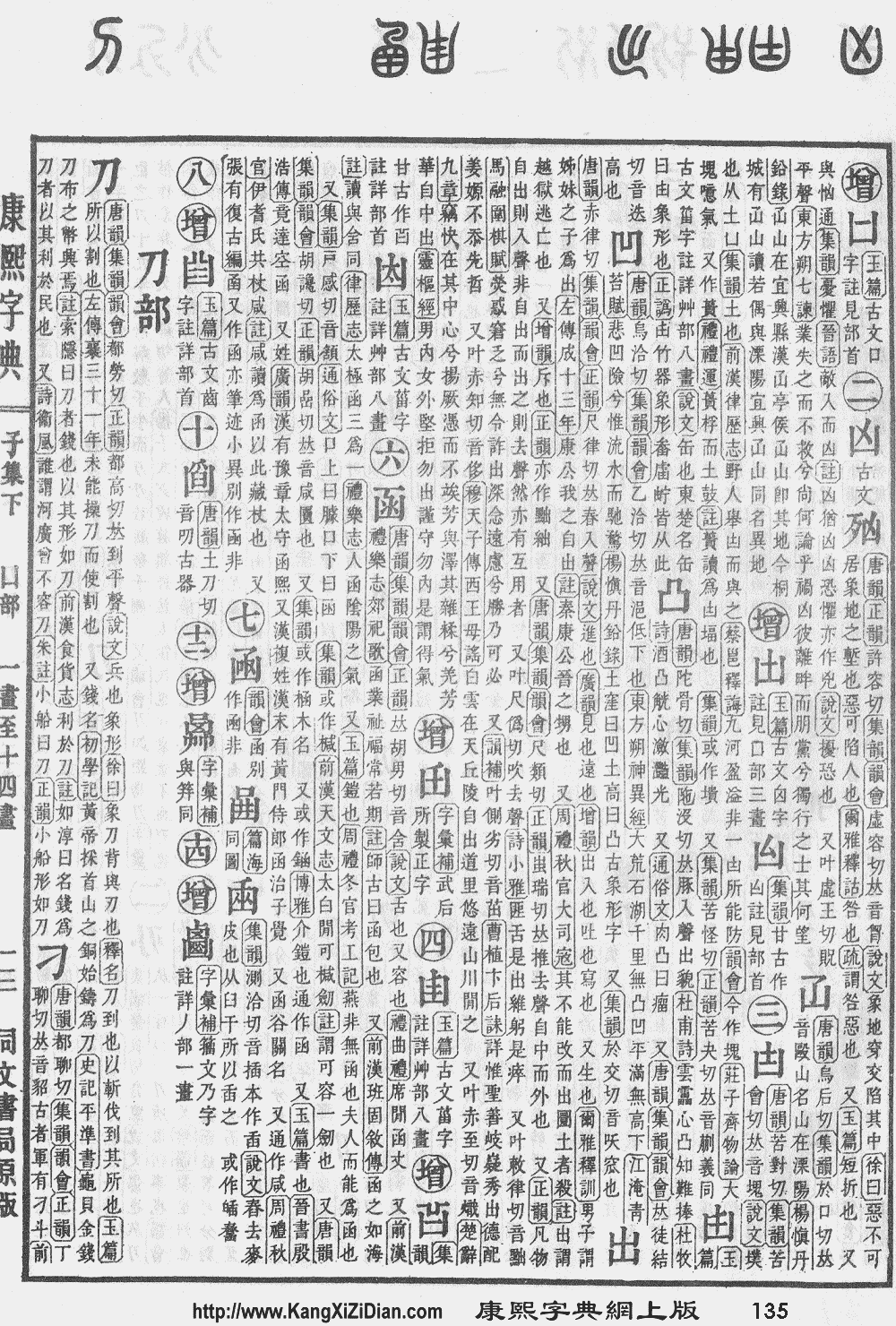
- KangXi: page 135, character 25
- Dai Kanwa Jiten: character 1846
- Dae Jaweon: page 304, character 5
- Hanyu Da Zidian (first edition): volume 1, page 320, character 2
- Unihan data for U+5201
Chinese
| simp. and trad. |
刁 | |
|---|---|---|
Glyph origin
Characters in the same phonetic series (刀) (Zhengzhang, 2003)
| Old Chinese | |
|---|---|
| 刀 | *taːw |
| 忉 | *taːw |
| 魛 | *taːw |
| 舠 | *taːw |
| 朷 | *taːw, *moːɡ |
| 叨 | *tuːw, *l̥ʰaːw |
| 倒 | *taːwʔ, *taːws |
| 到 | *taːws |
| 菿 | *taːws, *rtaːwɢ |
| 鞀 | *deːw |
| 鳭 | *rteːw, *teːw |
| 灱 | *hreːw |
| 菬 | *sdew, *tjewʔ |
| 超 | *tʰew |
| 怊 | *tʰew, *tʰjew |
| 欩 | *tʰew |
| 召 | *dews, *djews |
| 昭 | *tjew |
| 招 | *tjew |
| 鉊 | *tjew |
| 沼 | *tjewʔ |
| 照 | *tjews |
| 詔 | *tjews |
| 炤 | *tjews |
| 弨 | *tʰjew, *tʰjewʔ |
| 眧 | *tʰjewʔ |
| 韶 | *djew |
| 佋 | *djew, *djewʔ |
| 軺 | *djew, *lew |
| 玿 | *djew |
| 柖 | *djew |
| 紹 | *djewʔ |
| 袑 | *djewʔ |
| 綤 | *djewʔ |
| 邵 | *djews |
| 劭 | *djews |
| 卲 | *djews |
| 刁 | *teːw |
| 芀 | *teːw, *deːw |
| 貂 | *teːw |
| 蛁 | *teːw |
| 迢 | *deːw |
| 苕 | *deːw |
| 髫 | *deːw |
| 岧 | *deːw |
Variant of 刀 (dāo).
Pronunciation
Definitions
刁
Synonyms
- (treacherous):
Synonyms of 刁
Compounds
Etymology 2
| For pronunciation and definitions of 刁 – see 凋 (“to wither; to fall; to exhaust; to fade; etc.”). (This character, 刁, is the second-round simplified form of 凋.) |
Notes:
|
Etymology 3
| For pronunciation and definitions of 刁 – see 碉 (“room made of stone; pillbox; blockhouse”). (This character, 刁, is the second-round simplified form of 碉.) |
Notes:
|
Etymology 4
| For pronunciation and definitions of 刁 – see 雕 (“to engrave; to inlay; to carve; carving; etc.”). (This character, 刁, is the second-round simplified form of 雕.) |
Notes:
|
Japanese
Kanji
刁
- This term needs a translation to English. Please help out and add a translation, then remove the text
{{rfdef}}.
Readings
- Go-on: ちょう (chō)←てう (teu, historical)
- Kan-on: ちょう (chō)←てう (teu, historical)
Korean
Hanja
刁 (eum 조 (jo))
- This term needs a translation to English. Please help out and add a translation, then remove the text
{{rfdef}}.
Vietnamese
This article is issued from Wiktionary. The text is licensed under Creative Commons - Attribution - Sharealike. Additional terms may apply for the media files.