劫
See also: 刦
| ||||||||
Translingual
Han character
劫 (Kangxi radical 19, 力+5, 7 strokes, cangjie input 土戈大尸 (GIKS) or X土戈大尸 (XGIKS), four-corner 47720, composition ⿰去力)
References
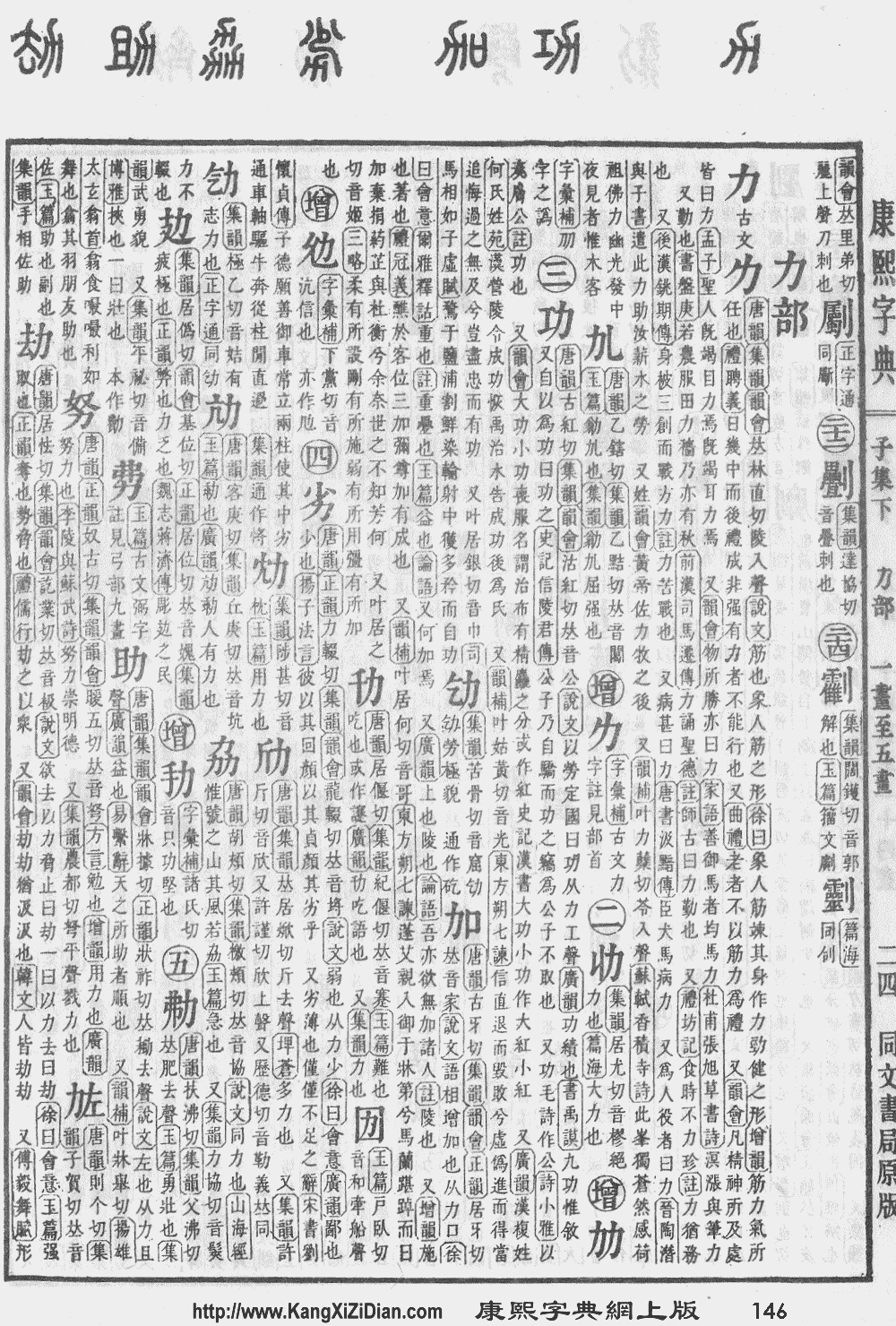
- KangXi: page 146, character 30
- Dai Kanwa Jiten: character 2316
- Dae Jaweon: page 331, character 3
- Hanyu Da Zidian (first edition): volume 1, page 367, character 12
- Unihan data for U+52AB
Chinese
| simp. and trad. |
劫 | |
|---|---|---|
| alternative forms | ||
Glyph origin
| Historical forms of the character 劫 | |
|---|---|
| Shuowen Jiezi (compiled in Han) | Liushutong (compiled in Ming) |
| Small seal script | Transcribed ancient scripts |
 |
 |
Characters in the same phonetic series (去) (Zhengzhang, 2003)
Phono-semantic compound (形聲, OC *kab, *kab) : phonetic 去 (OC *kʰaʔ, *kʰas) + semantic 力 (“power, force”)
Pronunciation
Definitions
劫
Synonyms
- (to coerce):
- (disaster):
Synonyms of 劫
|
Compounds
Derived terms from 劫
Japanese
Readings
- Go-on: こう (kō)←こふ (kofu, historical)
- Kan-on: きょう (kyō)←けふ (kefu, historical)
- Kan’yō-on: ごう (gō)←ごふ (gofu, historical)
- Kun: おびやかす (obiyakasu, 劫かす)
Compounds
Compounds
- 劫火 (kōka)
- 曠劫 (kōgō)
- 劫濁 (kōjoku)
- 劫奪 (kōdatsu)
- 劫初 (gōsho)
- 劫盗 (gōtō)
- 劫末 (gōmatsu)
- 劫掠, 劫略 (gōryaku)
- 永劫 (eigō)
- 壊劫 (ekō)
- 億劫 (okkō), 億劫 (okkū)
- 空劫 (kūkō)
- 久遠劫 (kuongō)
- 倶胝劫 (kuteikō)
- 減劫 (genkō)
- 賢劫 (kengō), 賢劫 (gengō)
- 五劫思惟 (gokō shiyui)
- 三阿僧祇劫 (san a sōgi kō)
- 四劫 (shikō)
- 住劫 (jūkō)
- 小劫 (shōkō)
- 成劫 (jōkō), 成劫 (jōgō)
- 塵劫 (jinkō), 塵劫 (jingō), 塵点劫 (jindengō)
- 増劫 (zōkō)
- 多生劫 (tashōgō)
- 万劫 (mangō), 万劫 (bangō)
- 無量劫 (muryōgō)
- 歴劫 (ryakkō)
Etymology 1
| Kanji in this term |
|---|
| 劫 |
| こう Jinmeiyō |
| on’yomi |
/kopu/ → /kofu/ → */kowu/ → /koː/
From Middle Chinese 劫 (MC kɨɐp̚), short form of 劫波 (MC kɨɐp̚ puɑ), itself a transliteration of Sanskrit कल्प (kalpa, “aeon”).
Derived terms
Derived terms
- 劫を経る (kō o heru)
- 劫﨟, 劫臘 (kōrō)
- 億万劫 (okumangō)
- 時劫 (jikō)
Proverbs
- 烏賊の甲より年の劫 (ika no kō yori toshi no kō)
- 亀の甲より年の劫 (kame no kō yori toshi no kō)
Pronunciation 2
Noun
- (go) a position in which two alternating stones can be captured and recaptured indefinitely
Derived terms
Derived terms
- 劫材 (kōzai)
- 劫立て (kōdate)
- 劫種 (kōdane)
Etymology 2
| Kanji in this term |
|---|
| 劫 |
| ごう Jinmeiyō |
| on’yomi |
/ɡopu/ → /ɡofu/ → */ɡowu/ → /ɡoː/
Possibly a shift from kō above. (Can this(+) etymology be sourced?)
Derived terms
Derived terms
- 劫罰 (gōbatsu)
- 時劫 (jigō)
- 多劫 (tagō)
Korean
Etymology
From Middle Chinese 劫 (MC kɨɐp̚). Recorded as Middle Korean 刼/겁〮 (kép) (Yale: kep) in Hunmong Jahoe (訓蒙字會 / 훈몽자회), 1527.
Vietnamese
This article is issued from Wiktionary. The text is licensed under Creative Commons - Attribution - Sharealike. Additional terms may apply for the media files.