呵
See also: 訶
| ||||||||
Translingual
Han character
呵 (Kangxi radical 30, 口+5, 8 strokes, cangjie input 口一弓口 (RMNR), four-corner 61020, composition ⿰口可)
Derived characters
- 𦱕, 𭊀
References
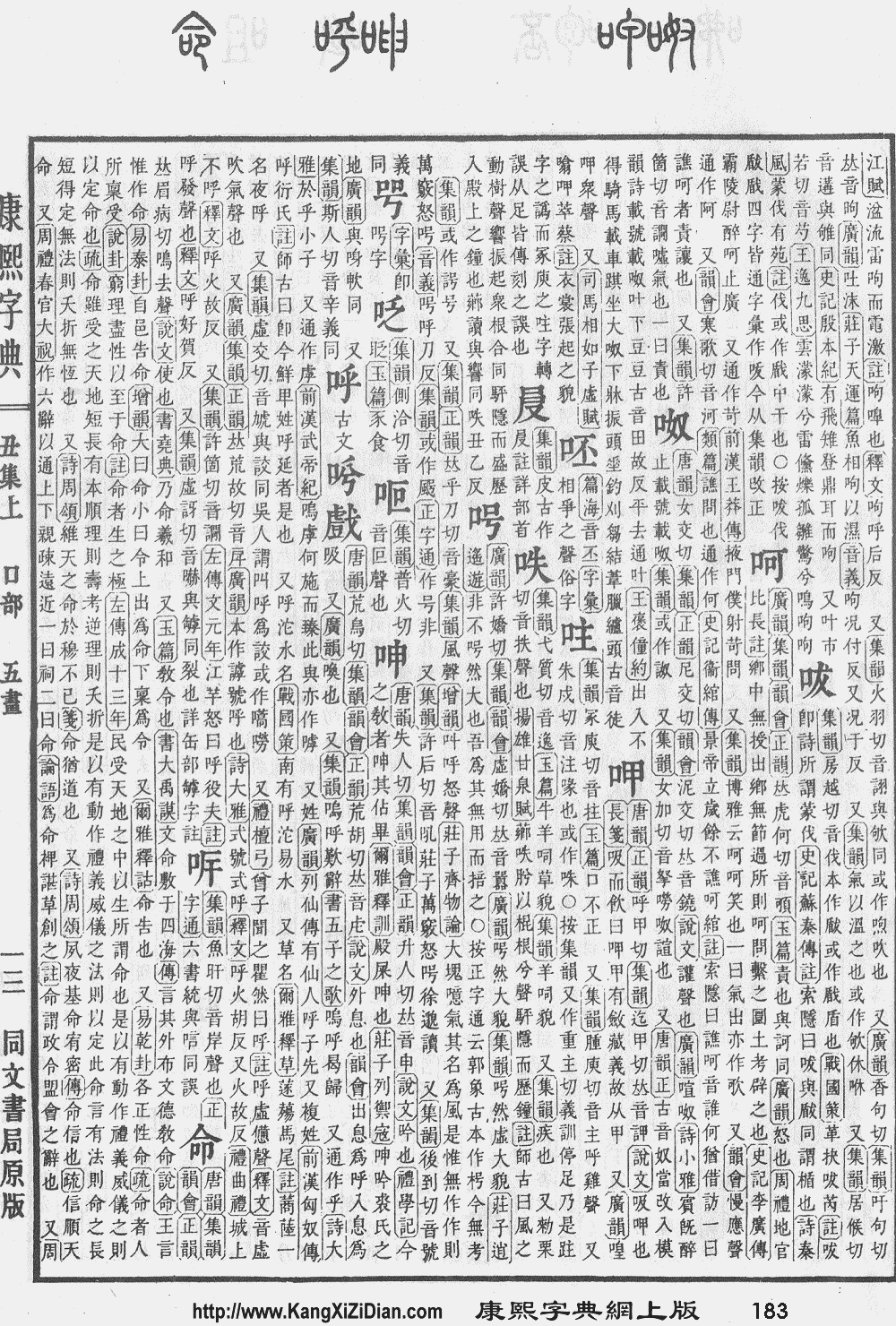
- KangXi: page 183, character 2
- Dai Kanwa Jiten: character 3459
- Dae Jaweon: page 402, character 3
- Hanyu Da Zidian (first edition): volume 1, page 598, character 10
- Unihan data for U+5475
Chinese
| simp. and trad. |
呵 | |
|---|---|---|
Glyph origin
Characters in the same phonetic series (可) (Zhengzhang, 2003)
| Old Chinese | |
|---|---|
| 砢 | *ɡ·raːlʔ |
| 柯 | *kaːl |
| 菏 | *kaːl, *ɡaːl |
| 牁 | *kaːl |
| 滒 | *kaːl |
| 哥 | *kaːl |
| 歌 | *kaːl |
| 謌 | *kaːl |
| 鴚 | *kaːl |
| 哿 | *kaːlʔ |
| 舸 | *kaːlʔ |
| 笴 | *kaːlʔ, *kaːnʔ |
| 軻 | *kʰaːl, *kʰaːlʔ, *kʰaːls |
| 珂 | *kʰaːl |
| 可 | *kʰaːlʔ |
| 岢 | *kʰaːlʔ |
| 坷 | *kʰaːlʔ, *kʰaːls |
| 蚵 | *kʰaːls, *ɡaːl |
| 呵 | *qʰaːl, *qʰaːls |
| 訶 | *qʰaːl |
| 抲 | *qʰaːl |
| 荷 | *qʰaːls, *ɡaːl, *ɡaːlʔ |
| 何 | *ɡaːl, *ɡaːlʔ |
| 河 | *ɡaːl |
| 苛 | *ɡaːl |
| 魺 | *ɡaːl |
| 袔 | *ɡaːls |
| 阿 | *qaːl |
| 妸 | *qaːl, *qaːlʔ |
| 疴 | *qaːl, *kʰraːls |
| 鈳 | *qaːl |
| 娿 | *qaːl, *qaːlʔ |
| 痾 | *qaːl |
| 跒 | *kʰraːlʔ |
| 閜 | *qʰraːlʔ |
Phono-semantic compound (形聲, OC *qʰaːl, *qʰaːls) : semantic 口 + phonetic 可 (OC *kʰaːlʔ).
Pronunciation 1
Definitions
呵
Compounds
Pronunciation 2
Compounds
Pronunciation 3
Definitions
呵
- Used in transcription.
Pronunciation 4
Pronunciation 5
Pronunciation 6
Pronunciation 7
Pronunciation 8
Definitions
呵
- (Cantonese) Used to point out something that one would like confirmation for. (Can we verify(+) this sense?)
- 都OK呵 [Cantonese] ― dou1 ou1 kei1 ho1 [Jyutping] ― should be OK, yeah?
- 曾江即示意不會再講,謝賢再說:「你唔會怪我架呵?打吓都唔會怪架呵?」隨即一巴掌打落曾江度。 [Cantonese, trad.]
- From:
- Cang4 Gong1 zik1 si6 ji3 bat1 wui5 zoi3 gong2, Ze6 Jin4 zoi3 syut3: “Nei5 m4 wui5 gwaai3 ngo5 gaa3 ho1? daa2 haa2 dou1 m4 wui5 gwaai3 gaa3 ho1?” Ceoi4 zik1 jat1 baa1 zoeng2 daa2 lok6 Cang4 Gong1 dou6. [Jyutping]
- Tsang Kong immediately displayed a lack of willingness to continue talking, so Tse Yin said: "You won't blame me, right? You wont't blame me if I give you a slap, right?" and immediately gave Tsang Kong a slap on the cheek.
曾江即示意不会再讲,谢贤再说:“你唔会怪我架呵?打吓都唔会怪架呵?”随即一巴掌打落曾江度。 [Cantonese, simp.]
Japanese
Korean
Hanja
呵 • (ga) (hangeul 가, revised ga, McCune–Reischauer ka)
- This term needs a translation to English. Please help out and add a translation, then remove the text
{{rfdef}}.
Vietnamese
This article is issued from Wiktionary. The text is licensed under Creative Commons - Attribution - Sharealike. Additional terms may apply for the media files.