擬
| ||||||||
Translingual
Han character
擬 (Kangxi radical 64, 手+14, 17 strokes, cangjie input 手心大人 (QPKO), four-corner 57081, composition ⿰扌疑)
Related characters
References
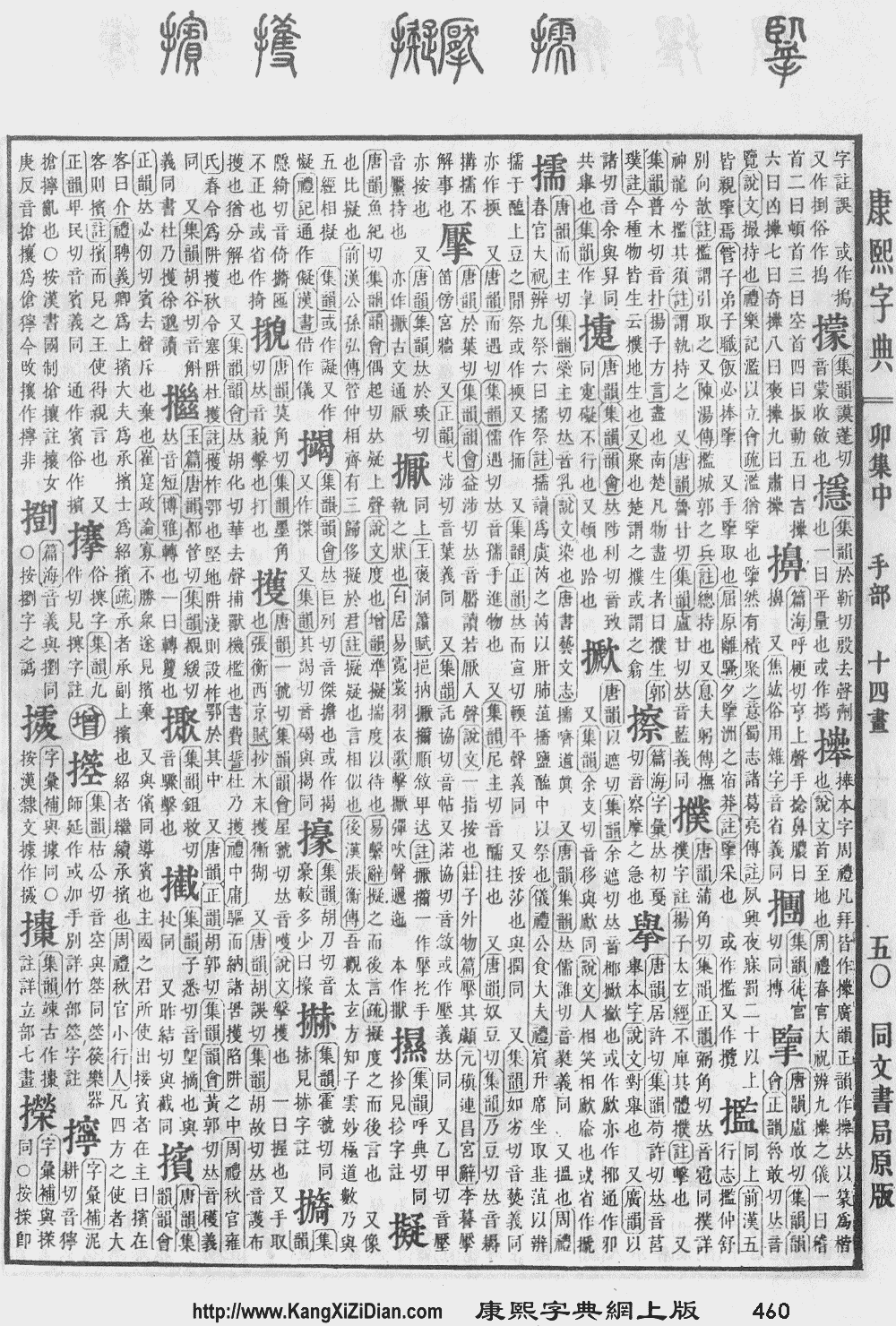
- KangXi: page 460, character 17
- Dai Kanwa Jiten: character 12870
- Dae Jaweon: page 809, character 6
- Hanyu Da Zidian (first edition): volume 3, page 1975, character 4
- Unihan data for U+64EC
Chinese
| trad. | 擬 | |
|---|---|---|
| simp. | 拟 | |
| alternative forms | 儗/拟 | |
Glyph origin
Characters in the same phonetic series (疑) (Zhengzhang, 2003)
Phono-semantic compound (形聲, OC *ŋɯʔ) : semantic 扌 (“hand”) + phonetic 疑 (OC *ŋɯ).
Pronunciation
Definitions
擬
Synonyms
- (to compare):
Synonyms of 擬
- (to imitate):
- (to plan):
Synonyms of 擬
- (to draft):
- (to presuppose):
Synonyms of 擬
Compounds
Derived terms from 擬
References
- “擬”, in 漢語多功能字庫 (Multi-function Chinese Character Database), 香港中文大學 (the Chinese University of Hong Kong), 2014–
Japanese
Readings
Korean
Etymology
From Middle Chinese 擬 (MC ŋɨX).
| Historical readings |
|---|
|
Pronunciation
- (SK Standard/Seoul) IPA(key): [ɰi]
- Phonetic hangul: [의]
Compounds
Compounds
- 모의 (模擬, moui, “imitation; simulation”)
- 의성 (擬聲, uiseong, “imitation sound”)
- 의성어 (擬聲語, uiseong'eo, “onomatopoeia”)
- 의태어 (擬態語, uitaeeo, “ideophone”)
- 의인 (擬人, uiin, “personification”)
- 의인화 (擬人化, uiinhwa, “anthropomorphization”)
Vietnamese
This article is issued from Wiktionary. The text is licensed under Creative Commons - Attribution - Sharealike. Additional terms may apply for the media files.