淨
| ||||||||
Translingual
| Traditional | 淨 |
|---|---|
| Shinjitai | 浄 |
| Simplified | 净 |
Han character
淨 (Kangxi radical 85, 水+8, 11 strokes, cangjie input 水月尸木 (EBSD), four-corner 32157, composition ⿰氵爭)
Derived characters
- 𪸊
References
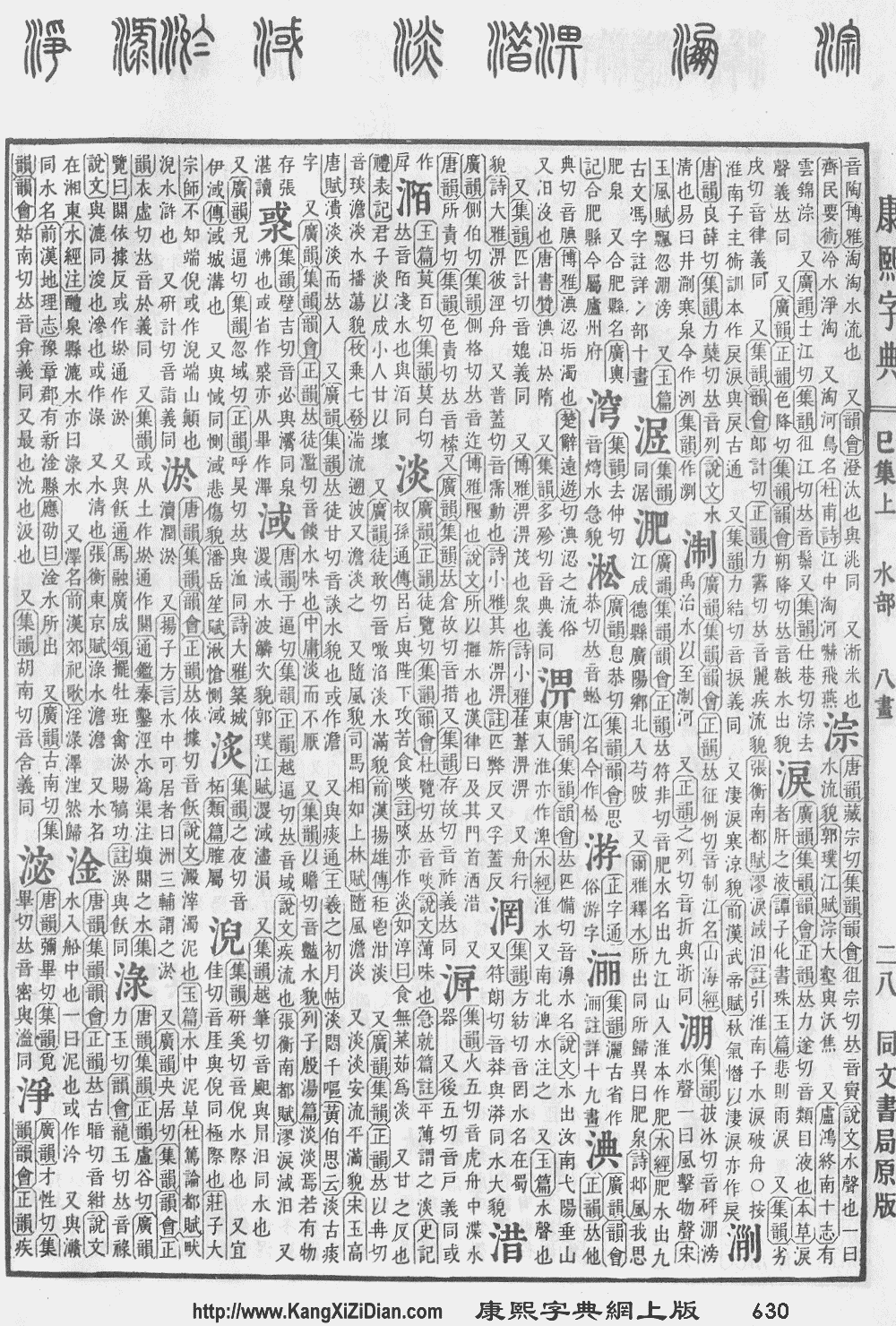
- KangXi: page 630, character 27
- Dai Kanwa Jiten: character 17669
- Dae Jaweon: page 1033, character 7
- Hanyu Da Zidian (first edition): not present, would follow volume 3, page 1655, character 2
- Unihan data for U+6DE8
Chinese
| trad. | 淨/净* | |
|---|---|---|
| simp. | 净* | |
| alternative forms | 浄 凈 㵾/𪷍 瀞 𩓞 | |
Glyph origin
Pronunciation
Definitions
淨
- clean; unspoilt
- (Cantonese) pure; with nothing else
- to clean; to cleanse
- finished; with nothing left
- net
- only; merely; nothing but
- 係做木匠、在前開過一間細木舖、後來亦關唨咯、而家靜靠同人做工夫嚟過日子、 [Cantonese, trad.]
- From: 粵音指南·上卷, 卷之一 應對須知
- hai6 zou6 muk6 zoeng6-2, zoi6 cin4 hoi1 gwo3 jat1 gaan1 sai3 muk6 pou3-2, hau6 loi4 jik6 gwaan1 zo2 lo3, ji4 gaa1 zing6 kaau3 tung4 jan4 zou6 gung1 fu1 lai4 gwo3 jat6 zi2, [Jyutping]
- He used to work as a woodworker; he had operated a small wood shop, and later closed it as well; currently he only relies on working for other people to make a living.
系做木匠、在前开过一间细木铺、后来亦关唨咯、而家静靠同人做工夫嚟过日子、 [Cantonese, simp.]
- all; all the time
- (opera) painted-face role
Synonyms
Dialectal synonyms of 淨角 (“painted-face role”) [map]
| Variety | Location | Words |
|---|---|---|
| Formal (Written Standard Chinese) | 淨, 淨角 | |
| Mandarin | Beijing | 花臉兒, 花臉 |
| Harbin | 花臉 | |
| Yantai (Muping) | 花臉 | |
| Jinan | 淨, 花臉 | |
| Luoyang | 黑頭 | |
| Wanrong | 花臉 | |
| Xi'an | 花臉 | |
| Lanzhou | 花臉 | |
| Ürümqi | 花臉 | |
| Wuhan | 花臉 | |
| Chengdu | 花臉 | |
| Guiyang | 花臉, 大花臉 | |
| Liuzhou | 淨角, 花臉 | |
| Xuzhou | 花臉 | |
| Yangzhou | 花臉 | |
| Nanjing | 花臉 | |
| Cantonese | Dongguan | 大花面 |
| Gan | Nanchang | 大花臉 |
| Lichuan | 花面 | |
| Pingxiang | 花臉 | |
| Hakka | Meixian | 淨 |
| Yudu | 大花面 | |
| Jin | Xinzhou | 唱黑哩 |
| Min Dong | Fuzhou | 花面 |
| Min Nan | Xiamen | 花面, 大淨, 淨 |
| Zhangzhou | 大淨 | |
| Southern Pinghua | Nanning (Tingzi) | 花面, 大花面 |
| Wu | Shanghai | 大花面 |
| Suzhou | 大面 | |
| Danyang | 大面 | |
| Hangzhou | 大花臉, 大面 | |
| Ningbo | 大花臉 | |
| Jinhua | 大花面 | |
| Xiang | Changsha | 花臉 |
Compounds
Derived terms from 淨
|
|
|
Etymology 2
| For pronunciation and definitions of 淨 – see 埩 (“moat around the gate of the capital of ancient state of Lu”). (This character, 淨, is a variant form of 埩.) |
Pronunciation
Japanese
| 浄 | |
| 淨 |
Kanji
淨
(“Jinmeiyō” kanji used for names, kyūjitai kanji, shinjitai form 浄)
- This term needs a translation to English. Please help out and add a translation, then remove the text
{{rfdef}}.
Korean
Hanja
淨 • (jeong) (hangeul 정)
- This term needs a translation to English. Please help out and add a translation, then remove the text
{{rfdef}}.
Vietnamese
This article is issued from Wiktionary. The text is licensed under Creative Commons - Attribution - Sharealike. Additional terms may apply for the media files.