才

See also: 扌, オ, and 孑
才 U+624D, 才
CJK UNIFIED IDEOGRAPH-624D
← 扌
[U+624C]
CJK Unified Ideographs 扎 →
[U+624E]

Translingual

Stroke order

Han character

才 (Kangxi radical 64, 手+0, 3 strokes, cangjie input 木竹 (DH), four-corner 40200, composition ⿹𬺰丿(GHTV) or ⿻𬺰丿(JK))

Derived characters

References

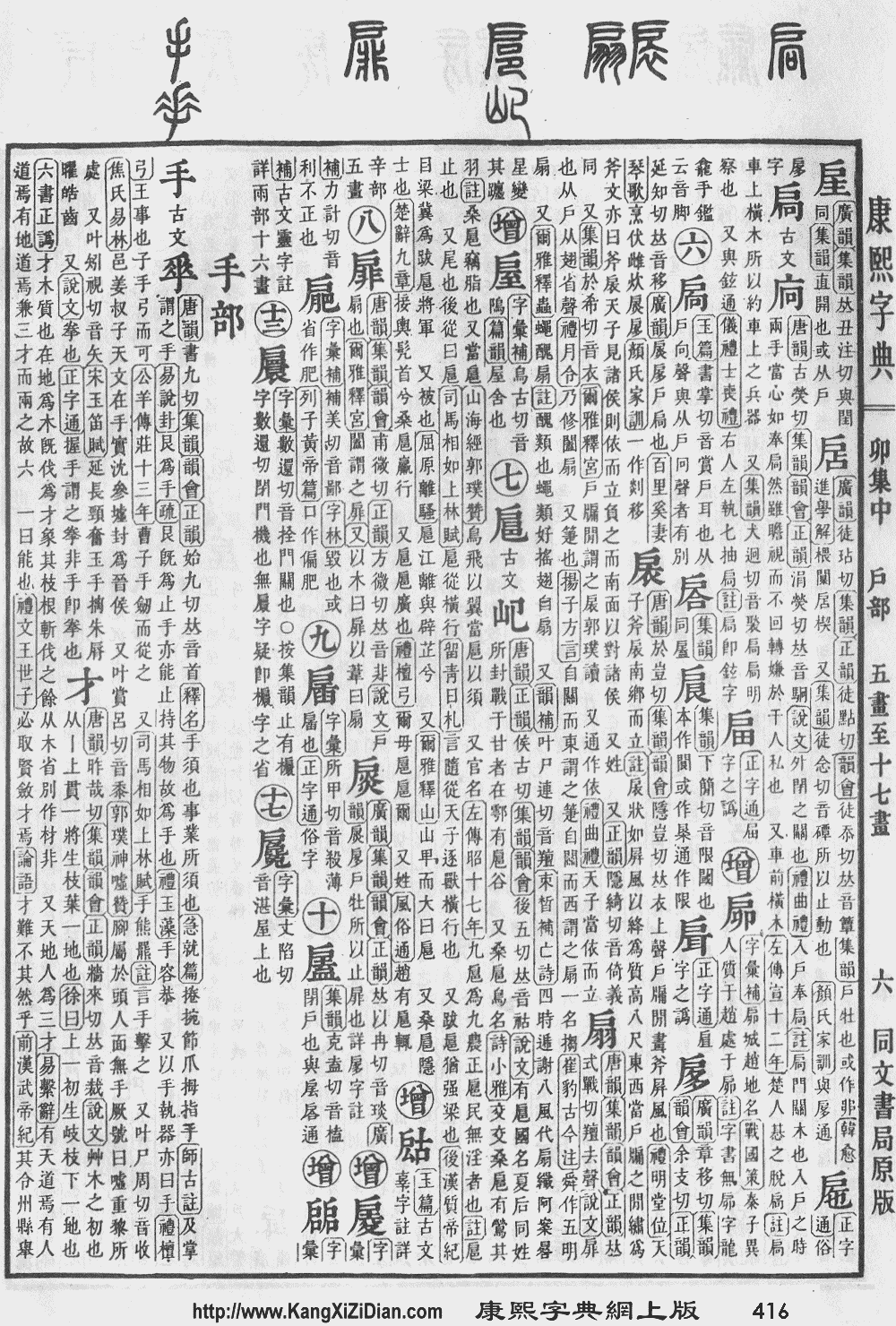
  • KangXi: page 416, character 30
  • Dai Kanwa Jiten: character 11769
  • Dae Jaweon: page 763, character 1
  • Hanyu Da Zidian (first edition): volume 3, page 1824, character 2
  • Unihan data for U+624D

Chinese

Glyph origin

Historical forms of the character 才
Shang Western Zhou Shuowen Jiezi (compiled in Han) Liushutong (compiled in Ming)
Oracle bone script Bronze inscriptions Small seal script Transcribed ancient scripts

Pictogram (象形) – sprouting of seeds.

Etymology 1

simp. and trad.
才

From Proto-Sino-Tibetan *tsa ~ za (“child, offspring, relatives; to come forth (as child at birth); to love; loving”) (STEDT; Schuessler, 2007). "Birth" and "natural characteristic / endowments" are semantically connected, compare 生 (OC *sʰleːŋ, *sreŋs, “live, give birth”) and its derivative 性 (OC *sleŋs, “nature; character; personality; quality”) & 姓 (OC *sleŋs, “family name”).

Derivatives: 材 (OC *zlɯː, “material; timber”), 財 (OC *zlɯː, “riches; property; money”).

Pronunciation


Note:
  • cài - vernacular;
  • chài - literary (奴才);
  • còi - vernacular (秀才).
Note:
  • châi - vernacular;
  • chhâi - literary (classifier).
Note: zai5 - used in 秀才.

Rime
Character 才
Reading # 1/2
Initial (聲) 從 (15)
Final (韻) 咍 (41)
Tone (調) Level (Ø)
Openness (開合) Open
Division (等) I
Fanqie 昨哉切
Baxter dzoj
Reconstructions
Zhengzhang
Shangfang
/d͡zʌi/
Pan
Wuyun
/d͡zəi/
Shao
Rongfen
/d͡zɒi/
Edwin
Pulleyblank
/d͡zəj/
Li
Rong
/d͡zᴀi/
Wang
Li
/d͡zɒi/
Bernard
Karlgren
/d͡zʱɑ̆i/
Expected
Mandarin
Reflex
cái
Expected
Cantonese
Reflex
coi4
Baxter–Sagart system 1.1 (2014)
Character 才
Reading # 1/1
Modern
Beijing
(Pinyin)
cái
Middle
Chinese
‹ dzoj ›
Old
Chinese
/*[dz]ˁə/
English talent, ability

Notes for Old Chinese notations in the Baxter–Sagart system:

* Parentheses "()" indicate uncertain presence;
* Square brackets "[]" indicate uncertain identity, e.g. *[t] as coda may in fact be *-t or *-p;
* Angle brackets "<>" indicate infix;
* Hyphen "-" indicates morpheme boundary;

* Period "." indicates syllable boundary.
Zhengzhang system (2003)
Character 才
Reading # 1/2
No. 1061
Phonetic
component
才
Rime
group
之
Rime
subdivision
0
Corresponding
MC rime
裁
Old
Chinese
/*zlɯː/

Definitions

才

  1. ability; gift; talent; capability
    alt. forms: 材 (cái)
  2. talented person; talent
  3. one with a certain status or background
  4. Alternative form of 材 (cái, “material”).
  5. (Min Nan) Alternative form of 材 (“classifier for volume (of wood) and area (of paper, glass, stone, curtain, etc.)”).
  6. a surname

Compounds

Etymology 2

trad. 才/纔*
simp. 才

Pronunciation


Note:
  • chăi - vernacular;
  • chài - literary.

Rime
Character 才 才
Reading # 1/2 2/2
Initial (聲) 從 (15) 從 (15)
Final (韻) 咍 (41) 咍 (41)
Tone (調) Level (Ø) Departing (H)
Openness (開合) Open Open
Division (等) I I
Fanqie 昨哉切 昨代切
Baxter dzoj dzojH
Reconstructions
Zhengzhang
Shangfang
/d͡zʌi/ /d͡zʌiH/
Pan
Wuyun
/d͡zəi/ /d͡zəiH/
Shao
Rongfen
/d͡zɒi/ /d͡zɒiH/
Edwin
Pulleyblank
/d͡zəj/ /d͡zəjH/
Li
Rong
/d͡zᴀi/ /d͡zᴀiH/
Wang
Li
/d͡zɒi/ /d͡zɒiH/
Bernard
Karlgren
/d͡zʱɑ̆i/ /d͡zʱɑ̆iH/
Expected
Mandarin
Reflex
cái zài
Expected
Cantonese
Reflex
coi4 zoi6
Zhengzhang system (2003)
Character 才 才
Reading # 1/2 2/2
No. 1061 1220
Phonetic
component
才 才
Rime
group
之 之
Rime
subdivision
0 0
Corresponding
MC rime
裁 載
Old
Chinese
/*zlɯː/ /*zlɯːs/

Definitions

才

  1. only; just; merely
    教室裡才五個人。/教室里才五个人。  ―  Jiàoshì lǐ cái wǔ ge rén.  ―  There are only five people in the classroom.
    1. Used in the 才……就…… structure; only; just
      才五點鐘他就起床了。 [MSC, trad.]
      才五点钟他就起床了。 [MSC, simp.]
      Cái wǔ diǎnzhōng tā jiù qǐchuáng le. [Pinyin]
      It's only five o'clock, yet he has already got up.
  2. only a short while ago; just
    我才來,錯過什麼了嗎? [MSC, trad.]
    我才来,错过什么了吗? [MSC, simp.]
    Wǒ cái lái, cuòguò shénme le ma? [Pinyin]
    I just arrived. What did I miss?
    Synonym: 剛/刚 (gāng)
  3. only after; only then; not ... until
    她鎖上所有的窗戶才去睡覺。 [MSC, trad.]
    她锁上所有的窗户才去睡觉。 [MSC, simp.]
    Tā suǒ shàng suǒyǒu de chuānghù cái qù shuìjiào. [Pinyin]
    She went to sleep only after locking all the windows.
    你怎麼現在才到。我等了一個多小時了。 [MSC, trad.]
    你怎么现在才到。我等了一个多小时了。 [MSC, simp.]
    Nǐ zěnme xiànzài cái dào. Wǒ děng le yī ge duō xiǎoshí le. [Pinyin]
    Why didn't you come until now? I've been waiting for more than an hour.
  4. Used to emphasize that something is/is not.
    我才是張三。/我才是张三。  ―  Wǒ cái shì Zhāng Sān.  ―  I'm Zhang San (not that some else is Zhang San).
    我才沒有騙人。/我才没有骗人。  ―  Wǒ cái méiyǒu piànrén.  ―  I'm not lying.

Synonyms

Compounds

Etymology 3

simp. and trad.
才
alternative forms 乍 Min Dong
則/则
即
者
隻/只

Possibly from 正 (“just”) (Taiwan MoE).

Pronunciation


Definitions

才 (Min)

  1. only; merely
  2. just; just now; a moment ago
    才看𡅏電影。 [Min Dong, trad.]
    才看𡅏电影。 [Min Dong, simp.]
    Ciáh káng lā̤ diêng-īng. / [t͡siɑʔ²⁴ kʰɑŋ²¹³ l̃ɛ³³ tieŋ²⁴²⁻⁵³ (Ø-)ŋiŋ³³] [Bàng-uâ-cê / IPA]
    [I] just watched a movie.
  3. only then; only after
  4. Used to emphasize that something is/is not.

Synonyms

  • (just now):
  • (only then):

Compounds

Further reading

Etymology 4

For pronunciation and definitions of 才 – see 儕 (“(Wu) all; completely; each and every one out of a determinate quantity; always; under all circumstances”).
(This character, 才, is a variant form of 儕.)

Etymology 5

For pronunciation and definitions of 才 – see 哉.
(This character, 才, is a variant form of 哉.)

Etymology 6

For pronunciation and definitions of 才 – see 在 (“to exist; to be alive; to be at; to be in; to be located; etc.”).
(This character, 才, is an ancient form of 在.)

Japanese

Traditional 歲
Shinjitai 歳
Simplified 岁

Kanji

才

(grade 2 “Kyōiku” kanji)

  1. age
  2. years old

Readings

  • Go-on: ざい (zai)
  • Kan-on: さい (sai, Jōyō)
  • Kun: わずかに (wazukani); ざえ (zae, 才); かど (kado, 才)

Compounds

Etymology 1

Kanji in this term
才
さい
Grade: 2
kan’on

Noun

才(さい) • (sai) 

  1. ability, talent, aptitude
  2. alternative form of the volumetric unit 抄(しょう) (shō)

Etymology 2

Kanji in this term
才
さい
Grade: 2
kan’on
For pronunciation and definitions of 才 – see the following entry.
【歳さい】S
[suffix] [from early 800s] -year-old
Alternative spellings
才, サイ
(This term, 才, is an alternative spelling of the above term.)

Korean

Hanja

才 (eumhun 재주 재 (jaeju jae))

  1. Hanja form? of 재 (“talent”).

Vietnamese

Han character

才: Hán Nôm readings: tài

  1. ability; talent
This article is issued from Wiktionary. The text is licensed under Creative Commons - Attribution - Sharealike. Additional terms may apply for the media files.