言
| ||||||||
| ||||||||
Translingual
| Stroke order | |||
|---|---|---|---|
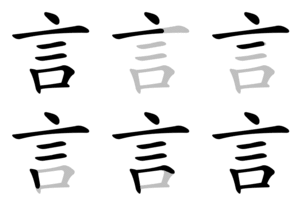 | |||
| Japanese | 言 |
|---|---|
| Simplified | 言 |
| Traditional | 言 |
Alternative forms
Note that in Japanese and Korean (printed forms), the 亠 component on top is written 二 (as found in the Kangxi dictionary). In traditional/simplified Chinese and Vietnamese, the top component is written 丶. In written Japanese, the top component may be written either 一, 丶 or 丨 (small vertical stroke).
Han character
言 (Kangxi radical 149, 言+0, 7 strokes, cangjie input 卜一一口 (YMMR), four-corner 00601, composition ⿳亠𠄠口(GHTV) or ⿱亖口(JK))
- Kangxi radical #149, ⾔.
- Shuowen Jiezi radical №56
Derived characters
References
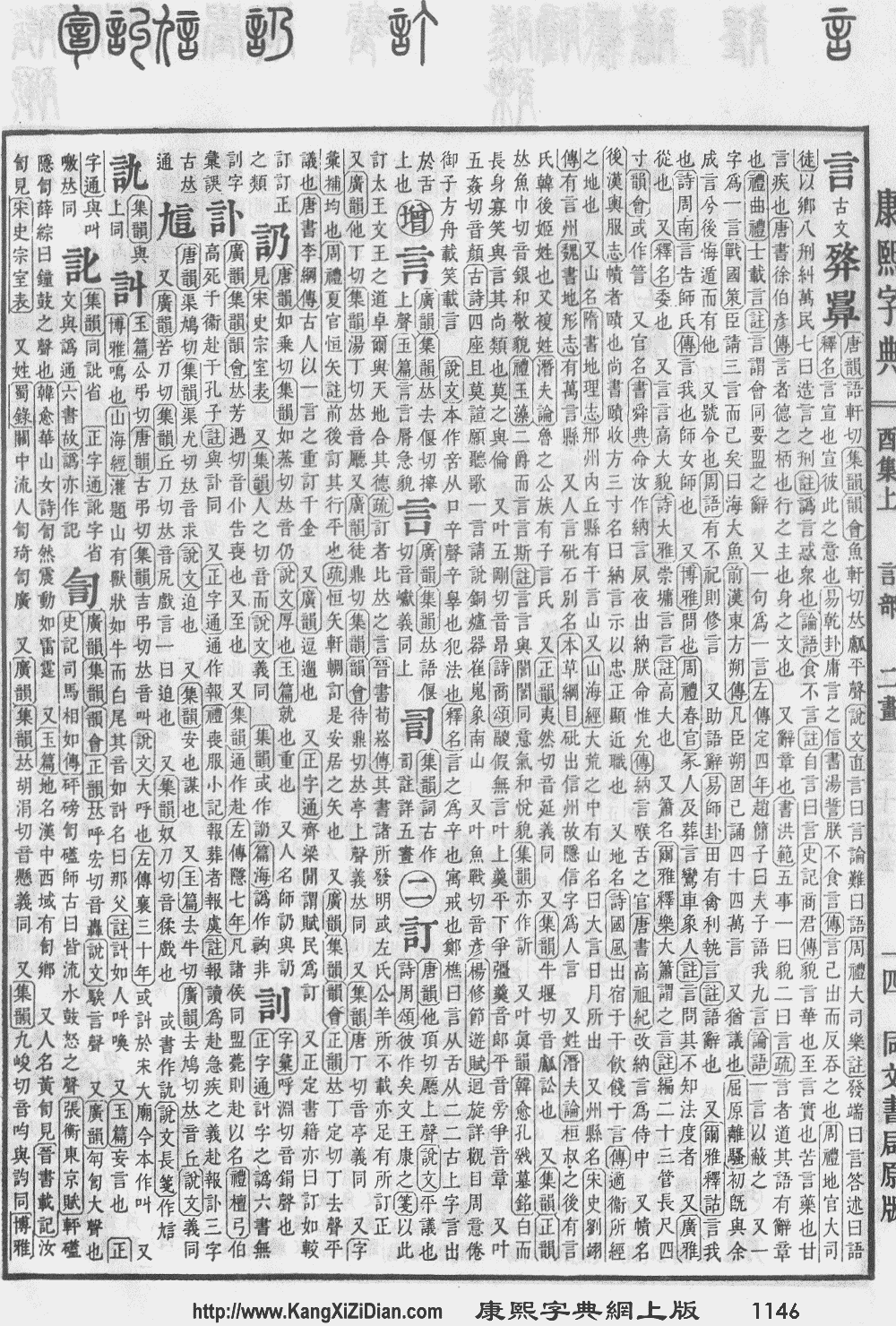
- KangXi: page 1146, character 1
- Dai Kanwa Jiten: character 35205
- Dae Jaweon: page 1612, character 20
- Hanyu Da Zidian (first edition): volume 6, page 3936, character 1
- Unihan data for U+8A00
Chinese
| simp. and trad. |
言 | |
|---|---|---|
Glyph origin
| Historical forms of the character 言 | |||
|---|---|---|---|
| Shang | Western Zhou | Shuowen Jiezi (compiled in Han) | Liushutong (compiled in Ming) |
| Oracle bone script | Bronze inscriptions | Small seal script | Transcribed ancient scripts |
 |
 |
 |
 |
Ideogram (指事) : 言 was created by adding a mark to 舌 to indicate movement of the tongue.[1] This indicates speech where 舌 is a mouth (口) with a tongue sticking out.
Shuowen erroneously analyzes the glyph as a phono-semantic compound (形聲) : phonetic 䇂 (qiān) + semantic 口 (“mouth”).
Etymology
According to Schuessler (2007: 74) this word is derived from 語 (OC *ŋaʔ, “to speak”) + -n nominal suffix.
Pronunciation
Definitions
言
- to say; to speak; to talk
- to discuss; to comment
- to state; to describe; to explain
- to write down; to record
- to ask; to inquire
- to inform; to tell; to let know
- spoken language; speech
- opinion; view; perspective
- words; language appropriate to the occasion
- proposal; idea; plan
- government decree; order
- character; word
- sentence; writing; works
- † A meaningless sentence-initial mood particle.
- 陟彼南山,言采其蕨 [Classical Chinese, trad. and simp.]
- From: The Classic of Poetry, c. 11th – 7th centuries BCE, translated based on James Legge's version
- zhì bǐ nán shān, yán cǎi qí jué [Pinyin]
- (please add an English translation of this example)
- a surname
Synonyms
Compounds
|
|
|
Japanese
Readings
Compounds
Synonyms
- (parole): パロール (parōru)
Antonyms
- (parole): 言語 (gengo)
References
- 2006, 大辞林 (Daijirin), Third Edition (in Japanese), Tōkyō: Sanseidō, →ISBN
- 1998, NHK日本語発音アクセント辞典 (NHK Japanese Pronunciation Accent Dictionary) (in Japanese), Tōkyō: NHK, →ISBN
- 2011, 新明解国語辞典 (Shin Meikai Kokugo Jiten), Seventh Edition (in Japanese), Tōkyō: Sanseidō, →ISBN
- 1995, 大辞泉 (Daijisen) (in Japanese), Tōkyō: Shogakukan, →ISBN
Korean
Etymology 1
From Middle Chinese 言 (MC ŋɨɐn).
| Historical readings |
|---|
|
Pronunciation
- (SK Standard/Seoul) IPA(key): [ʌ̹n]
- Phonetic hangul: [언]
Compounds
- 언어 (言語, eoneo)
- 언행 (言行, eonhaeng)
- 언론 (言論, eollon)
- 발언 (發言, bareon)
- 선언 (宣言, seoneon)
- 언급 (言及, eon'geup)
- 증언 (證言, jeung'eon)
- 망언 (妄言, mang'eon)
- 격언 (格言, gyeogeon)
- 화편 (花片, hwapyeon)
- 언동 (言動, eondong)
- 대언 (對言, daeeon)
- 폭언 (暴言, pogeon)
- 전언 (傳言, jeoneon)
- 조언 (助言, jo'eon)
- 언중 (言衆, eonjung)
- 허언 (虛言, heo'eon)
- 언사 (言辭, eonsa)
- 언약 (言約, eonyak)
- 유언 (遺言, yueon)
- 잠언 (箴言, jameon)
- 눌언 (訥言, nureon)
- 공언 (公言, gong'eon)
- 고언 (苦言, go'eon)
- 이언 (俚言, ieon)
- 확언 (確言, hwageon)
- 오언 (五言, o'eon)
- 진언 (眞言, jineon)
- 제언 (提言, jeeon)
- 명언 (名言, myeong'eon)
- 부언 (浮言, bueon)
- 좌언 (左言, jwa'eon)
- 예언 (豫言, yeeon)
- 호언 (豪言, ho'eon)
- 단언 (端言, daneon)
- 언변 (言辯, eonbyeon)
- 정언 (正言, jeong'eon)
- 창언 (昌言, chang'eon)
- 가언 (嘉言, ga'eon)
- 언설 (言舌, eonseol)
- 간언 (諫言, ganeon)
- 방언 (方言, bang'eon)
- 언쟁 (言爭, eonjaeng)
- 언필칭 (言必稱, eonpilching)
- 가언판단 (假言判斷, ga'eonpandan)
Etymology 2
Related to Middle Chinese 誾 (MC ŋˠiɪn).
Hanja
Compounds
- 은은 (言言, euneun)