噫
| ||||||||
Translingual
Han character
噫 (Kangxi radical 30, 口+13, 16 strokes, cangjie input 口卜廿心 (RYTP), four-corner 60036, composition ⿰口意)
References
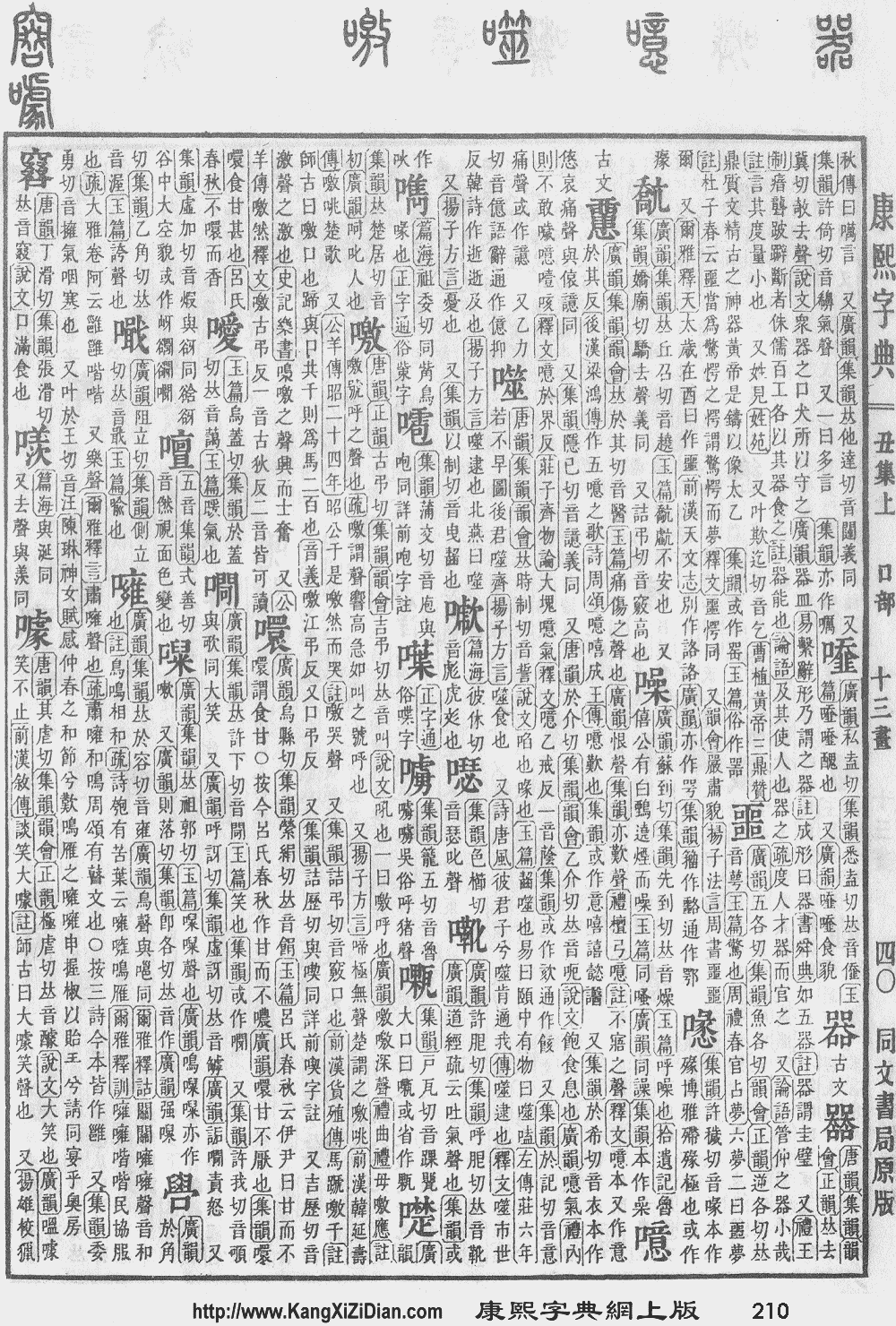
- KangXi: page 210, character 8
- Dai Kanwa Jiten: character 4381
- Dae Jaweon: page 432, character 31
- Hanyu Da Zidian (first edition): volume 1, page 694, character 1
- Unihan data for U+566B
Chinese
| simp. and trad. |
噫 | |
|---|---|---|
| alternative forms | 譩/𰶊 䪰 𧮒 𢤏 ancient | |
Glyph origin
Characters in the same phonetic series (意) (Zhengzhang, 2003)
Phono-semantic compound (形聲, OC *qrɯːɡs, *qɯ) : semantic 口 + phonetic 意 (OC *qɯɡs).
Pronunciation 1
Definitions
噫
- (Classical Chinese) alas; sigh (expressing regret or grief)
- 顏淵死。子曰:「噫!天喪予!天喪予!」 [Classical Chinese, trad.]
- From: The Analects of Confucius, c. 475 – 221 BCE, translated based on James Legge's version
- Yán Yuān sǐ. Zǐ yuē: “Yī! Tiān sàng yú! Tiān sàng yú!” [Pinyin]
- When Yan Yuan died, the Master said, "Alas! Heaven is destroying me! Heaven is destroying me!"
颜渊死。子曰:“噫!天丧予!天丧予!” [Classical Chinese, simp.]
- huh; wow; eh (expressing surprise or wonder)
Compounds
|
|
|
Pronunciation 2
Pronunciation 3
References
- “噫”, in 漢語多功能字庫 (Multi-function Chinese Character Database), 香港中文大學 (the Chinese University of Hong Kong), 2014–
Japanese
Compounds
- 五噫 (goi)
Korean
Etymology 1
From Middle Chinese 噫 (MC ʔɨ).
| Historical readings |
|---|
|
Pronunciation
- (SK Standard/Seoul) IPA(key): [çi]
- Phonetic hangul: [히]
Hanja
Wikisource 噫 (eumhun 한숨 쉴 희 (hansum swil hui))
- Hanja form? of 희 (“to sigh; to groan”).
- (literary) Hanja form? of 희 (“alas (expressing regret or surprise)”).
- 1919, Han Yong-un, 한용운(韓龍雲), 조선 독립의 서(朝鮮 獨立의 書) (Joseon dongnibui seo) [A letter for Korean independence]:
- 1929, Sin Chaeho, 신채호(申采浩), 조선사연구초(朝鮮史硏究草) (Joseonsayeon-gucho) [Exploratory Studies in Korean History]:
Etymology 2
From Middle Chinese 噫 (MC ʔˠɛiH).
| Historical readings |
|---|
|
Pronunciation
- (SK Standard/Seoul) IPA(key): [ɛ] ~ [e̞]
- Phonetic hangul: [애/에]
Vietnamese
Han character
- This term needs a translation to English. Please help out and add a translation, then remove the text
{{rfdef}}.
References
This article is issued from Wiktionary. The text is licensed under Creative Commons - Attribution - Sharealike. Additional terms may apply for the media files.