喪
| ||||||||
Translingual
Han character
喪 (Kangxi radical 30, 口+9, 12 strokes, cangjie input 土口口女 (GRRV), four-corner 40732, composition ⿱⿻土吅⿰𠄌⿺乀丿(GJKV) or ⿸⿱⿻土吅𠄌⿺乀丿(HT))
References
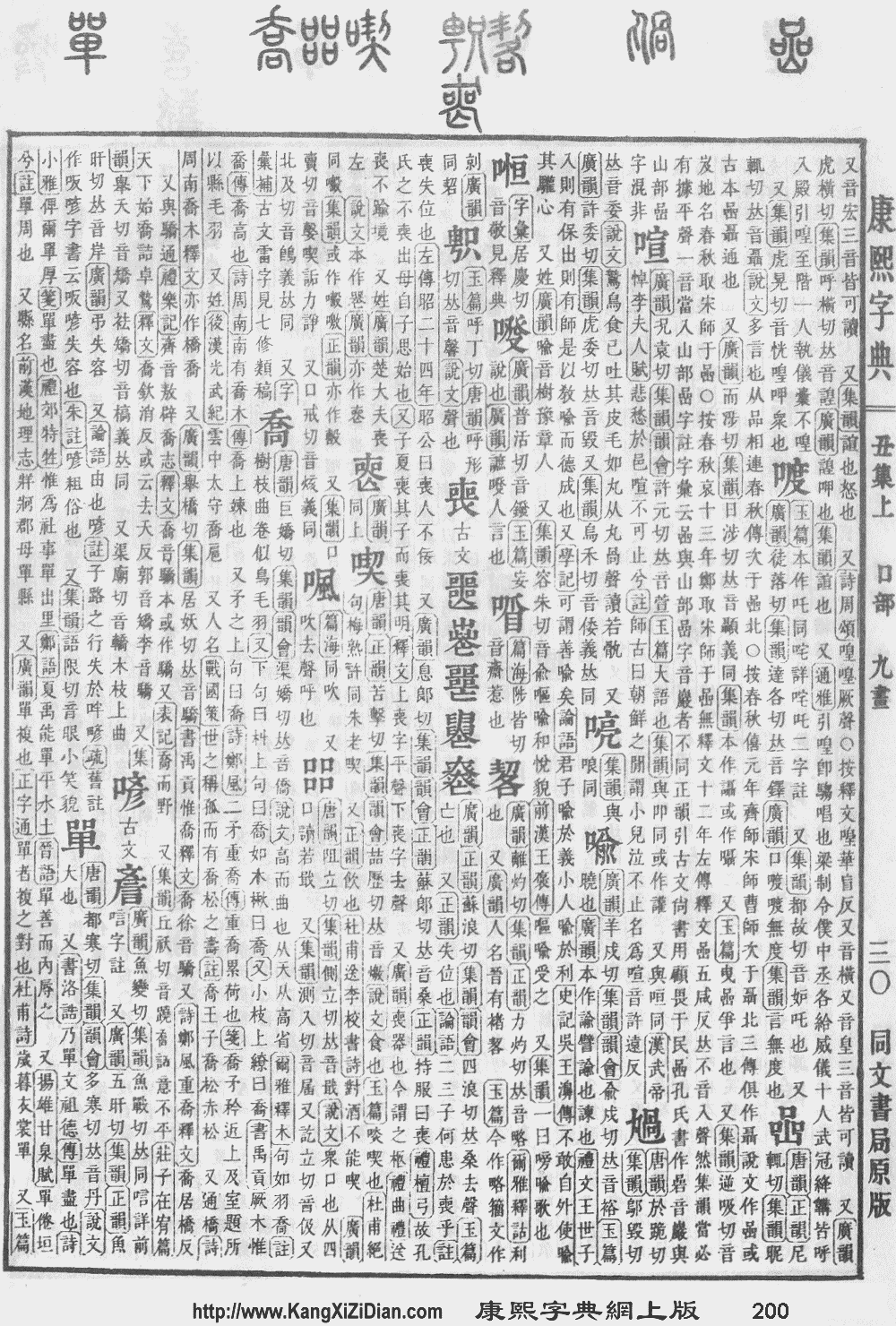
- KangXi: page 200, character 12
- Dai Kanwa Jiten: character 3985
- Dae Jaweon: page 421, character 23
- Hanyu Da Zidian (first edition): volume 1, page 650, character 3
- Unihan data for U+55AA
Chinese
| trad. | 喪 | |
|---|---|---|
| simp. | 丧 | |
| alternative forms | ||
Glyph origin
| Historical forms of the character 喪 | |||
|---|---|---|---|
| Shang | Western Zhou | Shuowen Jiezi (compiled in Han) | Liushutong (compiled in Ming) |
| Oracle bone script | Bronze inscriptions | Small seal script | Transcribed ancient scripts |
 |
 |
 |
 |
| Old Chinese | |
|---|---|
| 忙 | *maːŋ |
| 芒 | *maːŋ, *maŋ |
| 茫 | *maːŋ |
| 恾 | *maːŋ |
| 吂 | *maːŋ, *maːŋs |
| 汒 | *maːŋ, *maŋs |
| 朚 | *maːŋ, *hmaːŋ, *maŋ, *mraːŋ, *mraːŋs |
| 邙 | *maːŋ, *maŋ |
| 杗 | *maːŋ, *maŋ |
| 荒 | *hmaːŋ, *hmaːŋs |
| 肓 | *hmaːŋ |
| 衁 | *hmaːŋ |
| 巟 | *hmaːŋ |
| 詤 | *hmaːŋ, *hmaːŋʔ, *hmaŋʔ |
| 慌 | *hmaːŋ, *hmaːŋʔ |
| 謊 | *hmaːŋʔ |
| 喪 | *smaːŋs, *smaːŋ |
| 亡 | *maŋ |
| 望 | *maŋ, *maŋs |
| 莣 | *maŋ |
| 朢 | *maŋ, *maŋs |
| 鋩 | *maŋ |
| 硭 | *maŋ |
| 忘 | *maŋ, *maŋs |
| 网 | *mlaŋʔ |
| 罔 | *mlaŋʔ |
| 蛧 | *maŋʔ |
| 網 | *mlaŋʔ |
| 輞 | *maŋʔ |
| 棢 | *maŋʔ |
| 惘 | *maŋʔ |
| 菵 | *maŋʔ |
| 誷 | *maŋʔ |
| 魍 | *maŋʔ |
| 妄 | *maŋs |
| 盲 | *mraːŋ |
| 蝱 | *mraːŋ |
| 虻 | *mraːŋ |
| 氓 | *mraːŋ |
| 甿 | *mraːŋ |
Originally ideogrammic compound (會意) and phono-semantic compound (形聲, OC *smaːŋs, *smaːŋ) : phonetic 桑 (OC *sŋaːŋ, “mulberry tree”) + semantic 㗊 (“many mouths”). The number of mouths frequently varied. Sometimes 走 (“run”) was included as a semantic component, and later 亡 (OC *maŋ, “die”) was added as a phonetic (and also possibly semantic) component.
In the seal script became ideogrammic compound (會意) and phono-semantic compound (形聲, OC *smaːŋs, *smaːŋ) : semantic 哭 (“cry”) + phonetic 亡 (OC *maŋ, “die”), from which the modern form derives.
Compare 咢 and 噩, which may be derived from or originally the same character as 喪.
Etymology
From Proto-Sino-Tibetan *ma (“not”). Cognate with 亡 (OC *maŋ, “to disappear”). The level-toned pronunciation has a nominal prefix *s-, lit. "circumstances associated with disappearance (death)", whereas the departing-toned pronunciation has a formally identical causative prefix *s- and an exoactive suffix *-s, lit. "to cause to disappear".
Pronunciation 1
Definitions
喪
Compounds
Pronunciation 2
Definitions
喪
Compounds
References
- “喪”, in 漢語多功能字庫 (Multi-function Chinese Character Database), 香港中文大學 (the Chinese University of Hong Kong), 2014–
Japanese
Korean
Hanja
喪 • (sang) (hangeul 상, revised sang, McCune–Reischauer sang)
- This term needs a translation to English. Please help out and add a translation, then remove the text
{{rfdef}}.