醜
See also: 丑
| ||||||||
Translingual
Han character
醜 (Kangxi radical 164, 酉+10, 17 strokes, cangjie input 一田竹山戈 (MWHUI), four-corner 16613, composition ⿰酉鬼)
References
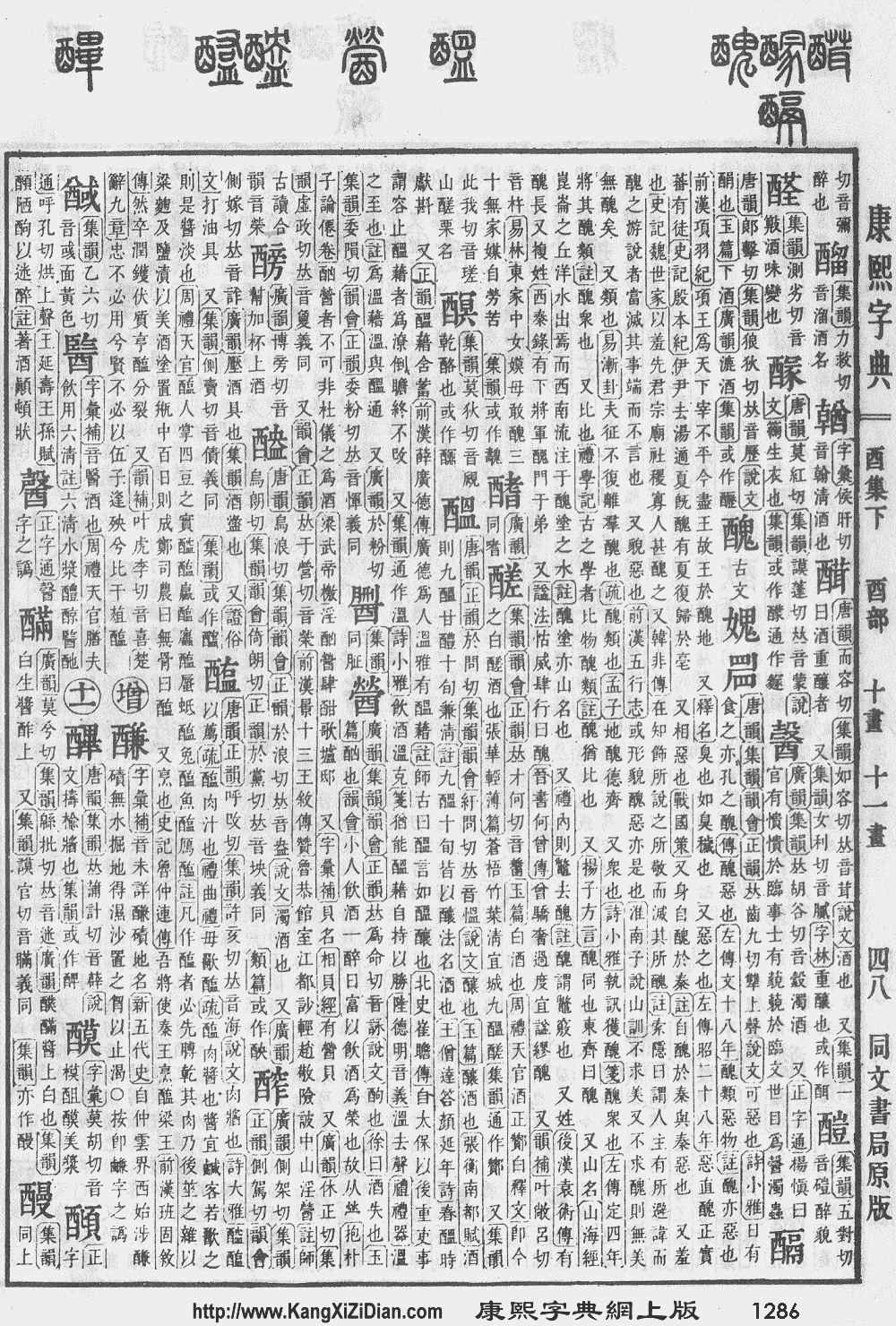
- KangXi: page 1286, character 9
- Dai Kanwa Jiten: character 39969
- Dae Jaweon: page 1786, character 12
- Hanyu Da Zidian (first edition): volume 6, page 3590, character 6
- Unihan data for U+919C
Chinese
| trad. | 醜 | |
|---|---|---|
| simp. | 丑* | |
| alternative forms | 魗/𱆛 | |
Glyph origin
Characters in the same phonetic series (酉) (Zhengzhang, 2003)
Phono-semantic compound (形聲, OC *l̥ʰjuʔ) : phonetic 酉 (OC *luʔ) + semantic 鬼 (“ghost, demon”) - demons are ugly in Chinese culture.
Pronunciation
Definitions
醜
- ugly; homely; hideous
- shameful; disgraceful
- shame; disgrace
- (obsolete) evil
- 十月之交,朔月辛卯,日有食之,亦孔之醜。 [Pre-Classical Chinese, trad.]
- From: The Classic of Poetry, c. 11th – 7th centuries BCE, translated based on James Legge's version
- Shíyuè zhī jiāo, shuòyuè xīnmǎo, rì yǒu shí zhī, yì kǒng zhī chǒu. [Pinyin]
- At the conjunction [of the sun and moon] in the tenth month,
On the first day of the moon, which was Xin-mao,
The sun was eclipsed,
A thing of very evil omen.
十月之交,朔月辛卯,日有食之,亦孔之丑。 [Pre-Classical Chinese, simp.]
- (obsolete) person or thing of the same kind
- (obsolete) to be similar
- 今天下地醜德齊,莫能相尚。無他,好臣其所教,而不好臣其所受教。 [Classical Chinese, trad.]
- From: Mencius, c. 4th century BCE
- Jīn tiānxià dì chǒu dé qí, mò néng xiàng shàng. Wú tā, hào chén qí suǒ jiào, ér bù hào chén qí suǒ shòu jiào. [Pinyin]
- Now throughout the kingdom, the territories of the princes are of equal extent, and in their achievements they are on a level. Not one of them is able to exceed the others. This is from no other reason, but that they love to make ministers of those whom they teach, and do not love to make ministers of those by whom they might be taught.
今天下地丑德齐,莫能相尚。无他,好臣其所教,而不好臣其所受教。 [Classical Chinese, simp.]
Synonyms
Dialectal synonyms of 醜 (“ugly”) [map]
| Variety | Location | Words |
|---|---|---|
| Classical Chinese | 醜, 媸 | |
| Formal (Written Standard Chinese) | 醜陋 | |
| Mandarin | Beijing | 難看, 寒磣, 磣 |
| Taiwan | 難看, 醜 | |
| Jinan | 難看, 醜 | |
| Xi'an | 難看, 醜, 不心疼 | |
| Wuhan | 醜, 不好看 | |
| Chengdu | 難看, 醜 | |
| Yangzhou | 難看, 醜 | |
| Hefei | 難看, 醜, 相壞 | |
| Singapore | 難看, 醜 | |
| Cantonese | Guangzhou | 難睇, 醜, 醜怪, 樣衰, 醜樣, 肉酸, 核突 |
| Hong Kong | 難睇, 醜, 醜怪, 樣衰, 醜樣, 肉酸, 核突 | |
| Dongguan | 難睞 | |
| Yangjiang | 惡看, 醜鬼 | |
| Gan | Nanchang | 不客氣, 難看 |
| Hakka | Meixian | 難看, 難睞, 醜, 像鬼 |
| Miaoli (N. Sixian) | 媸, 醜 | |
| Pingtung (Neipu; S. Sixian) | 媸, 醜 | |
| Hsinchu County (Zhudong; Hailu) | 媸, 醜 | |
| Taichung (Dongshi; Dabu) | 媸, 醜 | |
| Hsinchu County (Qionglin; Raoping) | 媸, 醜 | |
| Yunlin (Lunbei; Zhao'an) | 䆀 | |
| Jin | Taiyuan | 難看, 醜 |
| Min Bei | Jian'ou | 驚人, 毛格式, 生得呆 |
| Min Dong | Fuzhou | 驚儂, 驚, 伓好看, 生得呆 |
| Min Nan | Xiamen | 歹看, 㾀勢 |
| Quanzhou | 兇, 歹看, 㾀勢 | |
| Jinjiang | 兇, 歹看, 㾀勢 | |
| Zhangzhou | 䆀看, 㾀勢 | |
| Taipei | 歹看, 䆀, 䆀材, 㾀, 䆀猴, 㾀勢 | |
| Kaohsiung | 歹看 | |
| Singapore (Hokkien) | 歹看 | |
| Manila (Hokkien) | 兇, 歹看, 㾀勢 | |
| Chaozhou | 孬睇, 野樣, 䆀 | |
| Shantou | 野樣 | |
| Jieyang | 野樣 | |
| Wu | Suzhou | 難看, 怕 |
| Ningbo | 難看 | |
| Wenzhou | 難覷, 否好覷, 醜 | |
| Xiang | Changsha | 醜, 不好看, 不打彩 |
| Shuangfeng | 醜, 不好看 | |
Compounds
Japanese
Readings
Compounds
Derived terms
Korean
Vietnamese
This article is issued from Wiktionary. The text is licensed under Creative Commons - Attribution - Sharealike. Additional terms may apply for the media files.