哉
See also: 或
| ||||||||
Translingual
Han character
哉 (Kangxi radical 30, 口+6, 9 strokes, cangjie input 十戈口 (JIR), four-corner 43650, composition ⿹𢦏口)
References
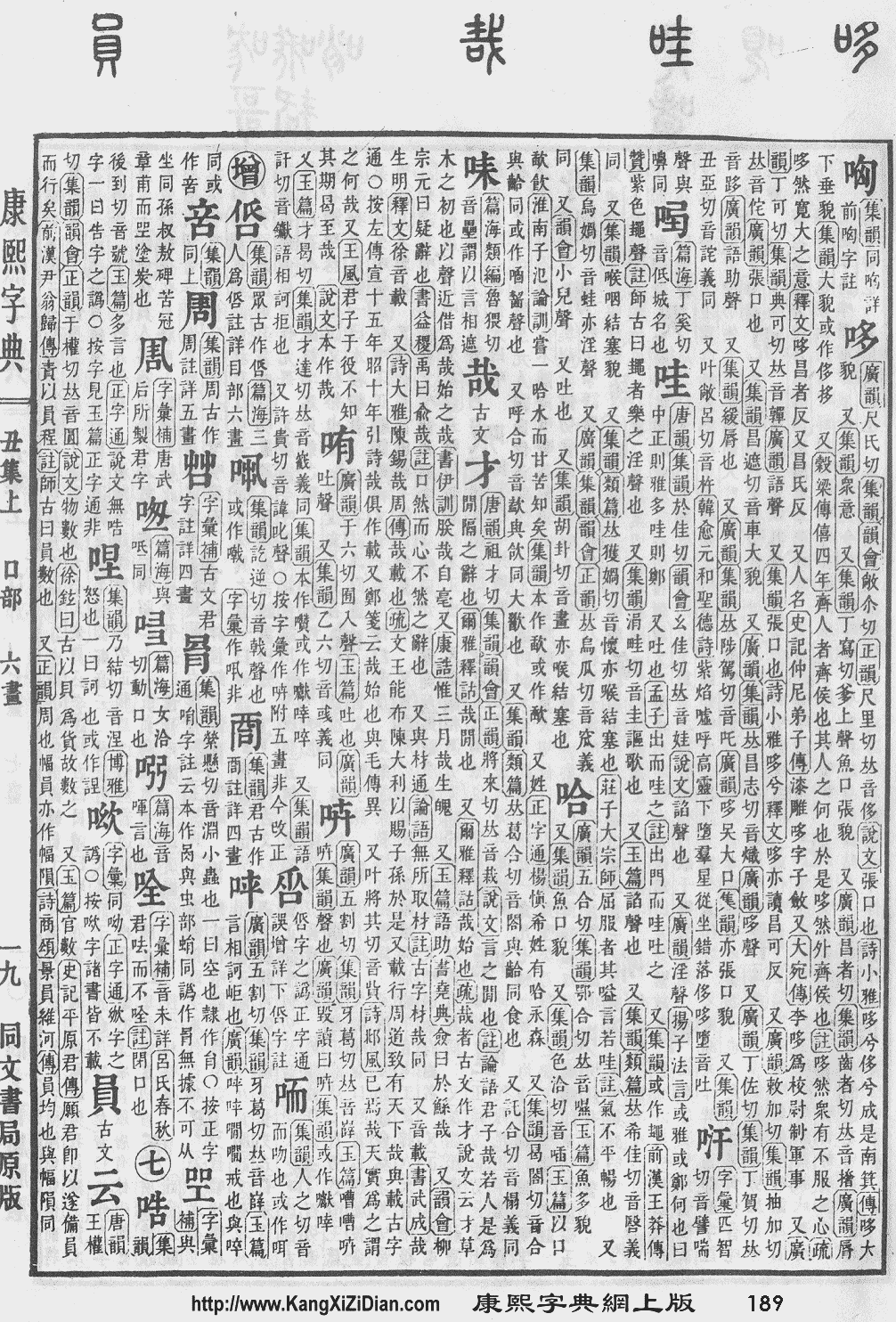
- KangXi: page 189, character 8
- Dai Kanwa Jiten: character 3596
- Dae Jaweon: page 408, character 14
- Hanyu Da Zidian (first edition): volume 1, page 611, character 7
- Unihan data for U+54C9
Chinese
Glyph origin
| Historical forms of the character 哉 |
|---|
| Spring and Autumn |
| Bronze inscriptions |
 |
Characters in the same phonetic series (𢦏) (Zhengzhang, 2003)
Phono-semantic compound (形聲, OC *ʔslɯː) : semantic 口 + phonetic 𢦏 (OC *ʔslɯː).
Pronunciation
Definitions
哉
- † grammatical particle indicating emphasis
- sentence-medial particle indicating inverted construction for the emphasis of the predicate
- 大哉斯言! [Classical Chinese] ― Dà zāi sī yán! [Pinyin] ― How great, these words!
- 子路曰:「有是哉,子之迂也!奚其正?」子曰:「野哉由也!君子於其所不知,蓋闕如也。」 [Classical Chinese, trad.]
- From: The Analects of Confucius, c. 475 – 221 BCE, translated based on James Legge's version
- Zǐlù yuē: “Yǒu shì zāi, zǐ zhī yū yě! Xī qí zhèng?” Zǐyuē: “Yě zāi Yóu yě! Jūnzǐ yú qí suǒbùzhī, gài quèrú yě.” [Pinyin]
- "So! indeed!" said Zilu, "You are wide of the mark! Why must there be such rectification?" The Master said, "How uncultivated you are, Zhongyou! A superior man, in regard to what he does not know, shows a cautious reserve."
子路曰:“有是哉,子之迂也!奚其正?”子曰:“野哉由也!君子于其所不知,盖阙如也。” [Classical Chinese, simp.]
- sentence-final particle indicating exclamation, emphasis, or strong intention
- 子曰:「默而識之,學而不厭,誨人不倦,何有於我哉?」 [Classical Chinese, trad.]
- From: The Analects of Confucius, c. 475 – 221 BCE, translated based on James Legge's version
- Zǐyuē: “Mò ér zhìzhī, xué ér bùyàn, huìrén bùjuàn, hé yǒuyúwǒ zāi?” [Pinyin]
- The Master said, "The silent treasuring up of knowledge; learning without satiety; and instructing others without being wearied - which one of these things belongs to me?"
子曰:“默而识之,学而不厌,诲人不倦,何有于我哉?” [Classical Chinese, simp.]- 欽念哉!欽念哉! [Classical Chinese, trad.]
- From: The Records of the Grand Historian, by Sima Qian, c. 91 BCE
- Qīn niàn zāi! Qīn niàn zāi! [Pinyin]
- Be reverent and remember this!
钦念哉!钦念哉! [Classical Chinese, simp.]
- sentence-medial particle indicating inverted construction for the emphasis of the predicate
See also
- 兮 (xī)
Compounds
Etymology 2
| simp. and trad. |
哉 | |
|---|---|---|
| alternative forms | 者 | |
According to Qian (2010), in contemporary Shanghainese, it has become 了 through lenition (/zəʔ/ > /ləʔ/). Compare 浪: /zɑ̃¹¹³/ > /lɑ̃¹¹³/. (This etymology is missing or incomplete. Please add to it, or discuss it at the Etymology scriptorium.)
Pronunciation
Definitions
哉 (Wu)
- (Northern Wu) Sentence-final particle used to indicate the present tense
- 打勿得哉! [Shanghainese, trad. and simp.]
- From: 1892, 韓邦慶 (Han Bangqing), 《海上花列傳》
- [tã³³ v̥əʔ⁵⁵ təʔ³³ t͡se̞] [IPA]
- Do not fight!
Usage notes
- Unlike Standard Chinese, Northern Wu languages can mark for some tenses, like many European languages. This term, therefore, cannot be accurately translated into Standard Chinese. In contemporary Shanghainese, 了 is more common.
Pronunciation
Japanese
Readings
Etymology 2
| Kanji in this term |
|---|
| 哉 |
| かな Jinmeiyō |
| kun’yomi |
| For pronunciation and definitions of 哉 – see the following entry. | ||
| ||
| (This term, 哉, is an alternative spelling of the above term.) |
Korean
Hanja
哉 (eum 재 (jae))
- This term needs a translation to English. Please help out and add a translation, then remove the text
{{rfdef}}.
Vietnamese
This article is issued from Wiktionary. The text is licensed under Creative Commons - Attribution - Sharealike. Additional terms may apply for the media files.