粉
| ||||||||
Translingual
Han character
粉 (Kangxi radical 119, 米+4, 10 strokes, cangjie input 火木金尸竹 (FDCSH), four-corner 98927, composition ⿰米分)
References
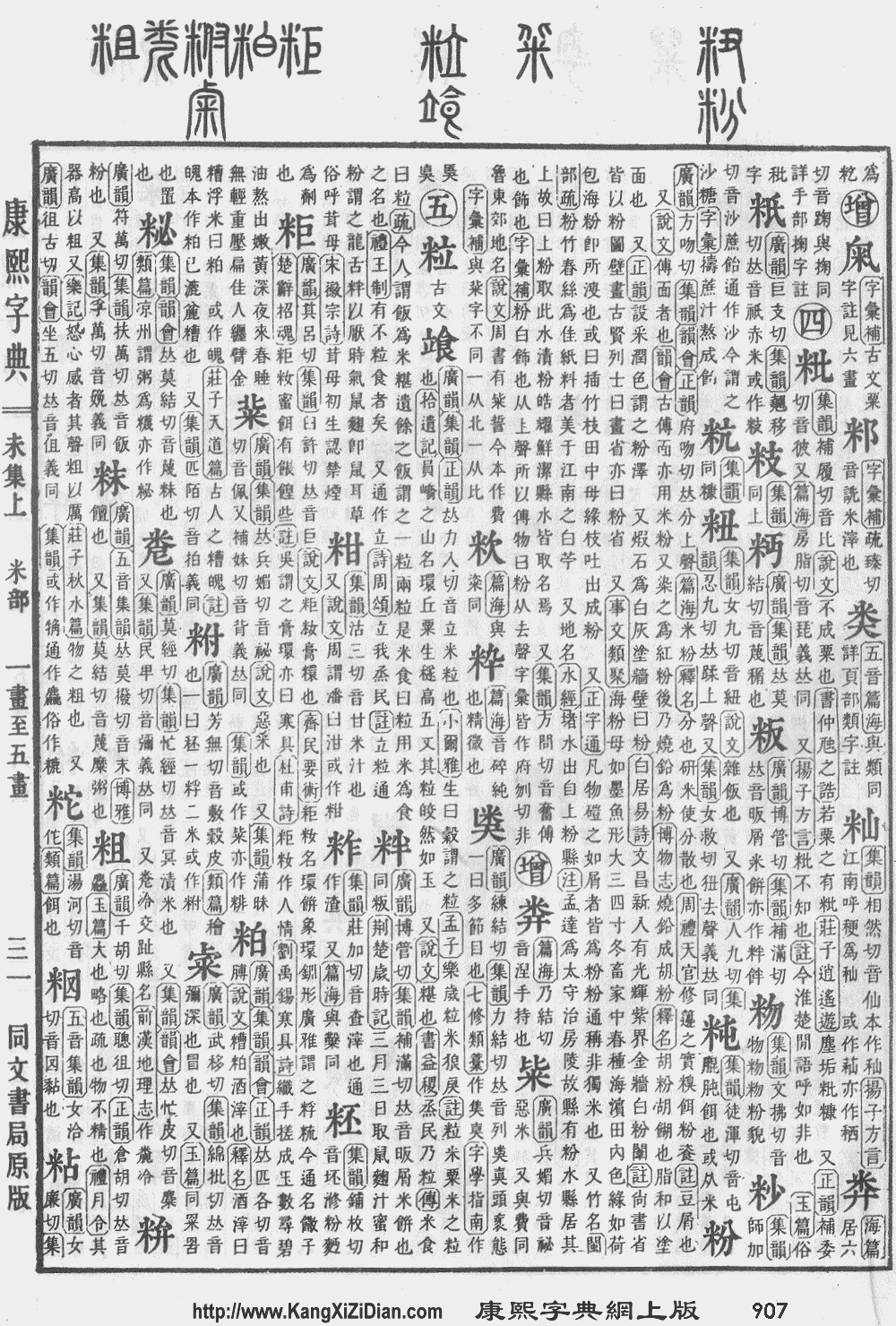
- KangXi: page 907, character 16
- Dai Kanwa Jiten: character 26872
- Dae Jaweon: page 1332, character 33
- Hanyu Da Zidian (first edition): volume 5, page 3143, character 7
- Unihan data for U+7C89
Chinese
| trad. | 粉 | |
|---|---|---|
| simp. # | 粉 | |
Glyph origin
| Historical forms of the character 粉 | |
|---|---|
| Warring States | Shuowen Jiezi (compiled in Han) |
| Chu slip and silk script | Small seal script |
 |
 |
| Old Chinese | |
|---|---|
| 扮 | *prɯːns, *hmroːlʔ, *pɯn, *pɯnʔ |
| 盼 | *pʰrɯːns |
| 頒 | *praːn, *bɯn |
| 朌 | *praːn, *bɯn |
| 鳻 | *praːn, *bɯn |
| 份 | *prɯn, *bɯns |
| 汃 | *pʰreːd, *prɯn |
| 玢 | *prɯn |
| 邠 | *prɯn |
| 攽 | *prɯn |
| 砏 | *prɯn, *pʰrɯn, *pʰɯn |
| 貧 | *brɯn |
| 湓 | *pʰɯːns, *bɯːn, *pʰɯns |
| 盆 | *bɯːn |
| 葐 | *bɯːn, *bɯn, *bɯn |
| 坌 | *bɯːns, *bɯnʔ, *bɯns |
| 坋 | *bɯːns, *bɯnʔ, *bɯns |
| 分 | *pɯn, *bɯns |
| 吩 | *pɯn |
| 粉 | *pɯnʔ |
| 黺 | *pɯnʔ |
| 芬 | *pʰɯn |
| 紛 | *pʰɯn |
| 衯 | *pʰɯn |
| 棻 | *pʰɯn, *bɯn |
| 氛 | *pʰɯn, *bɯn |
| 雰 | *pʰɯn |
| 忿 | *pʰɯnʔ, *pʰɯns, *bɯnʔ |
| 魵 | *pʰɯnʔ, *pʰɯns, *bɯn, *bɯnʔ |
| 汾 | *bɯn |
| 羒 | *bɯn |
| 枌 | *bɯn |
| 棼 | *bɯn |
| 妢 | *bɯn |
| 梤 | *bɯn |
| 馚 | *bɯn |
| 鼢 | *bɯn, *bɯnʔ |
| 蚡 | *bɯn, *bɯnʔ |
| 弅 | *bɯnʔ |
| 秎 | *bɯns |
Phono-semantic compound (形聲, OC *pɯnʔ) : semantic 米 (“rice”) + phonetic 分 (OC *pɯn, *bɯns) – face powder made of rice.
Etymology 1
The earliest sense is believed to be "face powder". The term is then used for the color of this powder, "white", and later also the color of a face with this cosmetic, "pink". In early modern Chinese, the ancient "face powder" sense is partly reinforced by 粉底 (fěndǐ) (from English foundation). (This etymology is missing or incomplete. Please add to it, or discuss it at the Etymology scriptorium.)
Pronunciation
Definitions
粉
Usage notes
Synonyms
- (powder):
| Variety | Location | Words |
|---|---|---|
| Formal (Written Standard Chinese) | 粉 | |
| Mandarin | Beijing | 麵兒 |
| Jinan | 麵兒 | |
| Xi'an | 麵麵兒 | |
| Wuhan | 粉子 | |
| Chengdu | 麵麵, 麵子, 粉粉 | |
| Yangzhou | 粉子, 粉 | |
| Hefei | 粉 | |
| Singapore | 粉 | |
| Cantonese | Guangzhou | 粉 |
| Hong Kong | 粉 | |
| Yangjiang | 粉 | |
| Singapore (Guangfu) | 粉 | |
| Gan | Nanchang | 粉 |
| Hakka | Meixian | 粉 |
| Jin | Taiyuan | 麵麵 |
| Min Bei | Jian'ou | 粉 |
| Min Dong | Fuzhou | 粉粉 |
| Min Nan | Xiamen | 粉 |
| Singapore (Hokkien) | 粉 | |
| Manila (Hokkien) | 粉 | |
| Chaozhou | 粉 | |
| Singapore (Teochew) | 粉 | |
| Wu | Suzhou | 粉 |
| Wenzhou | 粉 | |
| Xiang | Changsha | 粉子 |
| Shuangfeng | 粉子 | |
- (flour):
- (heroin):
| Variety | Location | Words |
|---|---|---|
| Formal (Written Standard Chinese) | 海洛因, 海洛英 | |
| Mandarin | Beijing | 白麵兒, 老海 |
| Taiwan | 海洛因, 白粉 | |
| Luoyang | 白麵兒, 老海 | |
| Xi'an | 白麵兒 | |
| Ürümqi | 白麵兒 | |
| Yangzhou | 白麵子 | |
| Singapore | 白粉 | |
| Dagudi (Maliba) | 白粉 | |
| Reshuitang (Longling) | 白粉, 粉藥 | |
| Mae Salong (Lancang) | 白粉, 粉藥 | |
| Mae Sai (Tengchong) | 白粉 | |
| Cantonese | Guangzhou | 白粉 |
| Hong Kong | 海洛英, 白粉, 粉, 灰, 四仔 | |
| Beihai (Qiaogang - Cô Tô) | 白粉 | |
| Beihai (Qiaogang - Cát Bà) | 白粉 | |
| Fangchenggang (Fangcheng) | 白粉 | |
| Kuala Lumpur (Guangfu) | 海洛英 | |
| Ho Chi Minh City (Guangfu) | 白粉 | |
| Móng Cái | 白粉 | |
| Hakka | Miaoli (N. Sixian) | 海洛因 |
| Pingtung (Neipu; S. Sixian) | 海洛因 | |
| Hsinchu County (Zhudong; Hailu) | 海洛因 | |
| Taichung (Dongshi; Dabu) | 海洛因 | |
| Hsinchu County (Qionglin; Raoping) | 海洛因 | |
| Yunlin (Lunbei; Zhao'an) | 海洛因 | |
| Senai (Huiyang) | 白粉 | |
| Jin | Taiyuan | 料子 |
| Xinzhou | 料子 | |
| Min Nan | Xiamen | 海洛因 |
| Singapore (Hokkien) | 白粉 | |
| Johor Bahru (Teochew) | 白粉 | |
| Southern Pinghua | Nanning (Tingzi) | 白粉 |
| Wu | Danyang | 白粉, 白麵 |
| Wenzhou | 白粉 | |
- (pink):
| Variety | Location | Words |
|---|---|---|
| Formal (Written Standard Chinese) | 粉紅, 粉 | |
| Mandarin | Taiwan | 粉紅 |
| Cantonese | Hong Kong | 粉紅 |
| Hakka | Miaoli (N. Sixian) | 粉紅 |
| Pingtung (Neipu; S. Sixian) | 粉紅, 水紅 | |
| Hsinchu County (Zhudong; Hailu) | 粉紅 | |
| Taichung (Dongshi; Dabu) | 粉紅 | |
| Hsinchu County (Qionglin; Raoping) | 粉紅 | |
| Yunlin (Lunbei; Zhao'an) | 粉紅 | |
| Min Nan | Xiamen | 水紅 |
| Quanzhou | 水紅 | |
| Zhangzhou | 水紅 | |
Definitions
粉
Compounds
|
|
|
References
- “粉”, in 漢語多功能字庫 (Multi-function Chinese Character Database), 香港中文大學 (the Chinese University of Hong Kong), 2014–
Japanese
| 粉 | |
| 粉 |
Compounds
- 花粉 (kafun)
- 小麦粉 (komugiko)
- 薄力粉 (hakurikiko)
- 中力粉 (chūrikiko)
- 強力粉 (kyōrikiko)
- 蕎麦粉 (sobako)
- 片栗粉 (katakuriko)
- 澱粉 (denpun)
- 米粉 (beifun), 米粉 (komeko): rice flour
- 黄な粉 (kinako)
- 粉茶 (konacha): dust tea
- 白粉 (oshiroi), 白粉 (hakufun)
- 天花粉 (tenkafun), 天瓜粉 (tenkafun)
- 粉薬 (konagusuri)
- 粉雪 (konayuki)
- 製粉 (seifun)
- 受粉 (jufun)
- 骨粉 (koppun)
- 胡粉 (gofun)
- 鱗粉 (rinpun)
- 金粉 (kinpun)
- 銀粉 (ginpun)
- 鉄粉 (teppun)
- 粉砕 (funsai)
Etymology 1
| Kanji in this term |
|---|
| 粉 |
| こ Grade: 5 |
| kun’yomi |
⟨ko1⟩ → */kwo/ → /ko/
From Old Japanese.[1] Used phonetically to spell ko in the Man'yōshū, completed some time after 759 CE.[2]
Usage notes
This reading remains in compounds and in certain set phrases. Use as a standalone noun began disappearing from the late 1600s in preference for the bisyllabic, and less ambiguous, kona reading.[1]
Etymology 2
| Kanji in this term |
|---|
| 粉 |
| こな Grade: 5 |
| kun’yomi |
Appears to be 粉 (ko, “powder”, see above) + な (-na, suffixing element, meaning unclear).[5]
First cited to 1683.[1]
Usage notes
This reading began to replace the monosyllabic ko reading from the late 1600s, likely due to sound shifts and the resulting ambiguity of monosyllabic words. Compare also ancient 足 (a) and modern 足 (ashi), ancient 羽 (ha) and modern 羽 (hane).[1]
Synonyms
- パウダー (paudā)
References
- 1988, 国語大辞典(新装版) (Kokugo Dai Jiten, Revised Edition) (in Japanese), Tōkyō: Shogakukan
- c. 759, Man'yōshū (book 6, poem 997), text here
- 2006, 大辞林 (Daijirin), Third Edition (in Japanese), Tōkyō: Sanseidō, →ISBN
- 1998, NHK日本語発音アクセント辞典 (NHK Japanese Pronunciation Accent Dictionary) (in Japanese), Tōkyō: NHK, →ISBN
- 1997, 新明解国語辞典 (Shin Meikai Kokugo Jiten), Fifth Edition (in Japanese), Tōkyō: Sanseidō, →ISBN
Korean
Etymology
From Middle Chinese 粉 (MC pɨunX). Recorded as Middle Korean 분〮 (pwún) (Yale: pwún) in Hunmong Jahoe (訓蒙字會 / 훈몽자회), 1527.
Pronunciation
- (powder; etc.):
- (SK Standard/Seoul) IPA(key): [pun]
- Phonetic hangul: [분]
- (in 분홍 (粉紅, bunhong)):
- (SK Standard/Seoul) IPA(key): [pu(ː)n]
- Phonetic hangul: [분(ː)]
- Though still prescribed in Standard Korean, most speakers in both Koreas no longer distinguish vowel length.
Compounds
Vietnamese
References
- Génibrel (1898).
- Bonet (1899).
- Thiều Chửu (1942).
- Nguyễn (1974).
- Trần (1999).
- Nguyễn et al. (2009).