縱
| ||||||||
Translingual
| Traditional | 縱 |
|---|---|
| Shinjitai | 縦 |
| Simplified | 纵 |
Han character
縱 (Kangxi radical 120, 糸+11, 17 strokes, cangjie input 女火竹人人 (VFHOO), four-corner 28981, composition ⿰糹從)
References
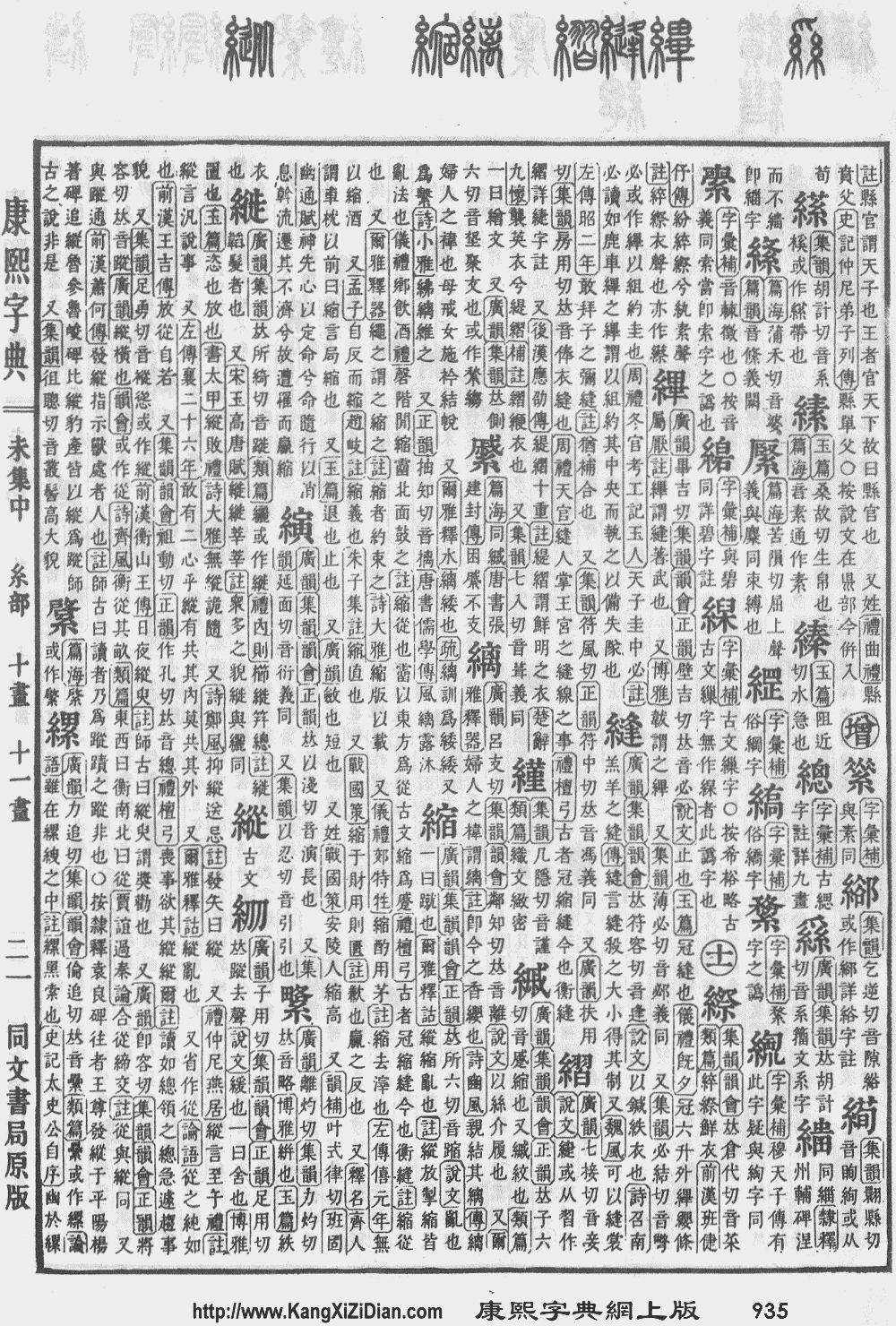
- KangXi: page 935, character 31
- Dai Kanwa Jiten: character 27819
- Dae Jaweon: page 1374, character 9
- Hanyu Da Zidian (first edition): volume 5, page 3445, character 2
- Unihan data for U+7E31
Chinese
| trad. | 縱 | |
|---|---|---|
| simp. | 纵 | |
| alternative forms | 縦 | |
Glyph origin
Characters in the same phonetic series (从) (Zhengzhang, 2003)
Phono-semantic compound (形聲, OC *ʔsloŋ, *ʔsloŋs) : semantic 糸 + phonetic 從 (OC *zloŋ, *zloŋ, *zloŋs).
Pronunciation 1
Definitions
縱
- (literary) loose; relaxed
- (literary) to shoot an arrow
- (literary) to send out; to deliver
- to let go; to release; to set free
- 吾聞一日縱敵,數世之患也。 [Classical Chinese, trad.]
- From: Commentary of Zuo, c. 4th century BCE, translated based on James Legge's version
- Wú wén yīrì zòng dí, shù shì zhī huàn yě. [Pinyin]
- I have heard that if you let your enemy go a single day, you are preparing the misfortunes of several generations.
吾闻一日纵敌,数世之患也。 [Classical Chinese, simp.]
- to let loose
- to jump up; to jump over
- (dialectal, including Cantonese, Hainanese, Leizhou Mina, Liuzhou Mandarin, Loudi Xiang) to spoil; to pamper
- even if; even though
- 縱我不往,子寧不來? [Pre-Classical Chinese, trad.]
- From: The Classic of Poetry, c. 11th – 7th centuries BCE, translated based on James Legge's version
- Zòng wǒ bù wǎng, zǐ nìng bù lái? [Pinyin]
- Although I do not go [to you],
Why do you not come [to me]?
纵我不往,子宁不来? [Pre-Classical Chinese, simp.]- 只有親愛並無怨仇, / 人民三千萬,人民三千萬, / 縱加十倍也得自由。 [MSC, trad.]
- From: 1933, National Anthem of Manchukuo (1933-1942)
- Zhǐyǒu qīn'ài bìng wú yuànchóu, / rénmín sān qiānwàn, rénmín sān qiānwàn, / zòng jiā shí bèi yě dé zìyóu. [Pinyin]
- With only love and no hatred, / thirty million people, thirty million people, / at ten times more we should still be free.
只有亲爱并无怨仇, / 人民三千万,人民三千万, / 纵加十倍也得自由。 [MSC, simp.]
- a surname
Synonyms
- (even if):
Synonyms of 縱
Compounds
Derived terms from 縱
Pronunciation 2
Definitions
縱
Compounds
Derived terms from 縱
Pronunciation 3
Definitions
縱
Pronunciation 4
Japanese
| 縦 | |
| 縱 |
Kanji
縱
(“Jinmeiyō” kanji used for names, kyūjitai kanji, shinjitai form 縦)
- This term needs a translation to English. Please help out and add a translation, then remove the text
{{rfdef}}.
Korean
Vietnamese
This article is issued from Wiktionary. The text is licensed under Creative Commons - Attribution - Sharealike. Additional terms may apply for the media files.