損
See also: 损
| ||||||||
Translingual
Han character
損 (Kangxi radical 64, 手+10, 13 strokes, cangjie input 手口月金 (QRBC), four-corner 56086, composition ⿰扌員)
Derived characters
- 𨆥
References
- KangXi: page 446, character 6
- Dai Kanwa Jiten: character 12459
- Dae Jaweon: page 796, character 27
- Hanyu Da Zidian (first edition): volume 3, page 1931, character 10
- Unihan data for U+640D
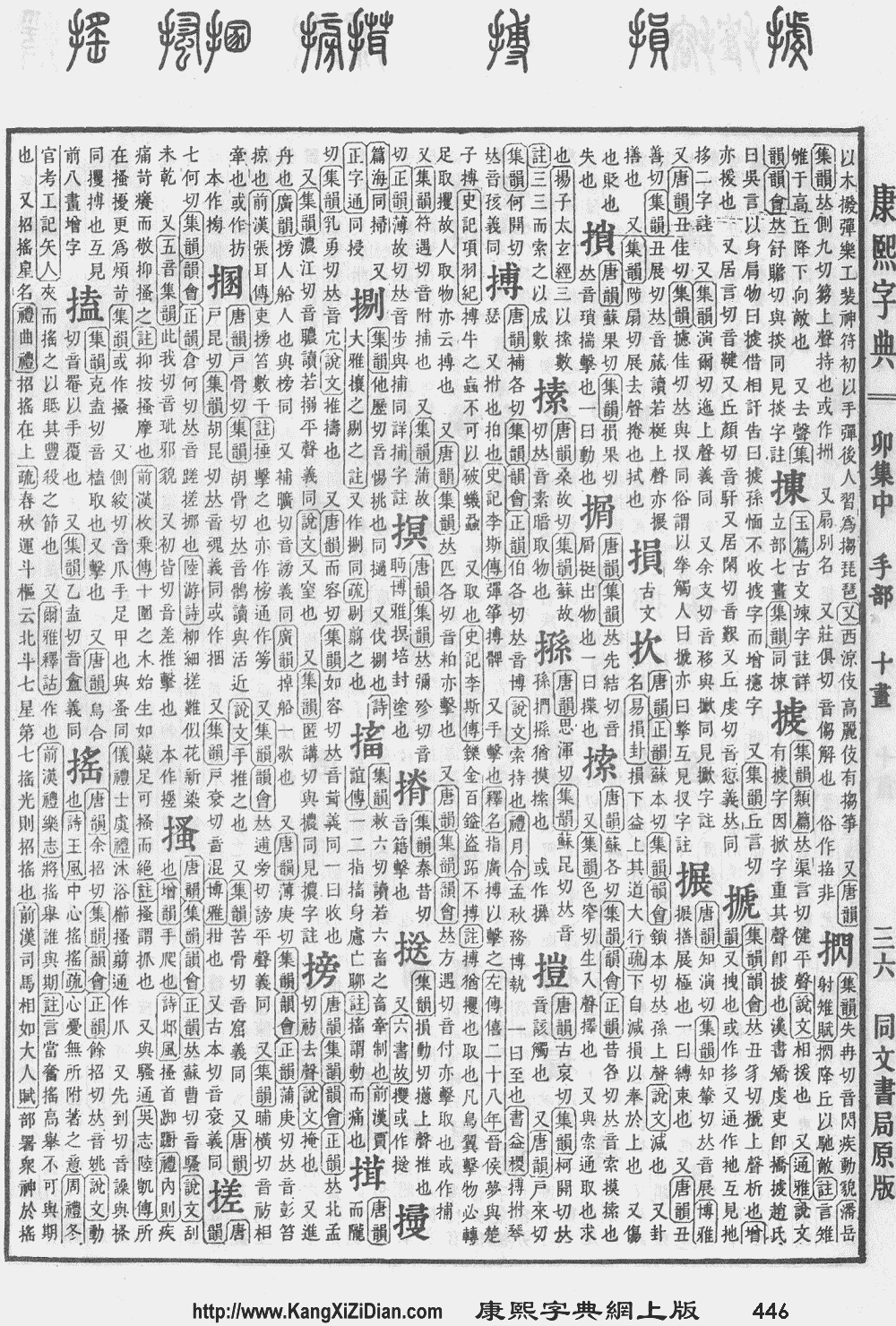
Chinese
| trad. | 損 | |
|---|---|---|
| simp. | 损 | |
| alternative forms | 扻 ancient | |
Glyph origin
Characters in the same phonetic series (員) (Zhengzhang, 2003)
Phono-semantic compound (形聲, OC *sqʰuːnʔ) : semantic 手 (“hand”) + phonetic 員 (OC *ɢon, *ɢun)
Pronunciation
Definitions
損
- to reduce; to decrease; to cut; to diminish
- Antonym: 益 (yì)
- to harm; to cause destruction to; to damage
- to lose; to forfeit
- loss; decrease; reduction
- 滿招損,謙受益。 [Classical Chinese, trad.]
- From: The Book of Documents, circa 4th – 3rd century BCE, translated based on James Legge's version
- Mǎn zhāo sǔn, qiān shòu yì. [Pinyin]
- Pride brings loss, and humility receives increase.
满招损,谦受益。 [Classical Chinese, simp.]
- (colloquial) to make sarcastic remarks; to act meanly; to mock
- (colloquial, chiefly of remarks) acrimonious; caustic; biting; mean (Can we add an example for this sense?) (especially Min Nan)
- (Cantonese) to be injured, in the form of an abrasion
Synonyms
- (to reduce):
Synonyms of 損
- (to harm):
Synonyms of 損
- (to lose):
- (to make sarcastic remarks):
Synonyms of 損
|
|
|
- (acrimonious):
Compounds
Derived terms from 損
Japanese
Readings
Affix
損 • (son)
- This term needs a translation to English. Please help out and add a translation, then remove the text
{{rfdef}}.
Vietnamese
This article is issued from Wiktionary. The text is licensed under Creative Commons - Attribution - Sharealike. Additional terms may apply for the media files.