長
| ||||||||
| ||||||||
| ||||||||
Translingual
| Stroke order | |||
|---|---|---|---|
 | |||
| Stroke order | |||
|---|---|---|---|
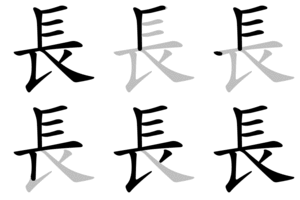 | |||
Alternative forms
- 镸 (when used as a radical)
Han character
長 (Kangxi radical 168, 長+0, 8 strokes, cangjie input 尸一女 (SMV), four-corner 71732, composition ⿱⿺丄三⿰𠄌⿺乀丿(GJKV) or ⿸⿱⿺丄三𠄌⿺乀丿(HT) or ⿱⿰丨三⿸⿱一𠄌⿺乀丿(HT))
- Kangxi radical #168, ⾧.
Derived characters
References
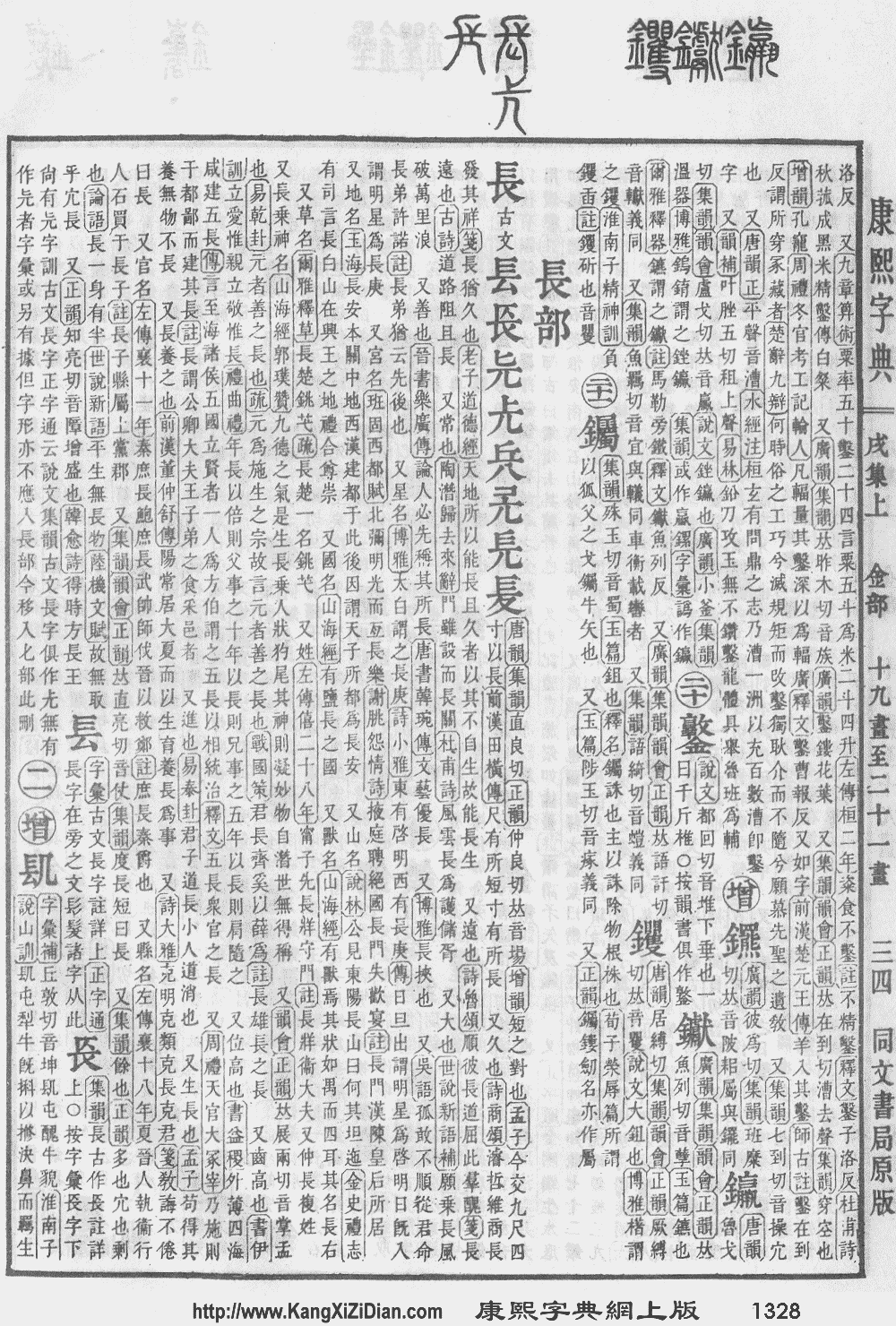
- KangXi: page 1328, character 7
- Dai Kanwa Jiten: character 41100
- Dae Jaweon: page 1829, character 11
- Hanyu Da Zidian (first edition): volume 6, page 4050, character 1
- Unihan data for U+9577
Chinese
| trad. | 長 | |
|---|---|---|
| simp. | 长 | |
Glyph origin
| Historical forms of the character 長 | ||
|---|---|---|
| Shang | Western Zhou | Shuowen Jiezi (compiled in Han) |
| Oracle bone script | Bronze inscriptions | Small seal script |
 |
 |
 |
Etymology
Three pronunciations below are cognate, all derived from the original root of 張 (*traŋ, “to make long; to stretch; to string a bow”).
Pronunciation 1 ("long") is the endopassive derivative ("be extended, be stretched"), with intransitive voicing. The lack of Tibeto-Burman cognates with the same meaning indicate that this is a Chinese innovation. Pronunciation 2 ("to grow") is the endoactive derivative. The different pronunciations are one of the few instances of contemporary grammatical tone in Mandarin.
See 張 for more.
Pronunciation 1
Definitions
長
Compounds
- 不氣長/不气长
- 久長/久长 (jiǔcháng)
- 伸長/伸长 (shēncháng)
- 保長/保长
- 修長/修长 (xiūcháng)
- 優長/优长
- 內長城/内长城
- 全長/全长 (quáncháng)
- 外長城/外长城
- 天長日久/天长日久 (tiānchángrìjiǔ)
- 天長節/天长节
- 子長/子长 (Zǐcháng)
- 寸長/寸长
- 專長/专长 (zhuāncháng)
- 履長/履长
- 廣長舌/广长舌
- 延長/延长 (yáncháng)
- 延長線/延长线 (yánchángxiàn)
- 延長賽/延长赛
- 悠長/悠长 (yōucháng)
- 所長/所长
- 手長的/手长的
- 扛長活/扛长活
- 拉長/拉长 (lācháng)
- 拉長線/拉长线
- 拉長臉/拉长脸
- 揚長/扬长
- 擅長/擅长 (shàncháng)
- 斜長石/斜长石 (xiéchángshí)
- 月長石/月长石 (yuèchángshí)
- 波長/波长 (bōcháng)
- 深長/深长 (shēncháng)
- 漫長/漫长 (màncháng)
- 片長/片长
- 特長/特长 (tècháng)
- 狹長/狭长 (xiácháng)
- 瘦長/瘦长 (shòucháng)
- 睡長覺/睡长觉
- 短長/短长
- 等長/等长
- 細水長流/细水长流 (xìshuǐchángliú)
- 細長/细长 (xìcháng)
- 綿長/绵长 (miáncháng)
- 說短長/说短长
- 說長短/说长短
- 賣長舌/卖长舌
- 身長/身长 (shēncháng)
- 車長/车长
- 輝長岩/辉长岩
- 長三/长三
- 長世/长世
- 長久/长久 (chángjiǔ)
- 長亭/长亭 (chángtíng)
- 長人/长人 (chángrén)
- 長休告/长休告
- 長休飯/长休饭
- 長住/长住 (chángzhù)
- 長便/长便
- 長信宮/长信宫
- 長假/长假 (chángjià)
- 長兵/长兵
- 長冊/长册
- 長刀/长刀 (chángdāo)
- 長句/长句 (chángjù)
- 長吁/长吁
- 長吁短嘆/长吁短叹 (chángxūduǎntàn)
- 長吟/长吟
- 長吻魚/长吻鱼
- 長命/长命 (chángmìng)
- 長命縷/长命缕
- 長命釘/长命钉
- 長命鎖/长命锁
- 長嘆/长叹 (chángtàn)
- 長嘯/长啸 (chángxiào)
- 長噸/长吨 (chángdūn)
- 長圍/长围
- 長圓/长圆
- 長坂/长坂
- 長坂坡/长坂坡
- 長城/长城 (Chángchéng)
- 長埫口/长埫口 (Chángtǎngkǒu)
- 長堰/长堰 (Chángyàn)
- 長堤/长堤
- 長壽/长寿 (chángshòu)
- 長壽麵/长寿面 (chángshòumiàn)
- 長夏/长夏
- 長夜/长夜 (chángyè)
- 長夜飲/长夜饮
- 長夫/长夫
- 長天/长天 (chángtiān)
- 長存/长存 (chángcún)
- 長安/长安 (cháng'ān)
- 長局/长局
- 長尾猴/长尾猴
- 長尾雞/长尾鸡
- 長尾鮫/长尾鲛
- 長居/长居
- 長島/长岛 (Chángdǎo)
- 長崎/长崎 (Chángqí)
- 長嶺/长岭 (Chánglǐng)
- 長川/长川 (chángchuān)
- 長工/长工 (chánggōng)
- 長干巷/长干巷
- 長干曲/长干曲
- 長年/长年
- 長年菜/长年菜
- 長庚/长庚 (chánggēng)
- 長度/长度 (chángdù)
- 長廊/长廊 (chángláng)
- 長征/长征 (chángzhēng)
- 長思/长思
- 長性/长性 (chángxìng)
- 長恨傳/长恨传
- 長恨歌/长恨歌
- 長慶集/长庆集
- 長慶體/长庆体
- 長戳/长戳
- 長才/长才
- 長打/长打 (chángdǎ)
- 長技/长技
- 長挑/长挑
- 長拳/长拳
- 長揖/长揖
- 長攙攙/长搀搀
- 長方/长方 (chángfāng)
- 長方形/长方形 (chángfāngxíng)
- 長方體/长方体 (chángfāngtǐ)
- 長日/长日
- 長明燈/长明灯
- 長春/长春 (Chángchūn)
- 長春花/长春花 (chángchūnhuā)
- 長曆/长历
- 長書/长书
- 長期/长期 (chángqī)
- 長材/长材
- 長板/长板
- 長林/长林
- 長枷/长枷
- 長案/长案
- 長梁/长梁 (Chángliáng)
- 長條兒/长条儿
- 長條圖/长条图
- 長楸/长楸
- 長楊/长杨
- 長槍/长枪 (chángqiāng)
- 長樂/长乐 (chánglè)
- 長樂宮/长乐宫 (Chánglègōng)
- 長歌/长歌 (chánggē)
- 長歲錢/长岁钱
- 長毛/长毛
- 長毛絨/长毛绒
- 長毛象/长毛象 (chángmáoxiàng)
- 長江/长江 (Cháng Jiāng)
- 長江埠/长江埠 (Chángjiāngbù)
- 長泰/长泰 (Chángtài)
- 長治/长治 (Chángzhì)
- 長河/长河 (chánghé)
- 長法/长法 (chángfǎ)
- 長波/长波 (chángbō)
- 長流/长流
- 長湖/长湖 (Chánghú)
- 長港/长港 (Chánggǎng)
- 長漏/长漏
- 長潭河/长潭河 (Chángtánhé)
- 長濱/长滨 (Chángbīn)
- 長灘/长滩 (Chángtān)
- 長班/长班
- 長生/长生 (chángshēng)
- 長生庫/长生库
- 長生果/长生果 (chángshēngguǒ)
- 長生殿/长生殿 (Chángshēng Diàn)
- 長白山/长白山 (Chángbáishān)
- 長相思/长相思
- 長眠/长眠 (chángmián)
- 長短/长短 (chángduǎn)
- 長短句/长短句 (chángduǎnjù)
- 長石/长石 (chángshí)
- 長磧/长碛 (Chángqì)
- 長程/长程 (chángchéng)
- 長空/长空 (chángkōng)
- 長竿/长竿
- 長笛/长笛 (chángdí)
- 長策/长策 (chángcè)
- 長箋/长笺
- 長算/长算
- 長篇/长篇 (chángpiān)
- 長紅/长红
- 長統襪/长统袜 (chángtǒngwà)
- 長編/长编 (chángbiān)
- 長線/长线 (chángxiàn)
- 長纓/长缨
- 長耳公/长耳公
- 長耳鴞/长耳鸮
- 長腰/长腰
- 長腳蜂/长脚蜂
- 長臂猿/长臂猿 (chángbìyuán)
- 長臂蝦/长臂虾
- 長至/长至
- 長舌/长舌
- 長舌婦/长舌妇 (chángshéfù)
- 長舌頭/长舌头
- 長著臉/长著脸
- 長處/长处 (chángchù)
- 長號/长号 (chánghào)
- 長虹/长虹 (chánghóng)
- 長蟲/长虫
- 長行/长行
- 長衫/长衫 (chángshān)
- 長袂/长袂
- 長袍/长袍 (chángpáo)
- 長角果/长角果
- 長解/长解
- 長話/长话 (chánghuà)
- 長調/长调 (chángdiào)
- 長談/长谈 (chángtán)
- 長豇豆/长豇豆
- 長足/长足 (chángzú)
- 長跑/长跑 (chángpǎo)
- 長路/长路 (chánglù)
- 長跪/长跪 (chángguì)
- 長車/长车
- 長轂/长毂
- 長辭/长辞 (chángcí)
- 長逝/长逝 (chángshì)
- 長途/长途 (chángtú)
- 長遠/长远 (chángyuǎn)
- 長邁/长迈
- 長里崗/长里岗
- 長針/长针 (chángzhēn)
- 長鋏/长铗
- 長鋒筆/长锋笔
- 長錢/长钱
- 長鎗/长枪
- 長鎩/长铩
- 長鏡頭/长镜头
- 長鑱/长镵
- 長門/长门
- 長門賦/长门赋
- 長關/长关
- 長陵/长陵
- 長陽/长阳 (Chángyáng)
- 長隨/长随
- 長離/长离
- 長青/长青 (chángqīng)
- 長青樹/长青树
- 長項/长项
- 長頭布/长头布
- 長頸鹿/长颈鹿 (chángjǐnglù)
- 長風/长风 (chángfēng)
- 長馬/长马
- 長驅/长驱 (chángqū)
- 長骨/长骨 (chánggǔ)
- 長髮/长发 (chángfà)
- 長鬣/长鬣
- 長鯨/长鲸
- 長鳴/长鸣
- 長黑/长黑
- 長鼓/长鼓
- 長鼻目/长鼻目
- 長齋/长斋
- 長齡/长龄
- 長龍/长龙 (chánglóng)
- 鞭長莫及/鞭长莫及 (biānchángmòjí)
- 音長/音长
- 頎長/颀长 (qícháng)
- 馬齒長/马齿长
Descendants
Pronunciation 2
Definitions
長
- to begin to grow; to grow; to develop
- (of a person) to look; to appear (e.g. beautiful)
- (transitive) to increase; to enhance
- (intransitive) to increase; to go up
- See also: 漲
- to nourish
- old (of age)
- senior; elder
- leader; master; chief; head
- eldest; oldest
- to exalt; to honor
- 乃惟四方之多罪逋逃,是崇是長,是信是使,是以為大夫卿士。 [Classical Chinese, trad.]
- From: The Book of Documents, circa 4th – 3rd century BCE, translated based on James Legge's version
- Nǎi wéi sìfāng zhī duōzuì būtáo, shì chóng shì zhǎng, shì xìn shì shǐ, shì yǐwéi dàfū qīngshì. [Pinyin]
- They are only the fugitives from all quarters, loaded with crimes, whom he honours and exalts, whom he employs and trusts, making them great officers and high nobles.
乃惟四方之多罪逋逃,是崇是长,是信是使,是以为大夫卿士。 [Classical Chinese, simp.]
- to wield; to be in control of
Synonyms
| Variety | Location | Words |
|---|---|---|
| Classical Chinese | 生, 長 | |
| Formal (Written Standard Chinese) | 長 | |
| Mandarin | Taiwan | 長 |
| Yantai (Muping) | 生 | |
| Jinan | 長 | |
| Wanrong | 長 | |
| Xi'an | 長 | |
| Ürümqi | 生 | |
| Wuhan | 長 | |
| Guilin | 長 | |
| Yangzhou | 生 | |
| Singapore | 長 | |
| Cantonese | Guangzhou | 生 |
| Hong Kong | 生 | |
| Dongguan | 生 | |
| Gan | Lichuan | 長 |
| Pingxiang | 生 | |
| Hakka | Meixian | 生 |
| Miaoli (N. Sixian) | 生 | |
| Pingtung (Neipu; S. Sixian) | 生 | |
| Hsinchu County (Zhudong; Hailu) | 生 | |
| Taichung (Dongshi; Dabu) | 生 | |
| Hsinchu County (Qionglin; Raoping) | 生 | |
| Jin | Taiyuan | 長 |
| Min Dong | Fuzhou | 生 |
| Min Nan | Xiamen | 生 |
| Quanzhou | 生 | |
| Zhangzhou | 生 | |
| Taipei | 生 GT | |
| Shantou | 生 | |
| Jieyang | 生 | |
| Leizhou | 生 | |
| Haikou | 生 | |
| Wu | Suzhou | 長 |
| Ningbo | 生 | |
| Wenzhou | 生 | |
| Jinhua | 生 | |
| Xiang | Loudi | 生 |
| Note | GT - General Taiwanese (no specific region identified) | |
Compounds
- 不學長俊/不学长俊
- 不長眼睛/不长眼睛
- 不長進/不长进
- 亭長/亭长 (tíngzhǎng)
- 伍長/伍长
- 使長/使长
- 停留長智/停留长智
- 兄長/兄长 (xiōngzhǎng)
- 典獄長/典狱长 (diǎnyùzhǎng)
- 再長爹娘/再长爹娘
- 列車長/列车长
- 副會長/副会长
- 副議長/副议长
- 助長/助长 (zhùzhǎng)
- 千夫長/千夫长
- 司長/司长 (sīzhǎng)
- 名譽校長/名誉校长
- 君長/君长
- 團長/团长 (tuánzhǎng)
- 土生土長/土生土长 (tǔshēngtǔzhǎng)
- 土長根生/土长根生
- 增長/增长 (zēngzhǎng)
- 增長見識/增长见识
- 大家長/大家长
- 大長公主/大长公主
- 女長須嫁/女长须嫁
- 嫡長子/嫡长子 (dízhǎngzǐ)
- 學長/学长 (xuézhǎng)
- 官長/官长 (guānzhǎng)
- 客長/客长
- 家長/家长 (jiāzhǎng)
- 家長制/家长制
- 審判長/审判长 (shěnpànzhǎng)
- 將兵長史/将兵长史
- 尊長/尊长 (zūnzhǎng)
- 山長/山长
- 州長/州长 (zhōuzhǎng)
- 市長/市长 (shìzhǎng)
- 師長/师长 (shīzhǎng)
- 年長/年长 (niánzhǎng)
- 店長/店长 (diànzhǎng)
- 庭長/庭长
- 廠長/厂长 (chǎngzhǎng)
- 廳長/厅长 (tīngzhǎng)
- 彼長我消/彼长我消
- 成長/成长 (chéngzhǎng)
- 成長率/成长率 (chéngzhǎnglǜ)
- 成長股/成长股
- 戶長/户长
- 拉名糧長/拉名粮长
- 拔苗助長/拔苗助长 (bámiáozhùzhǎng)
- 挾長/挟长
- 排長/排长 (páizhǎng)
- 揠苗助長/揠苗助长 (yàmiáozhùzhǎng)
- 敖不可長/敖不可长
- 教務長/教务长
- 教學相長/教学相长 (jiàoxuéxiāngzhǎng)
- 旅長/旅长 (lǚzhǎng)
- 族長/族长 (zúzhǎng)
- 晶粒生長/晶粒生长
- 會長/会长 (huìzhǎng)
- 村生泊長/村生泊长
- 村長/村长 (cūnzhǎng)
- 根生土長/根生土长
- 案長/案长
- 校長/校长 (xiàozhǎng)
- 機長/机长 (jīzhǎng)
- 次長/次长 (cìzhǎng)
- 水長船高/水长船高
- 沒出長/没出长
- 沒長眼/没长眼
- 沒長進/没长进
- 消長/消长 (xiāozhǎng)
- 滋長/滋长 (zīzhǎng)
- 火長/火长
- 王長/王长
- 班長/班长 (bānzhǎng)
- 理事長/理事长 (lǐshìzhǎng)
- 生長/生长 (shēngzhǎng)
- 生長期/生长期 (shēngzhǎngqī)
- 生長激素/生长激素 (shēngzhǎng jīsù)
- 生長素/生长素 (shēngzhǎngsù)
- 生長輪/生长轮
- 生長點/生长点
- 甲長/甲长
- 痴長/痴长
- 瘋長/疯长
- 百夫長/百夫长 (bǎifūzhǎng)
- 盟長/盟长 (méngzhǎng)
- 目無尊長/目无尊长 (mùwúzūnzhǎng)
- 省長/省长 (shěngzhǎng)
- 社長/社长 (shèzhǎng)
- 祕書長/秘书长 (mìshūzhǎng)
- 科長/科长 (kēzhǎng)
- 稍長膽壯/稍长胆壮
- 站長/站长 (zhànzhǎng)
- 糧長/粮长
- 級長/级长 (jízhǎng)
- 組長/组长 (zǔzhǎng)
- 經濟成長/经济成长
- 縣長/县长 (xiànzhǎng)
- 署長/署长 (shǔzhǎng)
- 翁長/翁长
- 老身長子/老身长子
- 老道長/老道长
- 股長/股长
- 船長/船长 (chuánzhǎng)
- 艦長/舰长 (jiànzhǎng)
- 色長/色长
- 茁長/茁长 (zhuózhǎng)
- 草長鶯飛/草长莺飞
- 董事長/董事长 (dǒngshìzhǎng)
- 處長/处长 (chùzhǎng)
- 見不長/见不长
- 見長/见长
- 觸類而長/触类而长
- 課長/课长 (kèzhǎng)
- 議長/议长 (yìzhǎng)
- 護士長/护士长 (hùshìzhǎng)
- 負成長/负成长
- 軍長/军长 (jūnzhǎng)
- 連長/连长 (liánzhǎng)
- 道長/道长 (dàozhǎng)
- 部會首長/部会首长
- 部長/部长 (bùzhǎng)
- 部隊長/部队长
- 鄉長/乡长 (xiāngzhǎng)
- 鄰長/邻长
- 酋長/酋长 (qiúzhǎng)
- 酋長制度/酋长制度
- 里長/里长 (lǐzhǎng)
- 鈞長/钧长
- 鋪長/铺长
- 鎮長/镇长 (zhènzhǎng)
- 長上/长上 (zhǎngshàng)
- 長俊/长俊 (zhǎngjùn)
- 長兄/长兄 (zhǎngxiōng)
- 長公主/长公主
- 長史/长史 (zhǎngshǐ)
- 長吏/长吏 (zhǎnglì)
- 長君/长君
- 長君之惡/长君之恶
- 長大/长大 (zhǎngdà)
- 長大成人/长大成人
- 長子/长子
- 長孫/长孙 (zhǎngsūn)
- 長孫媳/长孙媳
- 長官/长官 (zhǎngguān)
- 長尾巴/长尾巴
- 長幼/长幼 (zhǎngyòu)
- 長幼尊卑/长幼尊卑 (zhǎngyòuzūnbēi)
- 長幼有序/长幼有序
- 長成/长成 (zhǎngchéng)
- 長房/长房 (zhǎngfáng)
- 長機/长机 (zhǎngjī)
- 長水/长水 (Chángshuǐ)
- 長沙/长沙 (Chángshā)
- 長男/长男 (zhǎngnán)
- 長相/长相 (zhǎngxiàng)
- 長老/长老 (zhǎnglǎo)
- 長老教會/长老教会
- 長老會/长老会 (Zhǎnglǎohuì)
- 長者/长者 (zhǎngzhě)
- 長脾氣/长脾气
- 長親/长亲
- 長輩/长辈 (zhǎngbèi)
- 長進/长进 (zhǎngjìn)
- 院長/院长 (yuànzhǎng)
- 陡長/陡长
- 隊長/队长 (duìzhǎng)
- 雄長/雄长
- 靈長目/灵长目 (Língzhǎngmù)
- 靈長類/灵长类
- 館長/馆长 (guǎnzhǎng)
- 首長/首长 (shǒuzhǎng)
- 首長制/首长制
- 馬齒徒長/马齿徒长
- 駕長/驾长
- 鶯飛草長/莺飞草长
- 齋長/斋长
Descendants
Pronunciation 3
Definitions
長
Japanese
Kanji
Readings
- Go-on: ちょう (chō, Jōyō); じょう (jō)←ぢやう (dyau, historical)
- Kan-on: ちょう (chō, Jōyō)←ちやう (tyau, historical)
- Kun: ながい (nagai, 長い, Jōyō); おさ (osa, 長)←をさ (wosa, 長, historical); たける (takeru, 長ける); つかさ (tsukasa, 長)
- Nanori: いえ (ie); すすむ (susumu); たけ (take); たけし (takeshi); つね (tsune); ながし (nagashi); のぶ (nobu); ひさ (hisa); ひさし (hisashi); まさ (masa); まさる (masaru); ます (masu); みち (michi)
Compounds
- 長歌 (chōka)
- 長句 (chōku)
- 長躯 (chōku)
- 長兄 (chōkei)
- 長子 (chōshi)
- 長時間 (chō-jikan)
- 長州 (chōshū)
- 長女 (chōjo)
- 長上 (chōjō)
- 長短 (chōtan)
- 長調 (chōchō)
- 長刀 (chōtō)
- 長男 (chōnan)
- 長髪 (chōhatsu, “long hair”)
- 長夜 (chōya)
- 長老 (chōrō)
- 長銘 (chōmei): (swords) an inscription that includes some personal details about the swordsmith
- 一長一短 (itchō-ittan)
- 院長 (inchō)
- 延長 (enchō)
- 課長 (kachō)
- 会長 (kaichō)
- 学長 (gakuchō)
- 係長 (kakarichō)
- 楽長 (gakuchō)
- 機長 (kichō)
- 組長 (kumichō)
- 薩長 (Satchō)
- 市長 (shichō)
- 社長 (shachō)
- 船長 (senchō)
- 村長 (sonchō)
- 町長 (chōchō)
- 店長 (tenchō)
- 班長 (hanchō)
- 番長 (banchō)
- 部長 (buchō)
- 防長 (Bōchō)
- 霊長 (reichō)
- 長官 (kami)
- 長刀 (naginata), 薙刀 (naginata), 眉尖刀 (naginata)
- 長押 (nageshi)
- 長閑 (nodoka)
Etymology 1
| Kanji in this term |
|---|
| 長 |
| ちょう Grade: 2 |
| on’yomi |
/tjau/ → /t͡ɕjau/ → /t͡ɕɔː/ → /t͡ɕoː/
From Middle Chinese 長 (MC ʈɨɐŋX) in the sense of “chief, head, leader” and 長 (MC ɖɨɐŋ) (literally meaning “long”) for other senses. The two Middle Chinese readings were distinct but etymologically connected.
Noun
Etymology 3
| Kanji in this term |
|---|
| 長 |
| なが Grade: 2 |
| kun’yomi |
From Old Japanese.
Stem form of classical adjective 長し (nagashi), modern 長い (nagai, “long, lengthy”).
Alternative forms
Derived terms
Etymology 4
| Kanji in this term |
|---|
| 長 |
| つかさ Grade: 2 |
| irregular |
| Alternative spellings |
|---|
| 官 司 首 |
From Old Japanese.
Probably derived from 就か (tsuka, irrealis form of verb 就く (tsuku), “to take a position”) + さ (-sa, “-ness”, suffix indicating state or degree). (Can this(+) etymology be sourced?)
Pronunciation
Etymology 5
| Kanji in this term |
|---|
| 長 |
| たき Grade: 2 |
| irregular |
⟨taki1⟩ → */takʲi/ → /taki/
Possibly a variant of take below.[3] Appears in the Ruiju Myōgishō of around 1081-1100 CE.
Alternative forms
Pronunciation
- IPA(key): [ta̠kʲi]
Etymology 6
| Kanji in this term |
|---|
| 長 |
| たけ Grade: 2 |
| irregular |
⟨take2⟩ → */takəj/ → /take/
Cognate with 高 (taka, “height”), 高い (takai, “high”), and 長ける (takeru, “to be high”).
Alternative forms
Etymology 7
| Kanji in this term |
|---|
| 長 |
| たける Grade: 2 |
| irregular |
Etymology 8
| Kanji in this term |
|---|
| 長 |
| ひさし Grade: 2 |
| irregular |
From Old Japanese.
Nominalization of classical adjective 久し (hisashi), modern 久しい (hisashii, “long time”).
Korean
Etymology 1
From Middle Chinese 長 (MC ɖɨɐŋ, “long”).
| Historical Readings | ||
|---|---|---|
| Dongguk Jeongun Reading | ||
| Dongguk Jeongun, 1448 | 땨ᇰ (Yale: ttyàng) | |
| Middle Korean | ||
| Text | Eumhun | |
| Gloss (hun) | Reading | |
| Sinjeung Yuhap, 1576 | 긴 (Yale: kin) | 댱 (Yale: tyang) |
Pronunciation
- (SK Standard/Seoul) IPA(key): [t͡ɕa̠ŋ]
- Phonetic hangul: [장]
Compounds
- 연장 (延長, yeonjang)
- 신장 (身長, sinjang)
- 장고 (長考, janggo)
- 장광설 (長廣舌, janggwangseol)
- 장기 (長期, janggi)
- 장단 (長短, jangdan)
- 장문 (長文, jangmun)
- 장발 (長髮, jangbal)
- 장성 (長城, jangseong)
- 장소 (長所, jangso)
- 장수 (長壽, jangsu)
- 장어 (長魚, jang'eo)
- 장음 (長音, jang'eum)
- 장작 (長斫, jangjak)
- 장점 (長點, jangjeom)
- 장화 (長靴, janghwa)
- 최장 (最長, choejang)
- 파장 (波長, pajang)
Etymology 2
From Middle Chinese 長 (MC ʈɨɐŋX, “grow; elder”).
| Historical Readings | ||
|---|---|---|
| Dongguk Jeongun Reading | ||
| Dongguk Jeongun, 1448 | 댜ᇰ〯 (Yale: tyǎng) | |
| Middle Korean | ||
| Text | Eumhun | |
| Gloss (hun) | Reading | |
| Sinjeung Yuhap, 1576 | 길 (Yale: kil) | 댱 (Yale: tyang) |
Pronunciation
- (SK Standard/Seoul) IPA(key): [t͡ɕa̠(ː)ŋ]
- Phonetic hangul: [장(ː)]
- Though still prescribed in Standard Korean, most speakers in both Koreas no longer distinguish vowel length.
Hanja
Compounds
- 성장 (成長, seongjang)
- 조장 (助長, jojang)
- 장관 (長官, janggwan)
- 총장 (總長, chongjang)
- 회장 (會長, hoejang)
- 사장 (社長, sajang)
- 과장 (課長, gwajang)
- 의장 (議長, uijang)
- 교장 (校長, gyojang)
- 시장 (市長, sijang)
- 실장 (室長, siljang)
- 부장 (部長, bujang)
- 장남 (長男, jangnam)
- 반장 (班長, banjang)
- 가장 (家長, gajang)
- 수장 (首長, sujang)
- 선장 (船長, seonjang)
- 소장 (所長, sojang)
- 단장 (團長, danjang)
- 대장 (隊長, daejang)
- 계장 (係長, gyejang)
- 청장 (廳長, cheongjang)
- 원장 (院長, wonjang)
- 원장 (園長, wonjang)
- 장로 (長老, jangno)
- 서장 (署長, seojang)
- 학장 (學長, hakjang)
- 병장 (兵長, byeongjang)
- 촌장 (村長, chonjang)
- 기장 (機長, gijang)
- 함장 (艦長, hamjang)
Vietnamese
Han character
長: Hán Việt readings: trường (
長: Nôm readings: tràng[1][2][4], trường[1][2][4], trưởng[1][2][4], dài[1], chường[2], trành[3], trườn[5]
Compounds
- 部長 (bộ trưởng)
- 外長 (ngoại trưởng)
- 省長 (tỉnh trưởng)
- 市長 (thị trưởng)
- 社長 (xã trưởng)
- 校長 (hiệu trưởng)
- 副校長 (phó hiệu trưởng)
- 會長 (hội trưởng)
- 組長 (tổ trưởng)
- 隊長 (đội trưởng)
- 族長 (tộc trưởng)
- 家長 (gia trưởng)
- 酋長 (tù trưởng)
- 兄長 (huynh trưởng)
- 生長 (sinh trưởng)
- 增長 (tăng trưởng)
- 長成 (trưởng thành)
- 長老 (trưởng lão)
- 長房 (trưởng phòng)
- 長孫 (trưởng tôn)
- 長男 (trưởng nam)
- 長女 (trưởng nữ)
- 長村 (trưởng thôn)
- 長者 (trưởng giả)
Compounds
References
- Nguyễn (2014).
- Nguyễn et al. (2009).
- Trần (2004).
- Taberd & Pigneau de Béhaine (1838).
- Hồ (1976).