非
| ||||||||
| ||||||||
Translingual
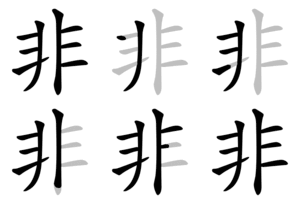
| Stroke order | |||
|---|---|---|---|
 | |||
Han character
非 (Kangxi radical 175, 非+0, 8 strokes, cangjie input 中一尸卜 (LMSY) or 中一卜卜卜 (LMYYY), four-corner 11111, composition ⿰⿰三丨⿰丨三(G) or ⿰⿰⿱𠄟㇀丿⿰丨三(HTK) or ⿰⿻⿰𠄟丿㇀⿰丨三(J) or ⿰⿰三丿⿰丨三(V))
Derived characters
- Appendix:Chinese radical/非
- 俳, 陫, 排, 啡, 徘, 猅, 渄, 悱, 婔, 𨓿, 㫵, 琲, 棑, 毴, 𤊬, 𤗋, 腓, 𤾅, 𥇪, 𪿨, 𥟍, 裶, 𥺘, 緋(绯), 𦖕, 𦩋, 𧍃, 誹(诽), 䠊, 輫, 𮤁, 𡳕, 䤵, 𩋂, 𩎻, 馡, 𡁭, 騑(𬴂), 鯡(鲱), 𪁹, 𬚀
- 剕, 𤿻, 䫍, 𪂞, 𡔭, 𡨰, 菲, 暃, 𣔉, 𭽜, 𥦯, 罪, 𦋛, 𫅪, 𬜞, 𧇁, 霏, 𮫊, 韭, 㐟, 𡌦, 奜, 婓, 𫸝, 𭣻, 棐, 㹃, 猆, 𤦅, 㻗, 𬐤, 𥇖, 𮀦, 𥺟, 斐, 悲, 裴, 蜚, 翡, 輩(辈), 𨛬, 餥, 𪂏, 𧓊, 𧕿, 裵, 䥆, 匪, 厞, 屝, 扉, 痱, 𬏿, 𨵈
References
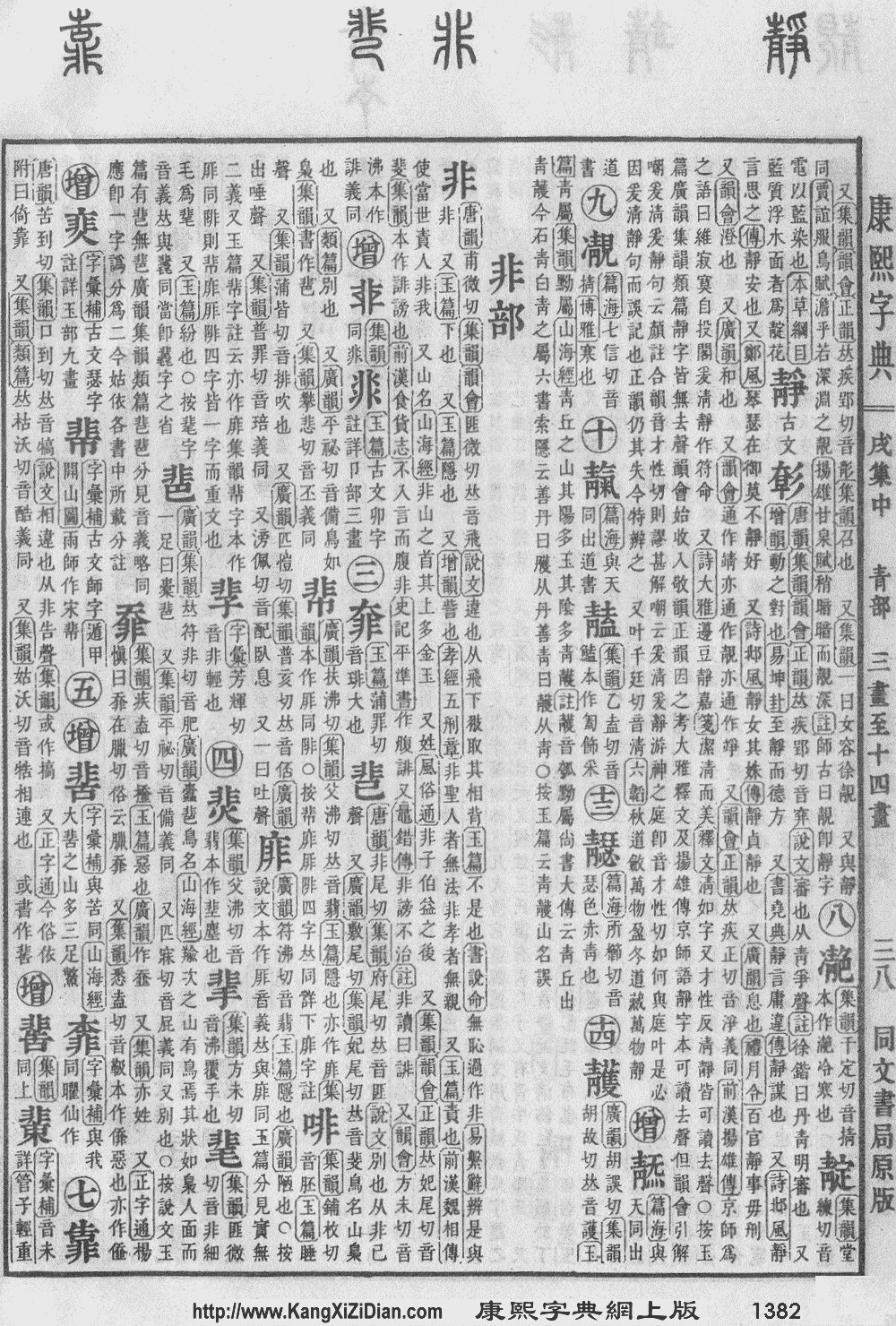
- KangXi: page 1382, character 11
- Dai Kanwa Jiten: character 42585
- Dae Jaweon: page 1894, character 7
- Hanyu Da Zidian (first edition): volume 6, page 4086, character 1
- Unihan data for U+975E
Chinese
| trad. | 非 | |
|---|---|---|
| simp. # | 非 | |
Glyph origin
| Historical forms of the character 非 | ||
|---|---|---|
| Shang | Western Zhou | Shuowen Jiezi (compiled in Han) |
| Oracle bone script | Bronze inscriptions | Small seal script |
 |
 |
 |
Characters in the same phonetic series (非) (Zhengzhang, 2003)
| Old Chinese | |
|---|---|
| 啡 | *pʰɯːlʔ |
| 排 | *brɯːl |
| 俳 | *brɯːl |
| 輫 | *brɯːl, *buːl |
| 悲 | *prɯl |
| 棑 | *breː, *brɯːls |
| 輩 | *puːls |
| 裴 | *buːl, *bɯl |
| 徘 | *buːl |
| 琲 | *buːlʔ |
| 痱 | *buːlʔ, *pɯds, *bɯl, *bɯls |
| 非 | *pɯl |
| 扉 | *pɯl |
| 緋 | *pɯl |
| 猆 | *pɯl |
| 斐 | *pɯl, *pʰɯlʔ |
| 馡 | *pɯl |
| 騑 | *pɯl, *pʰɯl |
| 誹 | *pɯl, *pɯlʔ, *pɯls |
| 餥 | *pɯl, *pɯlʔ |
| 匪 | *pɯlʔ |
| 棐 | *pɯlʔ |
| 蜚 | *pɯlʔ, *bɯls |
| 篚 | *pɯlʔ |
| 榧 | *pɯlʔ |
| 鯡 | *pɯls |
| 霏 | *pʰɯl |
| 菲 | *pʰɯl, *pʰɯlʔ, *bɯls |
| 婔 | *pʰɯl |
| 裶 | *pʰɯl |
| 悱 | *pʰɯlʔ |
| 奜 | *pʰɯlʔ |
| 腓 | *bɯl, *bɯls |
| 陫 | *bɯlʔ |
| 屝 | *bɯls |
| 厞 | *bɯls |
| 翡 | *bɯls |
Etymology
非 (OC *pɯj) is the fusion of the negation particle 不 (OC *pɯ, *pɯʔ, *pɯ', “not”) and the copula 惟 (OC *ɢʷi, “to be”), attested in oracle bone inscriptions.
Pronunciation
Definitions
非
- not be; is not; not
- 非常 ― fēicháng ― unusual
- 臣弒其君,子弒其父,非一朝一夕之故。 [Pre-Classical Chinese, trad.]
- From: I Ching, 11th – 8th century BCE
- Chén shì qí jūn, zǐ shì qí fù, fēi yīzhāoyīxī zhī gù. [Pinyin]
- The murder of a ruler by his minister, or of his father by a son, is not the result of the events of one morning or one evening.
臣弑其君,子弑其父,非一朝一夕之故。 [Pre-Classical Chinese, simp.]
- to run counter to; to not conform to
- 非法 ― fēifǎ ― illegal
- 子曰:「非禮勿視,非禮勿聽,非禮勿言,非禮勿動。」 [Classical Chinese, trad.]
- From: The Analects of Confucius, c. 475 – 221 BCE, translated based on James Legge's version
- Zǐ yuē: “Fēilǐ wù shì, fēilǐ wù tīng, fēilǐ wù yán, fēilǐ wù dòng.” [Pinyin]
- The Master replied, "Look not at what is contrary to propriety; listen not to what is contrary to propriety; speak not what is contrary to propriety; make no movement which is contrary to propriety."
子曰:“非礼勿视,非礼勿听,非礼勿言,非礼勿动。” [Classical Chinese, simp.]
- (logic) NOT
- wrong; incorrect
- 是非 ― shìfēi ― right and wrong
- to reproach; to blame
- 為上則不能愛下,為下則好非其上,是人之一必窮也。 [Classical Chinese, trad.]
- From: Xunzi, c. 3rd century BCE
- Wéi shàng zé bùnéng ài xià, wéi xià zé hào fēi qí shàng, shì rén zhī yī bì qióng yě. [Pinyin]
- If, as a superior he cannot love his subordinates, or if, as a subordinate, he likes to reproach his superiors — this is the first case in which a person is sure to suffer.
为上则不能爱下,为下则好非其上,是人之一必穷也。 [Classical Chinese, simp.]
- (colloquial) Used to insist on something. to have got to; to simply must
- Short for 非洲 (Fēizhōu, “Africa”).
- 北非 ― běifēi ― North Africa
- (~母) (Chinese linguistics) the Middle Chinese initial of 非 (MC pʉi)
Compounds
Derived terms from 非
|
|
|
Descendants
Japanese
Readings
Compounds
- 非情 (hijō): heartlessness
- 非常口 (hijōguchi): emergency exit
- 非常 (hijō): emergency, extraordinary, unusual
- 非難 (hinan): criticize, blame, reproach
- 非行 (hikō): delinquency, misconduct
Korean
Etymology
From Middle Chinese 非 (MC pʉi). Recorded as Middle Korean 비 (pi) (Yale: pi) in Hunmong Jahoe (訓蒙字會 / 훈몽자회), 1527.
Pronunciation
- (in 비단 (非但, bidan)):
- (SK Standard/Seoul) IPA(key): [pi]
- Phonetic hangul: [비]
- (not; un-; in-; non-; etc.):
- (SK Standard/Seoul) IPA(key): [pi(ː)]
- Phonetic hangul: [비(ː)]
- Though still prescribed in Standard Korean, most speakers in both Koreas no longer distinguish vowel length.
Compounds
Vietnamese
Han character
References
- Nguyễn et al. (2009).
This article is issued from Wiktionary. The text is licensed under Creative Commons - Attribution - Sharealike. Additional terms may apply for the media files.