窮
See also: 穷
| ||||||||
Translingual
Han character
窮 (Kangxi radical 116, 穴+10, 15 strokes, cangjie input 十金竹竹弓 (JCHHN), four-corner 30227, composition ⿱穴躬)
References
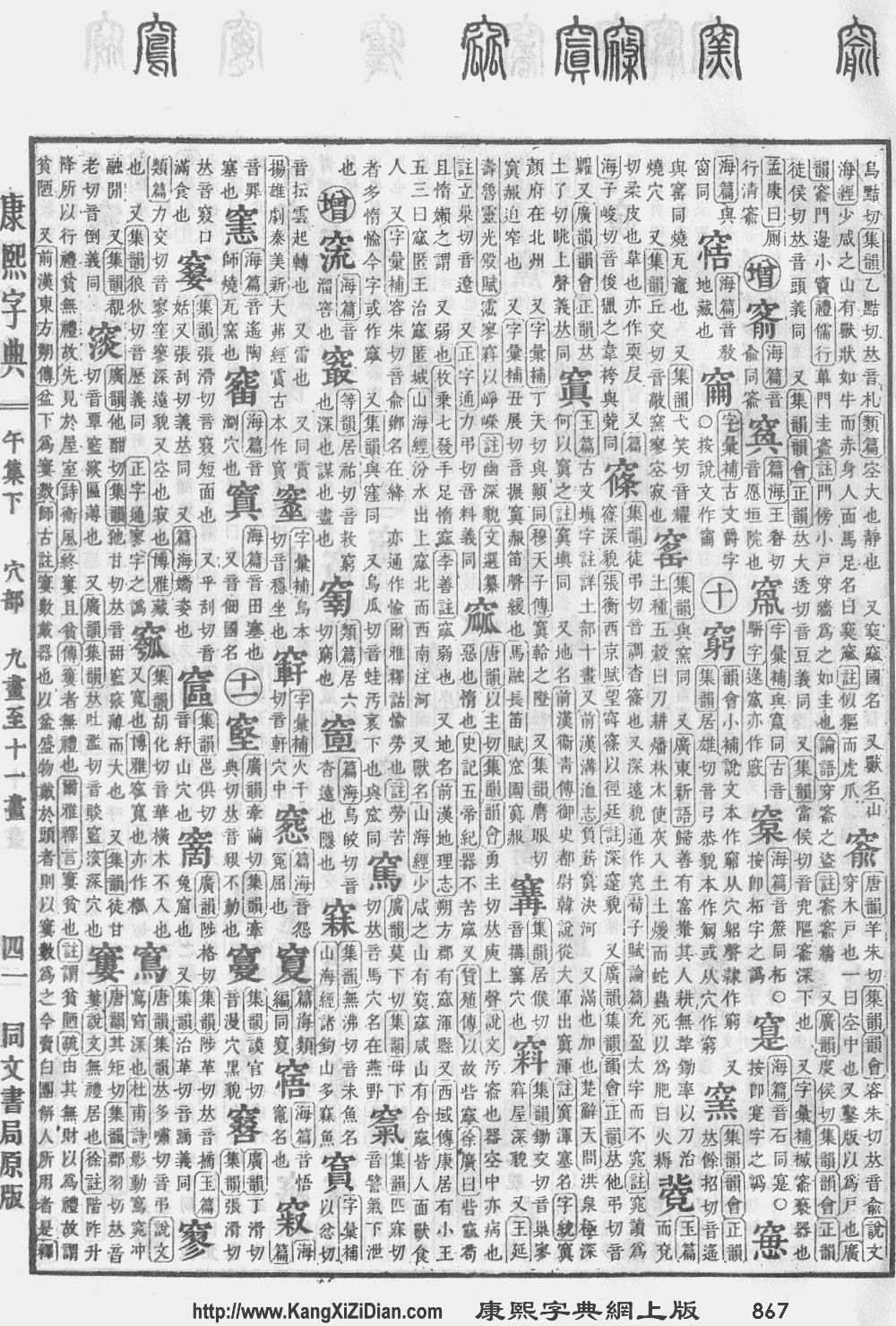
- KangXi: page 867, character 10
- Dai Kanwa Jiten: character 25593
- Hanyu Da Zidian (first edition): volume 4, page 2737, character 12
- Unihan data for U+7AAE
Chinese
| trad. | 窮 | |
|---|---|---|
| simp. | 穷 | |
Glyph origin
Characters in the same phonetic series (躬) (Zhengzhang, 2003)
Phono-semantic compound (形聲, OC *ɡuŋ) : semantic 穴 (“cave; nest; confinement”) + phonetic 躬 (OC *kuŋ).
Etymology
Possibly a vocalic variant of 邛 (OC *ɡoŋ, “distress”) (Schuessler, 2007). See there for more.
Pronunciation
Definitions
窮
- to exhaust
- to thoroughly investigate
- to be in the wrong and unable to argue further
- to be in dire straits; to suffer from lack of opportunity, support, etc.
- 子路慍見曰:「君子亦有窮乎?」子曰:「君子固窮,小人窮斯濫矣。」 [Classical Chinese, trad.]
- From: The Analects of Confucius, c. 475 – 221 BCE, translated based on James Legge's version
- Zǐ Lù yùn jiàn yuē: “Jūnzǐ yì yǒu qióng hū?” Zǐ yuē: “Jūnzǐ gù qióng, xiǎorén qióng sī làn yǐ.” [Pinyin]
- (please add an English translation of this example)
子路愠见曰:“君子亦有穷乎?”子曰:“君子固穷,小人穷斯滥矣。” [Classical Chinese, simp.]
- poor; destitute; impoverished
- to be exhausted; to be used up
- 無窮無盡/无穷无尽 ― wúqióngwújìn ― to be inexhaustible
- 理屈詞窮/理屈词穷 ― lǐqūcíqióng ― unable to argue any further; having no more excuses
- 軻既取圖奉之,發圖,圖窮而匕首見。 [Classical Chinese, trad.]
- From: Zhanguo Ce, circa 5th – 3rd centuries BCE
- Kē jì qǔ tú fèng zhī, fā tú, tú qióng ér bǐshǒu xiàn. [Pinyin]
- Jing Ke took the map scroll and presented it. He unrolled the map, and when it reached the end, the dagger appeared.
轲既取图奉之,发图,图穷而匕首见。 [Classical Chinese, simp.]
- remote; out-of-the-way
- extremely
- thoroughly
- 窮究/穷究 ― qióngjiū ― to dig deep into something
- 窮追猛打/穷追猛打 ― qióngzhuīměngdǎ ― hotly pursue and fiercely attack
- excessively; inappropriately attentive to details; snobbishly; frivolously
- 69th tetragram of the Taixuanjing; "exhaustion, tiredness" (𝍊)
- (Northern Wu) very; quite
Synonyms
- (poor):
Synonyms of 窮
Dialectal synonyms of 貧窮 (“poor; impoverished; poverty-striken”) [map]
| Variety | Location | Words |
|---|---|---|
| Classical Chinese | 貧, 窮 | |
| Formal (Written Standard Chinese) | 窮, 貧窮, 窮困, 貧困, 赤貧, 貧乏, 貧苦, 貧寒, 苦寒 | |
| Mandarin | Taiwan | 窮, 貧窮 |
| Yantai (Muping) | 窮 | |
| Luoyang | 窮 | |
| Wanrong | 窮 | |
| Xi'an | 窮 | |
| Yinchuan | 窮 | |
| Chengdu | 苦寒 | |
| Nanjing | 窮 | |
| Singapore | 窮, 貧窮, 窮苦 | |
| Cantonese | Guangzhou | 窮 |
| Hong Kong | 窮 | |
| Taishan | 窮 | |
| Gan | Nanchang | 窮 |
| Pingxiang | 窮 | |
| Hakka | Meixian | 窮 |
| Jin | Taiyuan | 窮 |
| Min Bei | Jian'ou | 窮無 |
| Min Dong | Fuzhou | 窮 |
| Min Nan | Xiamen | 宋凶, 㾪赤, 窮㾪, 窮赤 |
| Quanzhou | 宋凶, 窮赤 | |
| Hui'an | 窮赤 | |
| Zhangzhou | 宋凶, 散, 散赤 | |
| Tainan | 散, 散赤, 散食, 散凶, 窮赤, 窮散, 窮苦 | |
| Shantou | 窮, 磽 | |
| Jieyang | 窮, 磽 | |
| Leizhou | 窮, 蒯 | |
| Wu | Suzhou | 窮 |
| Danyang | 窮 | |
| Hangzhou | 窮 | |
| Jinhua | 倒灶 | |
- (very):
Dialectal synonyms of 很 (“very”) [map]
Compounds
Derived terms from 窮
|
|
|
Japanese
Kanji
窮
- This term needs a translation to English. Please help out and add a translation, then remove the text
{{rfdef}}.
Readings
- Go-on: ぐ (gu); ぐう (gū)
- Kan-on: きゅう (kyū, Jōyō)←きゆう (kyuu, historical)
- Kun: きわめる (kiwameru, 窮める, Jōyō)←きはめる (kifameru, 窮める, historical); きわまる (kiwamaru, 窮まる, Jōyō)←きはまる (kifamaru, 窮まる, historical); きわまり (kiwamari, 窮まり)←きはまり (kifamari, 窮まり, historical); きわみ (kiwami, 窮み)←きはみ (kifami, 窮み, historical)
Korean
Vietnamese
References
- Lê Sơn Thanh, "Nom-Viet.dat", WinVNKey (details)
- Nôm Lookup Tool, Vietnamese Nom Preservation Foundation
- Phạm Đình Hổ (18 c.), Nhật dụng thường đàm
This article is issued from Wiktionary. The text is licensed under Creative Commons - Attribution - Sharealike. Additional terms may apply for the media files.