埋

埋 U+57CB, 埋
CJK UNIFIED IDEOGRAPH-57CB
← 埊
[U+57CA]
CJK Unified Ideographs 埌 →
[U+57CC]

Translingual

Han character

Stroke order
10 strokes

埋 (Kangxi radical 32, 土+7, 10 strokes, cangjie input 土田土 (GWG), four-corner 46114, composition ⿰土里)

References

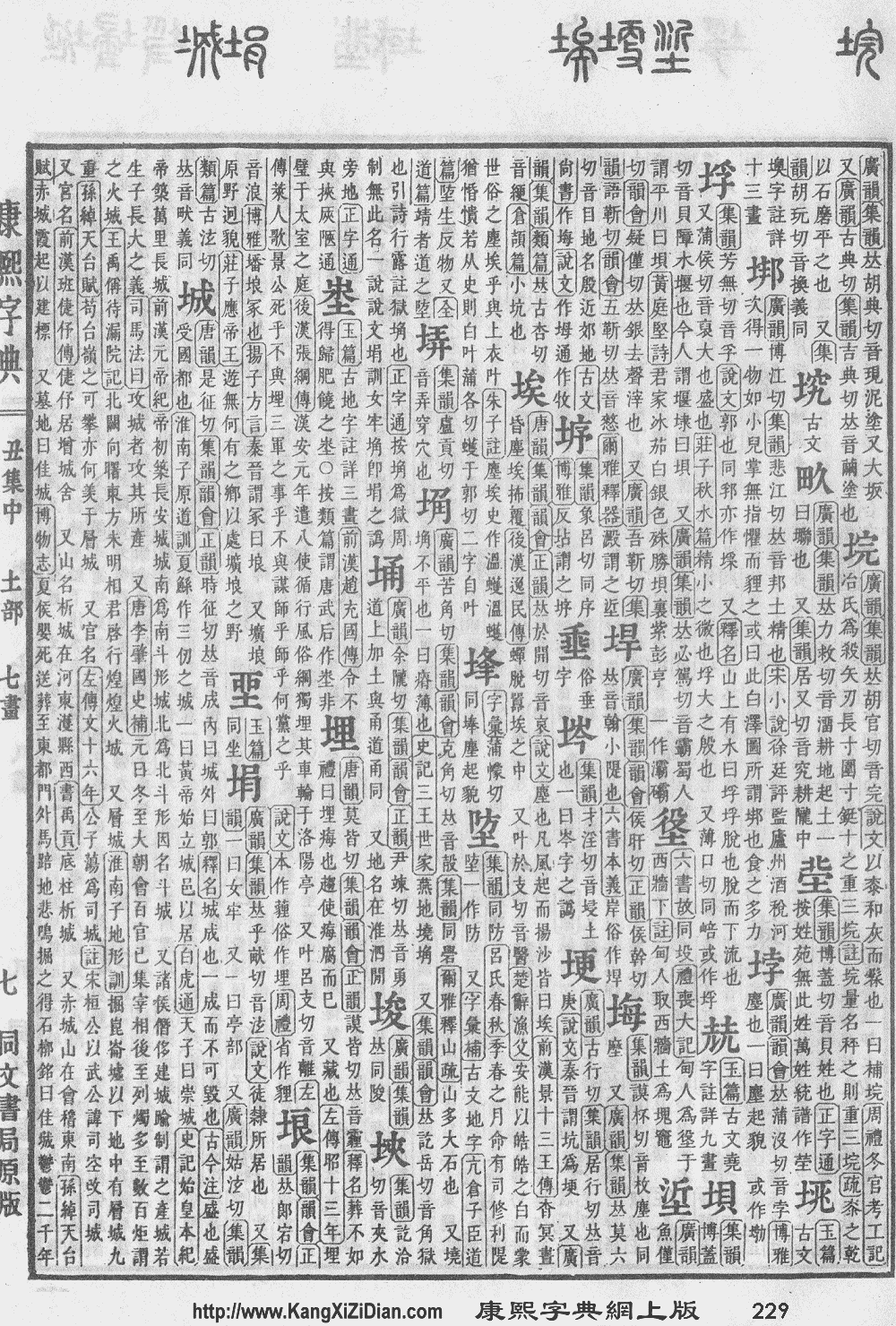
  • KangXi: page 229, character 28
  • Dai Kanwa Jiten: character 5116
  • Dae Jaweon: page 465, character 18
  • Hanyu Da Zidian (first edition): volume 1, page 443, character 21
  • Unihan data for U+57CB

Chinese

Glyph origin

Etymology 1

simp. and trad.
埋

Pronunciation


Note:
  • muài - vernacular;
  • mài - literary.
Note: tâi - vernacular (also written as 坮).
Note: dai5 - vernacular (also written as 坮).

Rime
Character 埋
Reading # 1/1
Initial (聲) 明 (4)
Final (韻) 皆 (33)
Tone (調) Level (Ø)
Openness (開合) Open
Division (等) II
Fanqie 莫皆切
Baxter meaj
Reconstructions
Zhengzhang
Shangfang
/mˠɛi/
Pan
Wuyun
/mᵚæi/
Shao
Rongfen
/mɐi/
Edwin
Pulleyblank
/məɨj/
Li
Rong
/mɛi/
Wang
Li
/mɐi/
Bernard
Karlgren
/măi/
Expected
Mandarin
Reflex
mái
Expected
Cantonese
Reflex
maai4
Baxter–Sagart system 1.1 (2014)
Character 埋
Reading # 1/1
Modern
Beijing
(Pinyin)
mái
Middle
Chinese
‹ mɛj ›
Old
Chinese
/*m.rˁə/
English bury

Notes for Old Chinese notations in the Baxter–Sagart system:

* Parentheses "()" indicate uncertain presence;
* Square brackets "[]" indicate uncertain identity, e.g. *[t] as coda may in fact be *-t or *-p;
* Angle brackets "<>" indicate infix;
* Hyphen "-" indicates morpheme boundary;

* Period "." indicates syllable boundary.
Zhengzhang system (2003)
Character 埋
Reading # 1/1
No. 7817
Phonetic
component
里
Rime
group
之
Rime
subdivision
0
Corresponding
MC rime
埋
Old
Chinese
/*mrɯː/

Definitions

埋

  1. to bury
  2. to hide; to conceal
Synonyms
  • (to bury):
  • (to conceal):

Compounds

Etymology 2

simp. and trad.
埋

Pronunciation


Definitions

埋

  1. Only used in 埋怨 (mányuàn).

Etymology 3

simp. and trad.
埋
alternative forms 𠹺 particle
枚 Siyi

Possibly from 摩 (OC *maːl, “to approach; to touch; to draw near”); cognate with Teochew 磨 (bhua5, “to approach”) (Yan et al., 2016).

Pronunciation


Definitions

埋

  1. (Cantonese) to approach
    埋位 [Cantonese]  ―  maai4 wai6-2 [Jyutping]  ―  to get in one's place
    埋站 [Cantonese]  ―  maai4 zaam6 [Jyutping]  ―  (of a bus) to approach a bus stop; (of a train) to enter a train station
    隻船埋咗岸喇。 [Cantonese, trad.]
    只船埋咗岸喇。 [Cantonese, simp.]
    zek3 syun4 maai4 zo2 ngon6 laa3. [Jyutping]
    The ship has come to the shore.
    快啲埋嚟啦! [Cantonese]  ―  faai3 di1 maai4 lai4 laa1! [Jyutping]  ―  Hurry up and join us over here!
  2. (Cantonese) towards; next to; close to
    唔好行埋嚟。 [Cantonese]  ―  m4 hou2 haang4 maai4 lai4. [Jyutping]  ―  Don't walk towards me.
    坐埋佢度 [Cantonese]  ―  co5 maai4 keoi5 dou6 [Jyutping]  ―  to sit next to them
    企埋佢身邊/企埋佢身边 [Cantonese]  ―  kei5 maai4 keoi5 san1 bin1 [Jyutping]  ―  to stand next to them
  3. (Cantonese) together; close together
    坐埋一齊/坐埋一齐 [Cantonese]  ―  co5 maai4 jat1 cai4 [Jyutping]  ―  to sit together
    將甲同乙擠埋一齊 [Cantonese, trad.]
    将甲同乙挤埋一齐 [Cantonese, simp.]
    zoeng1 gaap3 tung4 jyut3 zai1 maai4 jat1 cai4 [Jyutping]
    to put A and B next to each other; to place A and B together
    黐埋一齊/黐埋一齐 [Cantonese]  ―  ci1 maai4 jat1 cai4 [Jyutping]  ―  to stick together
    將啲材料撈埋。 [Cantonese, trad.]
    将啲材料捞埋。 [Cantonese, simp.]
    zoeng1 di1 coi4 liu6-2 lou1 maai4. [Jyutping]
    Mix the ingredients together.
  4. (Cantonese) close; intimate
    行得好埋 [Cantonese]  ―  haang4 dak1 hou2 maai4 [Jyutping]  ―  to get intimate
  5. (Cantonese) up; aside; away
    儲埋/储埋 [Cantonese]  ―  cou5 maai4 [Jyutping]  ―  to accumulate; to store up
    收埋 [Cantonese]  ―  sau1 maai4 [Jyutping]  ―  to hide away (something)
    放返埋本書。/放返埋本书。 [Cantonese]  ―  fong3 faan1 maai4 bun2 syu1. [Jyutping]  ―  Put back the book away.
  6. (Cantonese) to close; to shut
    埋口 [Cantonese]  ―  maai4 hau2 [Jyutping]  ―  (of an open wound) to heal
    埋閘/埋闸 [Cantonese]  ―  maai4 zaap6 [Jyutping]  ―  to close for business at night (lit. to shut the gates)
  7. (Cantonese) shut; closed
    閂埋度門/闩埋度门 [Cantonese]  ―  saan1 maai4 dou6 mun4 [Jyutping]  ―  to close the door
    瞇埋眼/眯埋眼 [Cantonese]  ―  mei1 maai4 ngaan5 [Jyutping]  ―  to shut the eyes
  8. (Cantonese) as well; in addition
    加埋呢個/加埋呢个 [Cantonese]  ―  gaa1 maai4 ni1 go3 [Jyutping]  ―  to add this as well
    你掉垃圾掉埋張紙吖。 [Cantonese, trad.]
    你掉垃圾掉埋张纸吖。 [Cantonese, simp.]
    nei5 deu6 laap6 saap3 deu6 maai4 zoeng1 zi2 aa1. [Jyutping]
    Throw out the piece of paper as well when you throw out the garbage.
    帶埋部手機/带埋部手机 [Cantonese]  ―  daai3 maai4 bou6 sau2 gei1 [Jyutping]  ―  to bring along a cellphone
  9. (Cantonese) to finish; to close off
    埋尾 [Cantonese]  ―  maai4 mei5 [Jyutping]  ―  to finish off
    埋單/埋单 [Cantonese]  ―  maai4 daan1 [Jyutping]  ―  to pay the bill (lit. to close off the bill)
  10. (Cantonese) to completion (of the remainder)
    食埋啲飯/食埋啲饭 [Cantonese]  ―  sik6 maai4 di1 faan6 [Jyutping]  ―  to eat the rest of the rice
    而家先寫得嗰一頁,我覺得你今晚寫唔埋份報告囉。 [Cantonese, trad.]
    而家先写得嗰一页,我觉得你今晚写唔埋份报告啰。 [Cantonese, simp.]
    ji4 gaa1 sin1 se2 dak1 go2 jat1 jip6, ngo5 gok3 dak1 nei5 gam1 maan5 se2 m4 maai4 fan6 bou3 gou3 lo1. [Jyutping]
    At this point, you've just written one page. I think you won't be able to finish writing up the report.
    畀同學講埋先啦。 [Cantonese, trad.]
    畀同学讲埋先啦。 [Cantonese, simp.]
    bei2 tung4 hok6 gong2 maai4 sin1 laa1. [Jyutping]
    Let your classmate finish what they have to say.
  11. (Cantonese) Used to indicate a negative evaluation on an event.
    唔好講埋啲咁難聽嘅說話啦。 [Cantonese, trad.]
    唔好讲埋啲咁难听嘅说话啦。 [Cantonese, simp.]
    m4 hou2 gong2 maai4 di1 gam3 naan4 teng1 ge3 syut3 waa6 laa1. [Jyutping]
    Don't say such terrible words.
    你識埋嗮啲食煙嘅朋友,日日吸佢哋啲二手煙,係唔係想生癌啊? [Cantonese, trad.]
    你识埋嗮啲食烟嘅朋友,日日吸佢哋啲二手烟,系唔系想生癌啊? [Cantonese, simp.]
    nei5 sik1 maai4 saai3 di1 sik6 jin1 ge3 pang4 jau5, jat6 jat6 kap1 keoi5 dei6 di1 ji6 sau2 jin1, hai6 m4 hai6 soeng2 saang1 ngaam4 aa3? [Jyutping]
    All the friends you make are those darn smokers, and you're breathing second-hand smoke everyday. Do you want to get cancer?
  • 埋埋, ...埋...埋

Compounds

Further reading

  • Winnie Chor (2010), “Inclusion of the outsider — grammaticalization of the verbal particle maai in Cantonese”, in Taiwan Journal of Linguistics‎

Japanese

Kanji

埋

(common “Jōyō” kanji)

  1. to bury

Readings

Korean

Hanja

埋 (eumhun 묻을 매 (mudeul mae))

  1. Hanja form? of 매 (“bury, secrete, conceal”).

Vietnamese

Han character

埋: Hán Nôm readings: mai, mài, man

  1. This term needs a translation to English. Please help out and add a translation, then remove the text {{rfdef}}.
This article is issued from Wiktionary. The text is licensed under Creative Commons - Attribution - Sharealike. Additional terms may apply for the media files.