見
| ||||||||
| ||||||||
| ||||||||
Translingual
| Stroke order | |||
|---|---|---|---|
 | |||
| Stroke order | |||
|---|---|---|---|
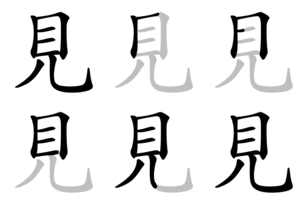 | |||
Han character
見 (Kangxi radical 147, 見+0, 7 strokes, cangjie input 月山竹山 (BUHU), four-corner 60210, composition ⿱目儿)
- Kangxi radical #147, ⾒.
Derived characters
Related characters
References
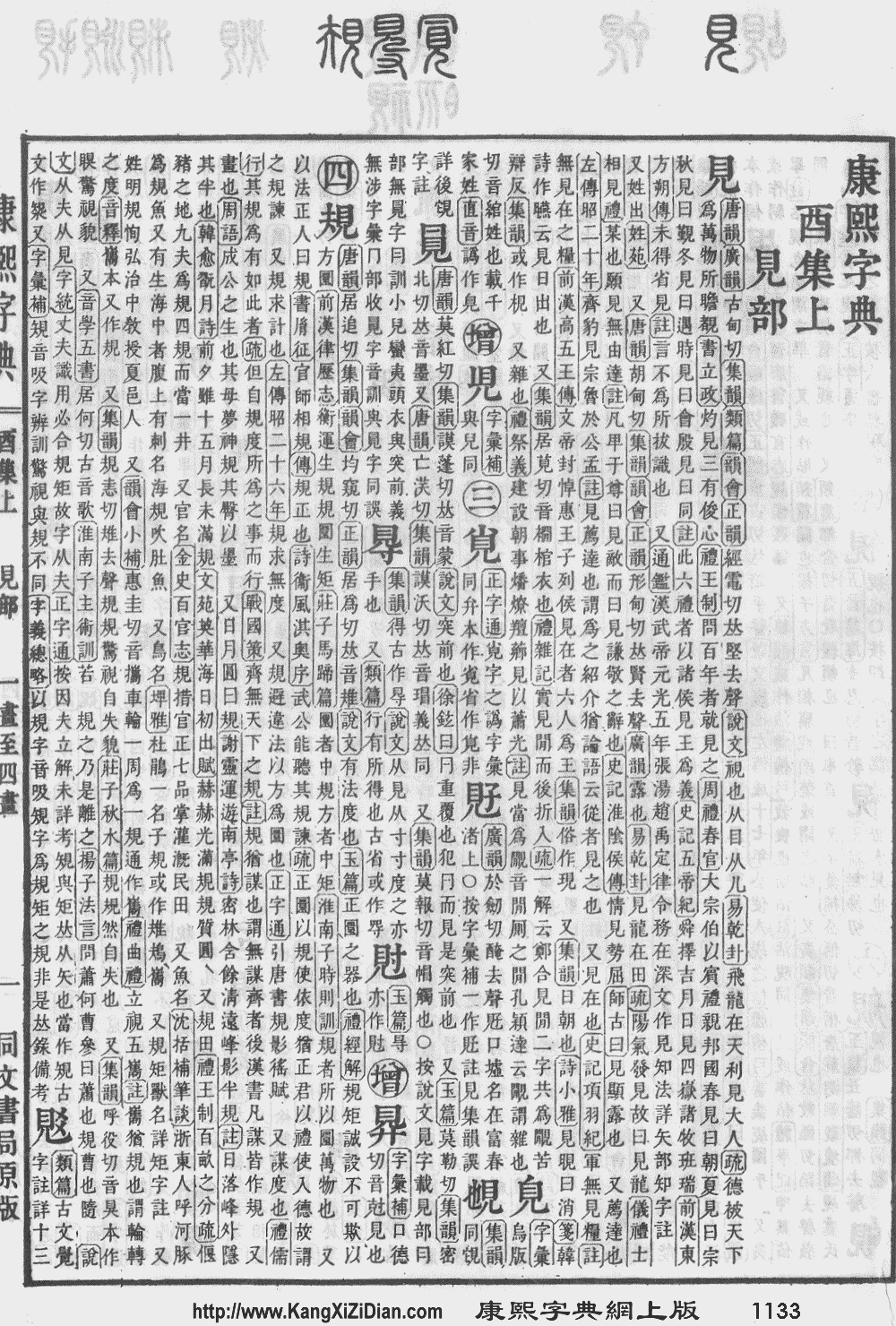
- KangXi: page 1133, character 1
- Dai Kanwa Jiten: character 34796
- Dae Jaweon: page 1599, character 8
- Hanyu Da Zidian (first edition): volume 6, page 3663, character 1
- Unihan data for U+898B
- Unihan data for U+FA0A
Chinese
| trad. | 見 | |
|---|---|---|
| simp. | 见 | |
Glyph origin
| Historical forms of the character 見 | ||||
|---|---|---|---|---|
| Shang | Western Zhou | Warring States | Shuowen Jiezi (compiled in Han) | Liushutong (compiled in Ming) |
| Oracle bone script | Bronze inscriptions | Chu slip and silk script | Small seal script | Transcribed ancient scripts |
 |
 |
 |
 |
 |
Characters in the same phonetic series (見) (Zhengzhang, 2003)
目 (“eye”) + 儿 (“human”) – an eye on a pair of legs. Originally a human figure with a large eye for a head.
Etymology
Pronunciation 1
Definitions
見
- to see
- to meet; to see
- to meet with; to be exposed to
- to see; to refer to; vide
- to appear; to seem
- opinion, idea, view
- used after some verbs to indicate the result
- (literary, used before a verb) (to have something done) by (someone or something)
- Synonym: 被 (bèi)
- 盆成括見殺。門人問曰:「夫子何以知其將見殺?」 [Classical Chinese, trad.]
- From: Mencius, c. 4th century BCE
- Pén Chéngkuò jiàn shā. Ménrén wèn yuē: “Fūzǐ héyǐ zhī qí jiāng jiàn shā?” [Pinyin]
- Pen Cheng Kuo was killed. The disciples asked, "How did you know, Master, that he would be killed?'
盆成括见杀。门人问曰:“夫子何以知其将见杀?” [Classical Chinese, simp.]
- (literary) used to before a verb to indicate the action towards the speaker
- (~母) (Chinese linguistics) the Middle Chinese initial of 見 (MC kenH)
Compounds
Derived terms from 見
|
|
|
Pronunciation 2
Definitions
見
- † Original form of 現/现 (xiàn, “to appear”).
- 軻既取圖奉之,發圖,圖窮而匕首見。 [Classical Chinese, trad.]
- From: Zhanguo Ce, circa 5th – 3rd centuries BCE
- Kē jì qǔ tú fèng zhī, fā tú, tú qióng ér bǐshǒu xiàn. [Pinyin]
- Jing Ke took the map scroll and presented it. He unrolled the map, and when it reached the end, the dagger appeared.
轲既取图奉之,发图,图穷而匕首见。 [Classical Chinese, simp.]
Compounds
Derived terms from 見
Japanese
Readings
Compounds
Etymology 1
| Kanji in this term |
|---|
| 見 |
| み Grade: 1 |
| kun’yomi |
[mi1] → /mi/
From Old Japanese. Attested in the Man'yōshū, completed some time after 759 CE.[1]
The 連用形 (ren'yōkei, “continuative or stem form”) of verb 見る (miru, “to see; to look at”).[2][3][4] Ultimately cognate with 目 (ancient ma, modern me, “eye”).[2]
Pronunciation
- IPA(key): [mʲi]
- Generally only found in compounds in modern Japanese, where the pitch accent depends on the entire term.
Etymology 2
| Kanji in this term |
|---|
| 見 |
| けん Grade: 1 |
| on’yomi |
From Middle Chinese 見 (MC kenH, ɦenH, “see; seem; opinion”).
Noun
見 • (ken)
- seeing, looking
- a view, perspective, thought, or opinion about something
- (noh) the visual impact the performers have on the audience
- window-shopping
- a window-shopper
Synonyms
References
- c. 759, Man'yōshū (book 20, poem 4360), text here
- 1988, 国語大辞典(新装版) (Kokugo Dai Jiten, Revised Edition) (in Japanese), Tōkyō: Shogakukan
- 2006, 大辞林 (Daijirin), Third Edition (in Japanese), Tōkyō: Sanseidō, →ISBN
- 1995, 大辞泉 (Daijisen) (in Japanese), Tōkyō: Shogakukan, →ISBN
Korean
Etymology 1
From Middle Chinese 見 (MC kenH).
| Historical readings |
|---|
|
Pronunciation
- (SK Standard/Seoul) IPA(key): [kjɘ(ː)n]
- Phonetic hangul: [견(ː)]
- Though still prescribed in Standard Korean, most speakers in both Koreas no longer distinguish vowel length.
Compounds
Compounds
- 의견 (意見, uigyeon)
- 발견 (發見, balgyeon)
- 견해 (見解, gyeonhae)
- 편견 (偏見, pyeon'gyeon)
- 견문 (見聞, gyeonmun)
- 이견 (異見, igyeon)
- 회견 (會見, hoegyeon)
- 참견 (參見, chamgyeon)
- 견각 (見却, gyeon'gak)
- 식견 (識見, sikgyeon)
- 예견 (豫見, yegyeon)
- 견식 (見識, gyeonsik)
- 견학 (見學, gyeonhak)
- 단견 (短見, dan'gyeon)
- 외견 (外見, oegyeon)
- 견습 (見習, gyeonseup)
- 소견 (所見, sogyeon)
- 견본 (見本, gyeonbon)
- 주견 (主見, jugyeon)
- 접견 (接見, jeopgyeon)
- 정견 (政見, jeonggyeon)
- 아견 (我見, agyeon)
- 망견 (望見, manggyeon)
- 사견 (私見, sagyeon)
- 견책 (見責, gyeonchaek)
- 고견 (高見, gogyeon)
- 일견 (一見, ilgyeon)
- 상견 (相見, sanggyeon)
- 상견례 (相見禮, sanggyeollye)
- 후견인 (後見人, hugyeonin)
- 일가견 (一家見, ilgagyeon)
- 선입견 (先入見, seonipgyeon)
- 선입지견 (先入之見, seonipjigyeon)
Etymology 2
From Middle Chinese 見 (MC ɦenH).
| Historical readings |
|---|
|
Pronunciation
- (SK Standard/Seoul) IPA(key): [çɘ(ː)n]
- Phonetic hangul: [현(ː)]
- Though still prescribed in Standard Korean, most speakers in both Koreas no longer distinguish vowel length.
Hanja
Vietnamese
This article is issued from Wiktionary. The text is licensed under Creative Commons - Attribution - Sharealike. Additional terms may apply for the media files.