比
| ||||||||
| ||||||||
Translingual
| Stroke order | |||
|---|---|---|---|
 | |||
| Stroke order | |||
|---|---|---|---|
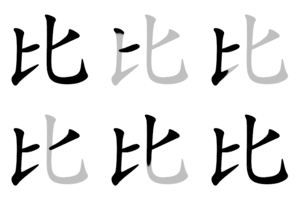 | |||
Han character
比 (Kangxi radical 81, 比+0, 4 strokes, cangjie input 心心 (PP), four-corner 21710, composition ⿰⿺𠄌一匕(GHT) or ⿻𠃏⿰一一(GHT) or ⿰⿱⺊㇀匕(JKV))
- Kangxi radical #81, ⽐.
Derived characters
Descendants
- ひ (Hiragana character derived from Man'yōgana)
- ヒ (Katakana character derived from Man'yōgana)
References
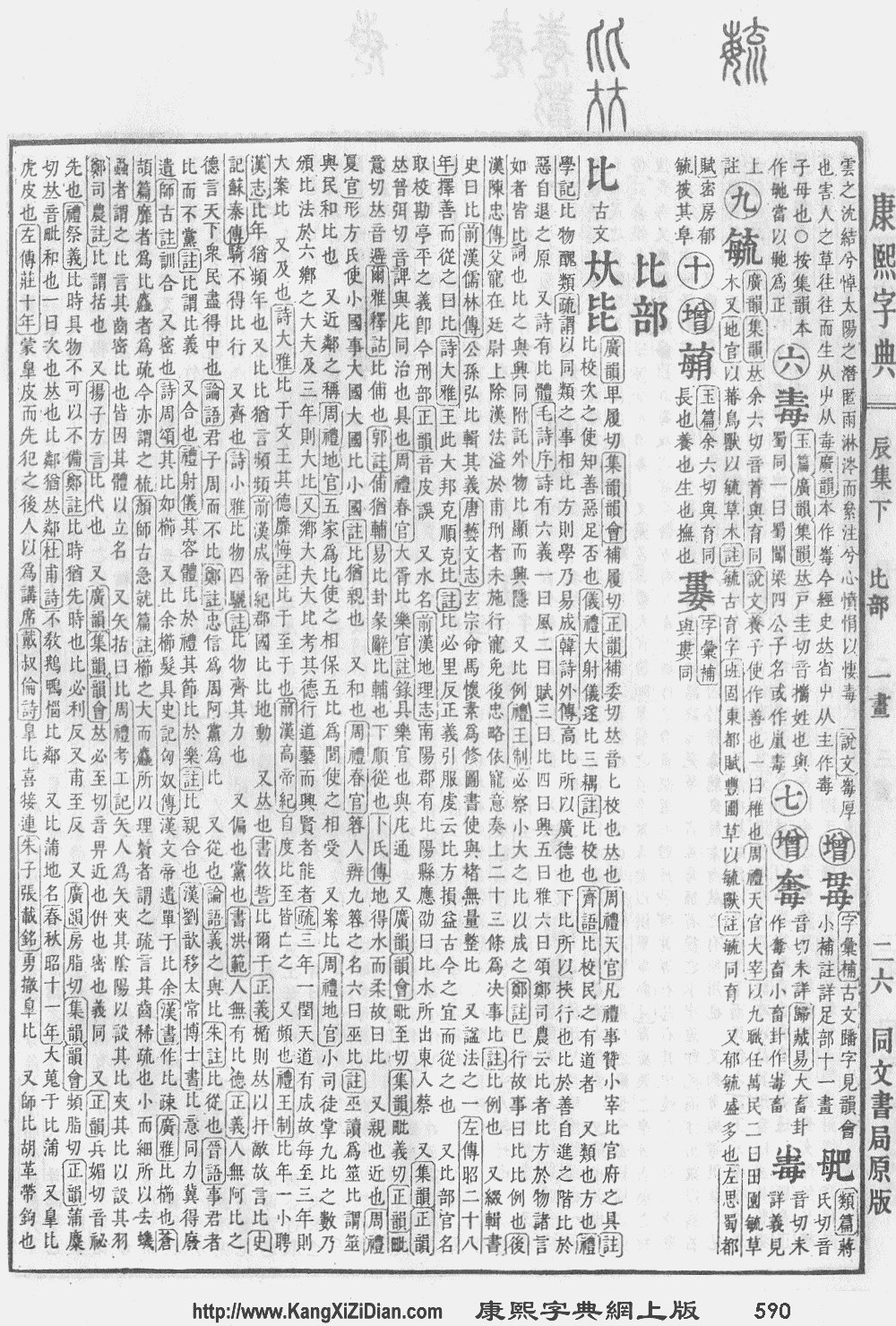
- KangXi: page 590, character 9
- Dai Kanwa Jiten: character 16743
- Dae Jaweon: page 982, character 4
- Hanyu Da Zidian (first edition): volume 2, page 1415, character 8
- Unihan data for U+6BD4
Chinese
| trad. | 比 | |
|---|---|---|
| simp. # | 比 | |
| alternative forms | 夶 ancient | |
Glyph origin
| Historical forms of the character 比 | |||||
|---|---|---|---|---|---|
| Shang | Western Zhou | Warring States | Shuowen Jiezi (compiled in Han) | Liushutong (compiled in Ming) | |
| Oracle bone script | Bronze inscriptions | Chu slip and silk script | Ancient script | Small seal script | Transcribed ancient scripts |
 |
 |
 |
 |
 |
 |
Characters in the same phonetic series (比) (Zhengzhang, 2003)
| Old Chinese | |
|---|---|
| 梐 | *piː, *biːʔ |
| 狴 | *piː |
| 悂 | *piː, *pʰi |
| 螕 | *piː |
| 鎞 | *piː |
| 蓖 | *piː |
| 篦 | *piː, *bis |
| 批 | *pʰiː |
| 砒 | *pʰiː |
| 鈚 | *pʰiː, *bi |
| 磇 | *pʰiː |
| 媲 | *pʰiːs |
| 笓 | *biː |
| 膍 | *biː, *bi |
| 陛 | *biːʔ |
| 仳 | *pʰeʔ, *piʔ, *bi, *briʔ |
| 吡 | *pʰeʔ, *piʔ, *biɡ |
| 紕 | *be, *pʰi, *kʰjɯʔ |
| 比 | *piʔ, *pis, *bi, *bis, *biɡ |
| 妣 | *piʔ, *pis |
| 秕 | *piʔ |
| 沘 | *piʔ, *bi |
| 枇 | *piʔ, *bi, *bis |
| 粊 | *pris |
| 庇 | *pis |
| 屁 | *pʰis |
| 琵 | *bi |
| 毗 | *bi |
| 貔 | *bi |
| 豼 | *bi |
| 蚍 | *bi |
| 芘 | *bi, *bis |
| 肶 | *bi |
| 魮 | *bi |
| 阰 | *bi |
| 坒 | *bis, *biɡ |
| 玭 | *bin |
Pronunciation 1
Definitions
比
- to compare; to contrast; to have a contest
- to liken; to draw an analogy to
- 如果把蒙古族文化比作草原,那蒙古族服飾就是這片草原上最美的花朵。 [MSC, trad.]
- From: 李振南 (23 August 2018), “融入生活是最好的传承”, in People's Daily, page 5
- Rúguǒ bǎ ménggǔzú wénhuà bǐzuò cǎoyuán, nà ménggǔzú fúshì jiùshì zhèpiàn cǎoyuán shàng zuì měi de huāduǒ. [Pinyin]
- (please add an English translation of this example)
如果把蒙古族文化比作草原,那蒙古族服饰就是这片草原上最美的花朵。 [MSC, simp.]
- to emulate; to copy; to imitate
- to match; to be equal
- 比得上 ― bǐdéshàng ― to compare favourably with
- 今非昔比 ― jīnfēixībǐ ― to no longer be what one was before (literally, “the present cannot compare with the past”)
- 對於一名身邊没有親人陪伴的重症患者來說,再多的言語安慰也比不上手與手的相握。 [MSC, trad.]
- From: 程煥 (5 September 2020), “白衣战士,用生命守护生命——记抗疫中的医务工作者”, in People's Daily, page 4
- Duìyú yīmíng shēnbiān méiyǒu qīnrén péibàn de zhòngzhèng huànzhě lái shuō, zài duō de yányǔ ānwèi yě bǐbùshàng shǒu yǔ shǒu de xiàng wò. [Pinyin]
- (please add an English translation of this example)
对于一名身边没有亲人陪伴的重症患者来说,再多的言语安慰也比不上手与手的相握。 [MSC, simp.]
- to be the ratio of; ... to ...
- indicating the score of a match
- to gesticulate; to gesture
- metaphor; analogy
- ratio; proportion
- than; more ... than; -er compared to
- 耶和華神對蛇說,你既作了這事,就必受咒詛,比一切的牲畜野獸更甚。 [MSC, trad.]
- Yēhéhuá shén duì shé shuō, nǐ jì zuò le zhè shì, jiù bì shòu zhòuzǔ, bǐ yīqiè de shēngchù yěshòu gèng shèn. [Pinyin]
- The Lord God said unto the serpent: “Because thou hast done this, thou art cursed above all cattle, and above every beast of the field.”
耶和华神对蛇说,你既作了这事,就必受咒诅,比一切的牲畜野兽更甚。 [MSC, simp.]
- Short for 比利時/比利时 (Bǐlìshí, “Belgium”).
Compounds
Derived terms from 比
|
|
|
Pronunciation 2
Definitions
比
Compounds
Derived terms from 比
Pronunciation 3
Definitions
比
Compounds
Derived terms from 比
|
|
|
Pronunciation 4
Pronunciation 5
Japanese
Readings
Compounds
Etymology 1
| Kanji in this term |
|---|
| 比 |
| ひ Grade: 5 |
| on’yomi |
| Alternative spelling |
|---|
| 譬 (compare) |
- (ratio, compare, equal, match): from Middle Chinese 比 (MC piɪX).
- (eighth hexagram of the I Ching): from Middle Chinese 比 (MC piɪH) or 比 (MC biɪH).
- (Philippines): short form of the ateji (当て字) spelling 比律賓 (Firipin).
Derived terms
Derived terms
- 比する (hisuru)
- 比抵抗 (hiteikō)
- 比電荷 (hidenka)
- 比誘電率 (hiyūdenritsu)
- アスペクト比 (asupekuto-hi)
- 間隙比 (kangekihi)
- 空燃比 (kūnenhi)
- 口径比 (kōkeihi)
- 構成比 (kōseihi)
- 三角比 (sankakuhi)
- 消光比 (shōkōhi)
- 縦横比 (shūōhi)
- 信号雑音比 (shingō-zatsuon-hi)
- 静圧比 (seiatsuhi)
- 整数比 (seisūhi)
- 千分比 (senbunhi)
- 前年比 (zennenhi)
- 相似比 (sōjihi)
- 男女比 (danjohi)
- 直間比率 (chokkan-hiritsu)
- 当社比 (tōshahi)
- 百分比 (hyakubunhi)
- 揚抗比 (yōkōhi)
- 容積比 (yōsekihi)
Idioms
- 比を求める (hi o motomeru)
- 比を見ない (hi o minai)
Derived terms
Derived terms
- 比価 (hika)
- 比較 (hikaku)
- 比況 (hikyō)
- 比肩 (hiken)
- 比重 (hijū)
- 比島 (Hitō)
- 比日 (Hi-Nichi)
- 比熱 (hibetsu)
- 比喩 (hiyu)
- 比諭 (hiyu)
- 比翼 (hiyoku)
- 比率 (hiritsu)
- 比倫 (hirin)
- 比隣 (hirin)
- 比類 (hirui)
- 比例 (hirei)
- 阿比 (abi)
- 逆比 (gyakuhi)
- 櫛比 (shippi)
- 正比 (seihi)
- 性比 (seihi)
- 対比 (taihi)
- 単比 (tanpi)
- 定比 (teihi)
- 渡比 (tohi)
- 等比 (tōhi)
- 日比 (Nichi-Hi)
- 反比 (hanpi)
- 複比 (fukuhi)
- 訪比 (hōhi)
- 無比 (muhi)
- 類比 (ruihi)
This article is issued from Wiktionary. The text is licensed under Creative Commons - Attribution - Sharealike. Additional terms may apply for the media files.