汩
See also: 汨
| ||||||||
Translingual
Han character
汩 (Kangxi radical 85, 水+4, 7 strokes, cangjie input 水日 (EA) or XX水日 (XXEA), four-corner 36100, composition ⿰氵曰)
Usage notes
References
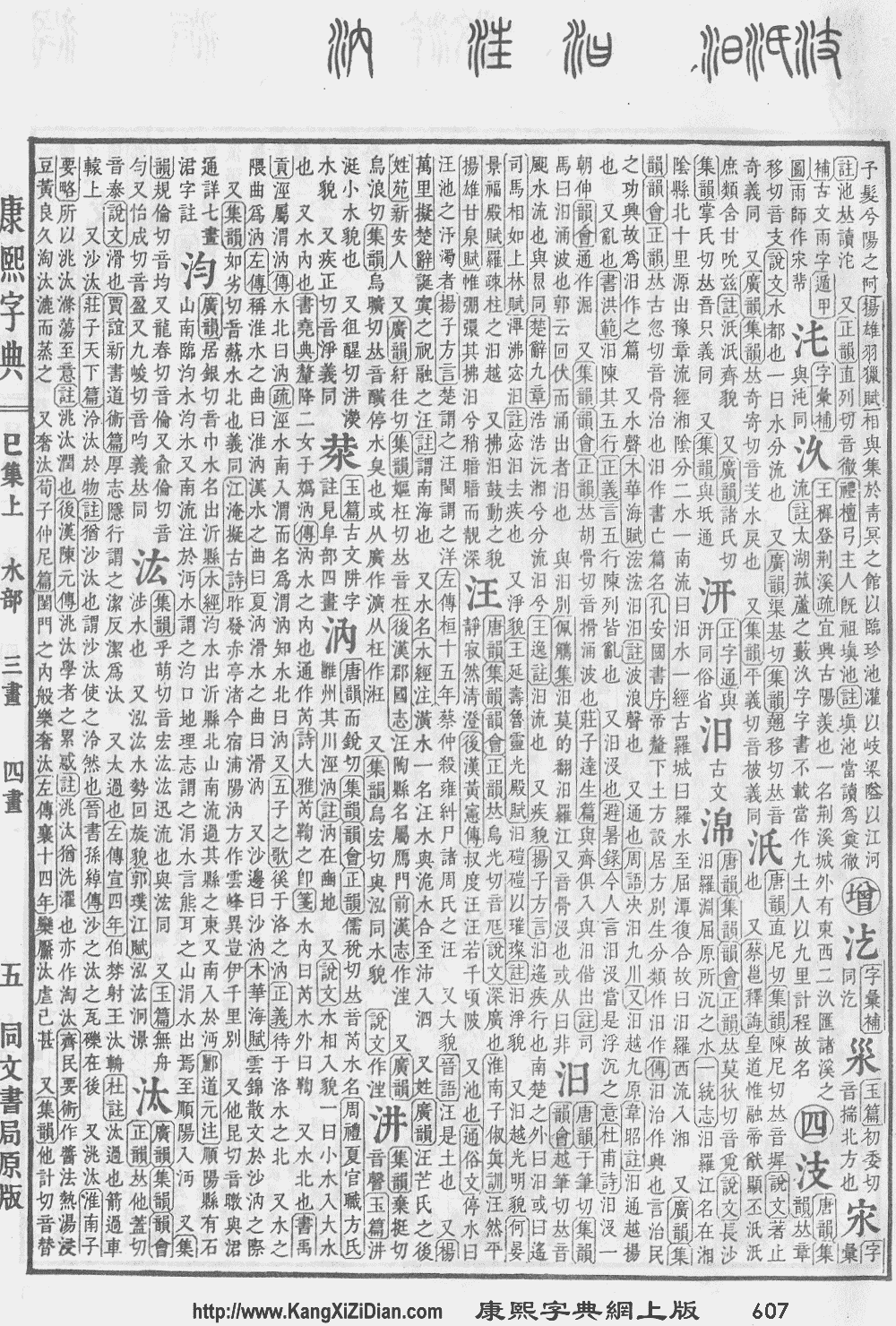
- KangXi: page 607, character 11
- Dai Kanwa Jiten: character 17153
- Dae Jaweon: page 1000, character 12
- Hanyu Da Zidian (first edition): volume 3, page 1565, character 1
- Unihan data for U+6C69
Chinese
| trad. | 汩 | |
|---|---|---|
| simp. # | 汩 | |
| alternative forms | 𭥚 | |
Glyph origin
Phono-semantic compound (形聲, OC *kʷɯːd, *ɡʷɯd) : semantic 氵 (“water”) + phonetic 曰 (OC *ɢʷad).
Pronunciation 1
Definitions
汩
- † to regulate rivers; to govern or manage
- Synonym: 治 (zhì)
- † to create disorder; to make chaos; to disturb
- † to submerge; to flood
- 薄日月,優光景,感震電,神變化,水下土,汩陵谷。雲亦靈怪矣哉! [Classical Chinese, trad.]
- From: 韓愈 (Han Yu) 《雜說四首》
- Bó rìyuè, yōu guāngjǐng, gǎn zhèn diàn, shén biànhuà, shuǐ xià tǔ, gǔ líng gǔ. Yún yì língguài yǐ zāi! [Pinyin]
- (please add an English translation of this example)
薄日月,优光景,感震电,神变化,水下土,汩陵谷。云亦灵怪矣哉! [Classical Chinese, simp.]
- † to indulge in; to wallow
- Synonym: 沉迷 (chénmí)
- (literary) appearance of water flowing rapidly
- 浩浩沅湘,分流汩兮。 [Classical Chinese, trad. and simp.]
- From: The Verses of Chu, 4th century BCE – 2nd century CE
- Hàohào yuán xiāng, fēnliú gǔ xī. [Pinyin]
- (please add an English translation of this example)
- (literary, onomatopoeia) Used in 汩汩 (“sound of water flowing”).
- 怳兮忽兮,聊兮慄兮,混汩汩兮,忽兮慌兮,俶兮儻兮,浩瀇瀁兮,慌曠曠兮。 [Classical Chinese, trad.]
- From: 枚乘 《七發》
- 怳 xī hū xī, liáo xī lì xī, hùn gǔgǔ xī, hū xī huāng xī, chù xī tǎng xī, hào 瀇瀁 xī, huāng kuàngkuàng xī. [Pinyin]
- (please add an English translation of this example)
怳兮忽兮,聊兮栗兮,混汩汩兮,忽兮慌兮,俶兮傥兮,浩㲿瀁兮,慌旷旷兮。 [Classical Chinese, simp.]
- a surname.
Compounds
|
|
|
Pronunciation 2
Definitions
汩
- † Alternative form of 𡿯 (“flow of water”).
- † appearance of rapid movement
- 引盈車之魚,於百仞之淵、汩流之中;綸不絕,鉤不伸,竿不撓。 [Classical Chinese, trad.]
- From: Liezi, 1st – 5th century CE
- Yǐn yíng chē zhī yú, yú bǎi rèn zhī yuān, gǔ liú zhī zhōng; lún bù jué, gōu bù shēn, gān bù náo. [Pinyin]
- (please add an English translation of this example)
引盈车之鱼,于百仞之渊、汩流之中;纶不绝,钩不伸,竿不挠。 [Classical Chinese, simp.]- 扈江離與辟芷兮,紉秋蘭以為佩。汩余若將不及兮,恐年歲之不吾與。 [Classical Chinese, trad.]
- From: The Verses of Chu, 4th century BCE – 2nd century CE
- Hù jiāng lí yǔ pì zhǐ xī, rèn qiū lán yǐ wèi pèi. Gǔ yú ruò jiāng bù jí xī, kǒng niánsuì zhī bù wú yǔ. [Pinyin]
- (please add an English translation of this example)
扈江离与辟芷兮,纫秋兰以为佩。汩余若将不及兮,恐年岁之不吾与。 [Classical Chinese, simp.]
- † clean appearance
Compounds
|
|
|
Pronunciation 3
Definitions
汩
- † surge
- Synonym: 湧波/涌波
- 吾始乎故,長乎性,成乎命。與齊俱入,與汩偕出,從水之道而不為私焉。 [Classical Chinese, trad.]
- From: Zhuangzi, circa 3rd – 2nd centuries BCE
- Wú shǐ hū gù, cháng hū xìng, chéng hū mìng. Yǔ qí jù rù, yǔ gǔ xié chū, cóng shuǐ zhī dào ér bùwèi sī yān. [Pinyin]
- (please add an English translation of this example)
吾始乎故,长乎性,成乎命。与齐俱入,与汩偕出,从水之道而不为私焉。 [Classical Chinese, simp.]- 龍池𤀰瀑濆其隈,漏江伏流潰其阿。汩若湯谷之揚濤,沛若濛汜之涌波。 [Classical Chinese, trad.]
- From: 左思 (Zuo Si) 《蜀都賦》
- Lóng chí 𤀰 pù fén qí wēi, lòu jiāng fú liú kuì qí ā. Gǔ ruò tāng gǔ zhī yáng tāo, pèi ruò méng sì zhī yǒngbō. [Pinyin]
- (please add an English translation of this example)
龙池𤀰瀑𣸣其隈,漏江伏流溃其阿。汩若汤谷之扬涛,沛若蒙汜之涌波。 [Classical Chinese, simp.]
Japanese
Kanji
汩
- This term needs a translation to English. Please help out and add a translation, then remove the text
{{rfdef}}.
Korean
Hanja
汩 • (yul) (hangeul 율, revised yul, McCune–Reischauer yul, Yale yul)
- This term needs a translation to English. Please help out and add a translation, then remove the text
{{rfdef}}.
This article is issued from Wiktionary. The text is licensed under Creative Commons - Attribution - Sharealike. Additional terms may apply for the media files.