食
| ||||||||
| ||||||||
| ||||||||
Translingual
| Stroke order | |||
|---|---|---|---|
 | |||
| Stroke order | |||
|---|---|---|---|
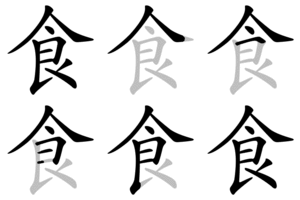 | |||
Han character
食 (Kangxi radical 184, 食+0, 9 strokes, cangjie input 人戈日女 (OIAV), four-corner 80732, composition ⿱人良)
- Kangxi radical #184, ⾷.
Derived terms
Further reading
- KangXi: page 1415, character 29
- Dai Kanwa Jiten: character 44014
- Dae Jaweon: page 1939, character 10
- Hanyu Da Zidian (first edition): volume 7, page 4440, character 1
- Unihan data for U+98DF

Chinese
Glyph origin
| Historical forms of the character 食 | |||||||
|---|---|---|---|---|---|---|---|
| Shang | Western Zhou | Spring and Autumn | Warring States | Shuowen Jiezi (compiled in Han) | Liushutong (compiled in Ming) | ||
| Oracle bone script | Bronze inscriptions | Bronze inscriptions | Bronze inscriptions | Chu slip and silk script | Qin slip script | Small seal script | Transcribed ancient scripts |
 |
 |
 |
 |
 |
 |
 |
 |
Pictogram (象形) : a mouth over a bowl of rice on a stand. While the current form is 人+良, the lower part (bowl of rice on a stand) is cognate to 皀, not to 良 or 艮. This is more visible in the form 𠊊.
Shuowen: Phono-semantic compound (形聲, OC *lɯɡs, *ɦljɯɡ) : phonetic 亼 (OC *zub) + semantic 皀; see 𠊊.
Pronunciation
Definitions
食
- (literary or Cantonese, Hakka) to eat; to have a meal; to take in
- 吾嘗終日不食,終夜不寢,以思,無益,不如學也。 [Classical Chinese, trad.]
- From: The Analects of Confucius, c. 475 – 221 BCE, translated based on James Legge's version
- Wú cháng zhōngrì bù shí, zhōngyè bù qǐn, yǐ sī, wú yì, bùrú xué yě. [Pinyin]
- I have been the whole day without eating, and the whole night without sleeping; occupied with thinking. It was of no use. The better plan is to learn.
吾尝终日不食,终夜不寝,以思,无益,不如学也。 [Classical Chinese, simp.]
- (dialectal Cantonese, Hakka) to drink
- 食酒愛食竹葉青。 [Sixian Hakka, trad.]
- From: 《食酒歌》
- Sṳ̍t-chiú oi sṳ̍t chuk-ya̍p-chhiâng. [Pha̍k-fa-sṳ]
- If you drink wine, you have to drink Zhuyeqing (three-year-old Shaoxing wine).
食酒爱食竹叶青。 [Sixian Hakka, simp.]
- (Cantonese, Hakka, Min) to smoke
- (Cantonese, board games) to capture
- (Cantonese, mahjong) Short for 食糊 (“to win”).
- (Cantonese, figuratively) to receive; to accept; to absorb
- 硬食 [Cantonese] ― ngaang6 sik6 [Jyutping] ― (please add an English translation of this example)
- † meal; food
- † edible
- † Alternative form of 蝕/蚀 (shí, “to eat away; to erode”).
- † Alternative form of 蝕/蚀 (shí, “eclipse (of the Sun or Moon)”).
Usage notes
- When playing mahjong in Cantonese, a player may say this word as a call when winning from another player's discard.
Synonyms
Compounds
- 一食萬錢/一食万钱
- 不甘食貧/不甘食贫
- 不食
- 丐食
- 不食之地
- 不食周粟
- 不食煙火/不食烟火
- 主食 (zhǔshí)
- 乞食 (qǐshí)
- 井渫不食
- 仰食 (yǎngshí)
- 伙食團/伙食团
- 伙食費/伙食费
- 伴食
- 伴食中書/伴食中书
- 伴食宰相
- 供食 (gōngshí)
- 侑食
- 侯服玉食
- 偏食 (piānshí)
- 偷食 (tōushí)
- 假食
- 停食
- 傷食/伤食 (shāngshí)
- 冇啖好食
- 冷食 (lěngshí)
- 列鼎而食
- 副食 (fùshí)
- 北食
- 半夜食黃瓜/半夜食黄瓜
- 卑宮菲食/卑宫菲食
- 即食麵/即食面 (jíshímiàn)
- 厭食/厌食 (yànshí)
- 厭食症/厌食症 (yànshízhèng)
- 口食
- 吃偏食
- 吃獨食/吃独食 (chī dúshí)
- 吃白食
- 吃自來食/吃自来食
- 吒食
- 吞食 (tūnshí)
- 吸食 (xīshí)
- 呃鬼食豆腐
- 品食
- 唔熟唔食
- 哺食
- 啄食
- 啖食
- 啃食
- 喂偏食
- 單食性/单食性
- 嗟來之食/嗟来之食 (jiēláizhīshí)
- 嗟來食/嗟来食
- 因噎廢食/因噎废食 (yīnyēfèishí)
- 坐食 (zuòshí)
- 堂食 (tángshí)
- 夕食
- 夜食
- 大食 (dàshí)
- 天狗食月 (tiāngǒu shíyuè)
- 好食
- 媮食/偷食
- 存食
- 宵衣旰食 (xiāoyīgànshí)
- 家食
- 寄食 (jìshí)
- 寒食 (hánshí)
- 寢皮食肉/寝皮食肉
- 寢食/寝食 (qǐnshí)
- 寢食不安/寝食不安 (qǐnshíbù'ān)
- 寢食俱廢/寝食俱废
- 寢食難安/寝食难安 (qǐnshínán'ān)
- 將食/将食
- 對食/对食 (duìshí)
- 小食 (xiǎoshí)
- 少食多滋味
- 少食多餐
- 就食 (jiùshí)
- 尺板斗食
- 工食
- 巴蛇食象
- 布衣糲食/布衣粝食
- 布衣蔬食 (bùyīshūshí)
- 市食
- 幫狗吃食/帮狗吃食
- 幫虎吃食/帮虎吃食
- 并日而食
- 廢寢忘食/废寝忘食 (fèiqǐnwàngshí)
- 廢寢輟食/废寝辍食
- 廟食/庙食
- 廢食忘寢/废食忘寝
- 廩食/廪食 (lǐnshí)
- 弊衣疏食
- 忘寢廢食/忘寝废食
- 忘食 (wàngshí)
- 快食麵/快食面
- 惡衣惡食/恶衣恶食
- 惡衣糲食/恶衣粝食
- 惡衣菲食/恶衣菲食
- 惡衣蔬食/恶衣蔬食
- 惡食/恶食
- 打野食
- 打食
- 托葷鹹食/托荤咸食
- 找野食
- 挑食 (tiāoshí)
- 捕食 (bǔshí)
- 掠食者 (lüèshízhě)
- 推食解衣
- 揀衣挑食/拣衣挑食
- 揀飲擇食/拣饮择食
- 搖尾求食/摇尾求食
- 搵食/揾食
- 擊鐘鼎食/击钟鼎食
- 擇食/择食
- 攝食/摄食 (shèshí)
- 攫食
- 攻苦食淡
- 斗食
- 斷頭食/断头食
- 施食 (shīshí)
- 旅食
- 日食 (rìshí)
- 旰食
- 旰食之勞/旰食之劳
- 旰食宵衣
- 易子而食 (yìzǐ'érshí)
- 昃食宵衣
- 春盛食罍
- 晝食/昼食
- 晡食
- 晚食當肉/晚食当肉
- 暇食
- 暴食 (bàoshí)
- 暴飲暴食/暴饮暴食 (bàoyǐnbàoshí)
- 替狗奪食/替狗夺食
- 會食/会食
- 月全食 (yuèquánshí)
- 月盈則食/月盈则食
- 月食 (yuèshí)
- 服食 (fúshí)
- 朝趁暮食
- 朝食 (zhāoshí)
- 木食
- 果食
- 東食西宿/东食西宿
- 棲梧食竹/栖梧食竹
- 殺衣縮食/杀衣缩食
- 毛食
- 民患淡食
- 民食 (mínshí)
- 沒見食面/没见食面
- 流食 (liúshí)
- 浮頭食/浮头食
- 消食 (xiāoshí)
- 游手游食
- 游食之民
- 滅此朝食/灭此朝食 (miècǐzhāoshí)
- 漂母進食/漂母进食
- 濁酒粗食/浊酒粗食 (zhuójiǔ cūshí)
- 濾食/滤食
- 灌園食力/灌园食力
- 火食
- 為食/为食
- 煙火食/烟火食
- 蒸食
- 熟食 (shúshí)
- 燕子銜食/燕子衔食
- 犬彘之食
- 狗彘不食
- 狗食
- 狼卜食
- 獨食/独食
- 獵食/猎食 (lièshí)
- 率獸食人/率兽食人
- 玉食
- 玉食錦衣/玉食锦衣
- 甘食褕衣
- 甜食 (tiánshí)
- 生食 (shēngshí)
- 疏食 (shūshí)
- 疏食飲水/疏食饮水
- 發憤忘食/发愤忘食 (fāfènwàngshí)
- 發誓當食生菜/发誓当食生菜
- 白衣大食
- 白食 (báishí)
- 盛食厲兵/盛食厉兵
- 禁食 (jìnshí)
- 祿食/禄食
- 福食 (fúshí)
- 稍食
- 穀食/谷食 (gǔshí)
- 節衣縮食/节衣缩食 (jiéyīsuōshí)
- 節食/节食 (jiéshí)
- 節食縮衣/节食缩衣
- 粉食
- 粗衣劣食
- 粗衣惡食/粗衣恶食
- 粗衣糲食/粗衣粝食
- 粗食 (cūshí)
- 糖食 (tángshí)
- 糧食/粮食 (liángshí)
- 糲食粗衣/粝食粗衣
- 糲食粗餐/粝食粗餐
- 素食 (sùshí)
- 細食/细食
- 終食之間/终食之间
- 絕食/绝食 (juéshí)
- 縮衣節食/缩衣节食
- 繫而不食/系而不食
- 缺衣少食 (quēyīshǎoshí)
- 缺食無衣/缺食无衣
- 美衣玉食
- 美食 (měishí)
- 耳食 (ěrshí)
- 耳食之聞/耳食之闻
- 耳食之言
- 耳食之談/耳食之谈
- 膈食病
- 膳食 (shànshí)
- 臨食廢箸/临食废箸
- 自食其力 (zìshíqílì)
- 自食其果 (zìshíqíguǒ)
- 自食惡果/自食恶果
- 草衣木食
- 荐食
- 菲衣惡食/菲衣恶食
- 菲食卑宮/菲食卑宫
- 菲食薄衣
- 葷食/荤食
- 蔬食 (shūshí)
- 藥食同源/药食同源
- 藿食
- 虎頭食肉/虎头食肉
- 蠶食/蚕食 (cánshí)
- 蠶食鯨吞/蚕食鲸吞 (cánshíjīngtūn)
- 血食
- 行食
- 衛星食/卫星食
- 衣帛食肉
- 衣租食稅/衣租食税
- 衣豐食足/衣丰食足
- 衣豐食飽/衣丰食饱
- 衣錦食肉/衣锦食肉
- 衣食 (yīshí)
- 褕衣甘食
- 褐衣疏食
- 見噎廢食/见噎废食
- 覓衣求食/觅衣求食
- 覓食/觅食 (mìshí)
- 解衣推食
- 解驂推食/解骖推食
- 託食/托食
- 誓願當食生菜/誓愿当食生菜
- 謀食/谋食
- 識食/识食
- 豐衣足食/丰衣足食 (fēngyīzúshí)
- 貓兒食/猫儿食
- 貼食/贴食
- 賦食行水/赋食行水
- 賴衣求食/赖衣求食
- 足食豐衣/足食丰衣
- 足食足兵
- 輟食吐哺/辍食吐哺
- 辛苦搵來志在食/辛苦揾来志在食
- 退食
- 逐食
- 速食 (sùshí)
- 進食/进食 (jìnshí)
- 遊手遊食/游手游食
- 遊食/游食
- 遛食兒/遛食儿
- 酒食 (jiǔshí)
- 野食兒/野食儿
- 金衣玉食
- 錦衣玉食/锦衣玉食 (jǐnyīyùshí)
- 鐘鳴鼎食/钟鸣鼎食 (zhōngmíngdǐngshí)
- 鑿飲耕食/凿饮耕食
- 閑食/闲食
- 陳食/陈食
- 雞鶩爭食/鸡鹜争食
- 零食 (língshí)
- 靡衣偷食
- 靡衣玉食
- 順口食/顺口食
- 頭食/头食
- 食下晝/食下昼
- 食不下咽
- 食不二味
- 食不充口
- 食不充腸/食不充肠
- 食不充飢/食不充饥
- 食不兼味
- 食不念飽/食不念饱
- 食不暇飽/食不暇饱
- 食不果腹 (shíbùguǒfù)
- 食不求甘
- 食不求飽/食不求饱
- 食不甘味
- 食不異肉/食不异肉
- 食不知味
- 食不終味/食不终味
- 食不累味
- 食不遑味
- 食不重味
- 食不重肉
- 食不餬口/食不糊口
- 食人魚/食人鱼 (shírényú)
- 食人鯊/食人鲨
- 食人鯧/食人鲳 (shírénchāng)
- 食住上
- 食俸
- 食具 (shíjù)
- 食前方丈
- 食力 (shílì)
- 食古不化 (shígǔbùhuà)
- 食味方丈
- 食品 (shípǐn)
- 食單/食单 (shídān)
- 食器 (shíqì)
- 食土
- 食地
- 食堂 (shítáng)
- 食塞米
- 食壘/食垒
- 食夾棍/食夹棍
- 食字
- 食宜 (shíyí)
- 食客 (shíkè)
- 食宿 (shísù)
- 食少事煩/食少事烦
- 食屎屙飯/食屎屙饭
- 食廩餼/食廪饩
- 食忌
- 食性
- 食慾/食欲 (shíyù)
- 食指 (shízhǐ)
- 食指大動/食指大动
- 食指浩繁
- 食料 (shíliào)
- 食既
- 食日萬錢/食日万钱
- 食格棍
- 食次
- 食死貓/食死猫
- 食毛踐土/食毛践土
- 食氣/食气
- 食水 (shíshuǐ)
- 食油 (shíyóu)
- 食波餠
- 食洋不化
- 食火雞/食火鸡 (shíhuǒjī)
- 食無定時/食无定时
- 食無情雞/食无情鸡
- 食無求飽/食无求饱
- 食煙/食烟
- 食物 (shíwù)
- 食玉炊桂
- 食環署/食环署 (Shíhuánshǔ)
- 食用 (shíyòng)
- 食用根
- 食用色素 (shíyòng sèsù)
- 食療/食疗 (shíliáo)
- 食白果
- 食盒
- 食碗面反碗底
- 食租衣稅/食租衣税
- 食穀種/食谷种
- 食積/食积
- 食管 (shíguǎn)
- 食糖 (shítáng)
- 食糧/食粮 (shíliáng)
- 食罍
- 食老本
- 食而不化
- 食肉寢皮/食肉寝皮 (shíròuqǐnpí)
- 食腦/食脑
- 食膳
- 食自己
- 食色性也 (shísèxìngyě)
- 食茱萸
- 食螺絲/食螺丝
- 食蟲植物/食虫植物
- 食蟲虻/食虫虻
- 食蟻獸/食蚁兽 (shíyǐshòu)
- 食衣住行
- 食補/食补 (shíbǔ)
- 食言 (shíyán)
- 食譜/食谱 (shípǔ)
- 食豆腐
- 食貓麵/食猫面
- 食貨/食货
- 食貨志/食货志
- 食道 (shídào)
- 食過返尋味/食过返寻味
- 食邑 (shíyì)
- 食量 (shíliàng)
- 食面
- 食頃/食顷
- 食頭路/食头路 (sṳ̍t-thèu-lu)
- 食飯/食饭 (sik6 faan6)
- 食髓知味
- 食鹽/食盐 (shíyán)
- 食墨
- 食齋/食斋
- 飢不擇食/饥不择食 (jībùzéshí)
- 飢虎撲食/饥虎扑食
- 飲冰食蘗/饮冰食蘗
- 飲水食菽/饮水食菽
- 飲食/饮食 (yǐnshí)
- 飯食/饭食 (fànshí)
- 飽食/饱食 (bǎoshí)
- 餐松食柏
- 餓虎撲食/饿虎扑食
- 餘食贅行/余食赘行
- 餵食/喂食 (wèishí)
- 饋食/馈食
- 馬食/马食
- 鬼食泥
- 鮮食/鲜食
- 鳥食/鸟食
- 鷇食/𬆮食
- 麵食/面食 (miànshí)
- 鼎食 (dǐngshí)
- 鼎食鳴鐘/鼎食鸣钟
- 齋居蔬食/斋居蔬食
Pronunciation
Definitions
食
- † Original form of 飼/饲 (sì, “to feed; to make ... eat or cause ... to eat”).
- 故孝子不以食其親,忠臣不以食其君。 [Classical Chinese, trad.]
- From: Mozi, c. 4th century BCE
- Gù xiàozǐ bù yǐ sì qí qīn, zhōngchén bù yǐ sì qí jūn. [Pinyin]
- Thus a filial son will not feed it (the medicine) to his parent and a loyal minister will not feed it (the medicine) to his king.
故孝子不以食其亲,忠臣不以食其君。 [Classical Chinese, simp.]
Etymology 3
| trad. | 食 | |
|---|---|---|
| simp. # | 食 | |
| alternative forms | 吃 𠋡 Min Dong 呷 Min Nan 噍 Min Nan | |
Kwok (2018) reconstructs Proto-Southern Min *tsiaʔ⁸ and tentatively reconstructs Proto-Min *dziak (in Norman's system).
While often considered as the vernacular counterpart to etymology 1, it is unlikely to be related to etymology 1 (Norman, 1991; Klöter, 2005; Fuehrer and Yang, 2014). Schuessler (2007) suggests it derives from 嚼 (OC *zewɢ, “to chew”) (probably based on Norman's unpublished manuscripts).
Pronunciation
Definitions
食
- (Coastal Min) to eat; to have a meal
- (Coastal Min) to drink
- (Coastal Min) to take in; to inhale
- 食薰 [Hokkien] ― chia̍h-hun [Pe̍h-ōe-jī] ― to inhale smoke; to smoke
- (Hokkien, Teochew) to embezzle (money)
- 食鐳/食镭 [Hokkien] ― chia̍h-lui [Pe̍h-ōe-jī] ― to embezzle money
- (Hokkien, mahjong) to chow
- (Teochew, Penang Hokkien) cuisine
- 紅毛食 [Penang Hokkien, trad.]
- From: Catherine Churchman (2021), “Chapter 5: Native Lexical Innovation in Penang Hokkien: Thinking beyond Rojak”, in Sinophone Southeast Asia: Sinitic Voices across the Southern Seas, Brill,
- Âng-mô͘-chia̍h [Pe̍h-ōe-jī]
- Western food
红毛食 [Penang Hokkien, simp.]
Usage notes
- When playing mahjong in Hokkien, a player may say this word as a call when forming a chowing another player's discard
Synonyms
Compounds
Etymology 4
| trad. | 食 | |
|---|---|---|
| simp. # | 食 | |
From Proto-Min *jiap or *jiat (“to eat”). While sometimes considered as the vernacular counterpart to etymology 1, it may be from 饁 (OC *ɢrab, “to carry food to workers in the field”) (Norman, 1991; Schuessler, 2007).
Pronunciation
Pronunciation
References
- “食”, in 漢語多功能字庫 (Multi-function Chinese Character Database), 香港中文大學 (the Chinese University of Hong Kong), 2014–
- “Entry #5589”, in 臺灣閩南語常用詞辭典 [Dictionary of Frequently-Used Taiwan Minnan] (in Chinese and Min Nan), Ministry of Education, R.O.C., 2011.
Japanese
| Shinjitai | 食 | |
| Kyūjitai [1][2] |
食󠄁 食+ 󠄁?(Adobe-Japan1) |
 |
| 食󠄃 食+ 󠄃?(Hanyo-Denshi) (Moji_Joho) | ||
| The displayed kanji may be different from the image due to your environment. See here for details. | ||
Readings
From Middle Chinese 食 (MC ʑɨk̚); compare Mandarin 食 (shí):
From Middle Chinese 食 (MC zɨH); compare Mandarin 食 (sì):
From Middle Chinese 食 (MC jɨH); compare Mandarin 食 (yì):
From native Japanese roots:
- Kun: くう (kū, 食う, Jōyō)←くふ (kufu, 食ふ, historical); くらう (kurau, 食らう, Jōyō)←くらふ (kurafu, 食らふ, historical); たべる (taberu, 食べる, Jōyō); はむ (hamu, 食む); すく (suku, 食く); おし (oshi, 食し); おす (osu, 食す); たぐ (tagu, 食ぐ); たぶ (tabu, 食ぶ); いい (ī, 食)←いひ (ifi, 食, historical); うか (uka, 食); うけ (uke, 食); け (ke, 食); し (shi, 食)
- Nanori: あき (aki); あきら (akira); うけ (uke); くら (kura); け (ke); みけ (mike)
Compounds
Pronunciation
- IPA(key): [ɯ̟ᵝka̠]
Etymology 2
| Kanji in this term |
|---|
| 食 |
| うけ Grade: 2 |
| kun’yomi |
uka + i → uke2 → uke. Bound apophonic form 食 (uka).
Pronunciation
- IPA(key): [ɯ̟ᵝke̞]
Pronunciation
- IPA(key): [ke̞]
Derived terms
- 食塩 (shokuen)
- 食事 (shokuji)
- 食餌 (shokuji)
- 食尽 (shokujin)
- 食卓 (shokutaku)
- 食道 (shokudō)
- 食堂 (shokudō)
- 食費 (shokuhi)
- 食品 (shokuhin)
- 食封 (shokuhō)
- 食物 (shokumotsu)
- 食欲 (shokuyoku)
- 食料 (shokuryō)
- 食糧 (shokuryō)
- 飲食 (inshoku)
- 会食 (kaishoku)
- 軽食 (keishoku)
- 月食 (gesshoku)
- 菜食 (saishoku)
- 蚕食 (sanshoku)
- 侵食 (shinshoku)
- 浸食 (shinshoku)
- 絶食 (zesshoku)
- 朝食 (chōshoku)
- 昼食 (chūshoku)
- 日食 (nisshoku)
- 陪食 (baishoku)
- 伴食 (banshoku)
- 腐食 (fushoku)
- 米食 (beishoku)
- 偏食 (henshoku)
- 飽食 (hōshoku)
- 夜食 (yashoku)
- 夕食 (yūshoku)
- 糧食 (ryōshoku)
- 食中毒 (shokuchūdoku)
- 衣食住 (ishokujū)
- 皆既食 (kaikishoku)
- 和食 (washoku)
- 洋食 (yōshoku)
Etymology 5
| Kanji in this term |
|---|
| 食 |
| しょく Grade: 2 |
| kan’on |
| Alternative spelling |
|---|
| 蝕 |
From Middle Chinese 蝕 (MC ʑɨk̚, “to eat away at, to erode; to eclipse”), originally the same word in Old Chinese as 食 (MC ʑɨk̚, “to eat”).
Noun
食 • (shoku)
- [from 927] 食, 蝕: (astronomy) eclipse (often, but not exclusively, of the sun or the moon)
- 2015, 田原真人, これだけ! 高校物理 波・音・光 波動編, 秀和システム, →ISBN, page 97:
- レーマーが木星の衛星の1つであるイオの食の周期を測定したところ、一定ではなく、地球の公転に伴い変動することがわかりました。
- Rēmā ga Mokusei no eisei no hitotsu de aru Io no shoku no shūki o sokutei shita tokoro, ittei de wa naku, Chikyū no kōten ni tomonai hendō suru koto ga wakarimashita.
- When Rømer measured the period of the eclipses of Io, one of Jupiter's satellites, he discovered that it was not constant but fluctuated with the Earth's revolution.
- レーマーが木星の衛星の1つであるイオの食の周期を測定したところ、一定ではなく、地球の公転に伴い変動することがわかりました。
-
Inflection
| Katsuyōkei ("stem forms") | ||||
|---|---|---|---|---|
| Mizenkei ("imperfective") | 食し | しょくし | shoku shi | |
| Ren’yōkei ("continuative") | 食し | しょくし | shoku shi | |
| Shūshikei ("terminal") | 食する | しょくする | shoku suru | |
| Rentaikei ("attributive") | 食する | しょくする | shoku suru | |
| Kateikei ("hypothetical") | 食すれ | しょくすれ | shoku sure | |
| Meireikei ("imperative") | 食せよ¹ 食しろ² |
しょくせよ¹ しょくしろ² |
shoku seyo¹ shoku shiro² | |
| Key constructions | ||||
| Passive | 食される | しょくされる | shoku sareru | |
| Causative | 食させる 食さす |
しょくさせる しょくさす |
shoku saseru shoku sasu | |
| Potential | 食できる | しょくできる | shoku dekiru | |
| Volitional | 食しよう | しょくしよう | shoku shiyō | |
| Negative | 食しない | しょくしない | shoku shinai | |
| Negative continuative | 食せず | しょくせず | shoku sezu | |
| Formal | 食します | しょくします | shoku shimasu | |
| Perfective | 食した | しょくした | shoku shita | |
| Conjunctive | 食して | しょくして | shoku shite | |
| Hypothetical conditional | 食すれば | しょくすれば | shoku sureba | |
| ¹ Written imperative ² Spoken imperative | ||||
References
- 1914, 漢和大辭書 (Kanwa Dai Jisho, “The Great Kanji-Japanese Dictionary”) (in Japanese), page 2332 (paper), page 1218 (digital), Tōkyō: 興文社 (Kōbunsha)
- 1927, 新漢和辭典 (Shin Kanwa Jiten, “The New Kanji-Japanese Dictionary”) (in Japanese), page 1372 (paper), page 699 (digital), Ōsaka: 松雲堂 (Shōundō)
- 2011, 新明解国語辞典 (Shin Meikai Kokugo Jiten), Seventh Edition (in Japanese), Tōkyō: Sanseidō, →ISBN
- 2006, 大辞林 (Daijirin), Third Edition (in Japanese), Tōkyō: Sanseidō, →ISBN
- “蝕・食”, in 日本国語大辞典 (Nihon Kokugo Daijiten, “Nihon Kokugo Daijiten”) (in Japanese), 2nd edition, Tōkyō: Shogakukan, 2000, →ISBN
Korean
Etymology 1
From Middle Chinese 食 (MC ʑɨk̚).
| Historical readings |
|---|
|
Pronunciation
- (SK Standard/Seoul) IPA(key): [ɕʰik̚]
- Phonetic hangul: [식]
Hanja
Wikisource
食 (eumhun 밥 식 (bap sik))
食 (eumhun 먹을 식 (meogeul sik))
- Hanja form? of 식 (“meal; food”).
- (literary) Hanja form? of 식 (“to eat”).
- 1919, 기미 독립 선언서(己未獨立宣言書) (gimi dongnip seoneonseo) [Proclamation of Korean Independence]:
-
Compounds
- 식객 (食客, sikgaek)
- 식구 (食口, sikgu)
- 식권 (食券, sikgwon)
- 식기 (食器, sikgi)
- 식당 (食堂, sikdang)
- 식량 (食糧, singnyang)
- 식료 (食料, singnyo)
- 식사 (食事, siksa)
- 식욕 (食慾/食欲, sigyok)
- 식초 (食醋, sikcho)
- 식탁 (食卓, siktak)
- 식품 (食品, sikpum)
- 간식 (間食, gansik)`
- 고식 (孤食, gosik)
- 곡식 (穀食, goksik)
- 단식 (斷食, dansik)
- 소식 (蔬食, sosik)
- 양식 (洋食, yangsik)
- 월식 (月食, wolsik)
- 음식 (飮食, eumsik)
- 일식 (日食, ilsik)
- 잠식 (蠶食, jamsik)
- 절식 (絶食, jeolsik)
- 주식 (主食, jusik)
- 중식 (中食, jungsik)
- 채식 (菜食, chaesik)
- 포식 (捕食, posik)
- 폭식 (暴食, poksik)
- 한식 (韓食, hansik)
- 식생활 (食生活, siksaenghwal)
- 식용유 (食用油, sigyong'yu)
- 식인종 (食人種, siginjong)
- 식중독 (食中毒, sikjungdok)
- 몰식자 (沒食子, molsikja)
- 약육강식 (弱肉強食, yagyukgangsik)
Etymology 2
Related to Middle Chinese 飼 (MC zɨH).
| Historical readings |
|---|
|
Pronunciation
- (SK Standard/Seoul) IPA(key): [sʰa̠]
- Phonetic hangul: [사]
Etymology 3
From Middle Chinese 食 (MC jɨH).
| Historical readings |
|---|
|
Vietnamese
Han character
食: Hán Việt readings: thực (
食: Nôm readings: thực[2][4][6], xực[1]
References
- Nguyễn (2014).
- Nguyễn et al. (2009).
- Trần (2004).
- Bonet (1899).
- Génibrel (1898).
- Taberd & Pigneau de Béhaine (1838).