老
| ||||||||
| ||||||||
| ||||||||
Translingual
| Stroke order | |||
|---|---|---|---|
 | |||
| Stroke order | |||
|---|---|---|---|
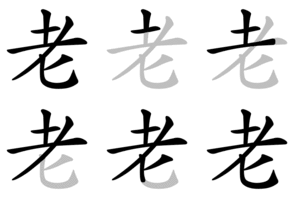 | |||
Han character
老 (Kangxi radical 125, 老+0, 6 strokes, cangjie input 十大心 (JKP), four-corner 44711, composition ⿱耂匕)
- Kangxi radical #125, ⽼.
Derived characters
References
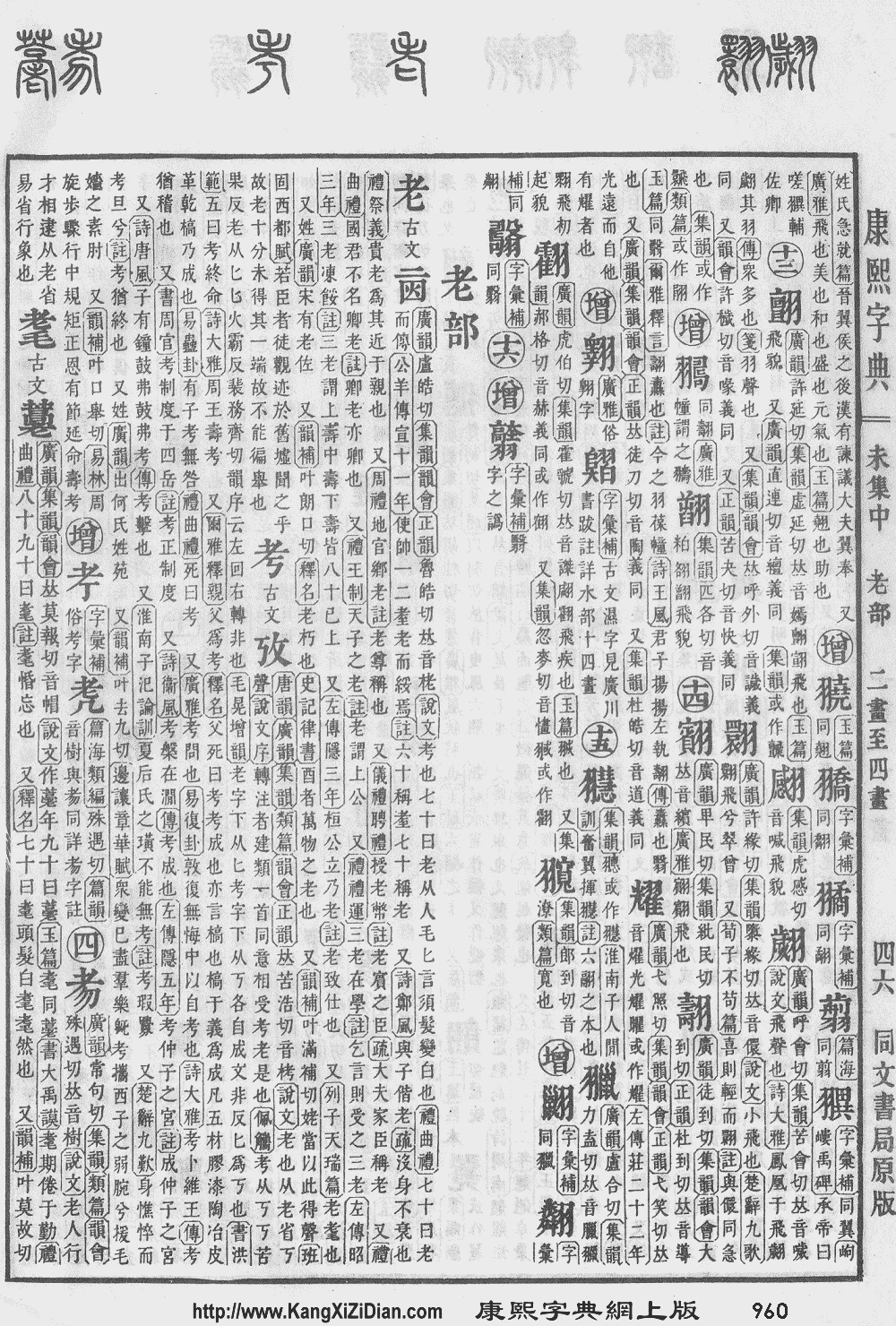
- KangXi: page 960, character 25
- Dai Kanwa Jiten: character 28842
- Dae Jaweon: page 1407, character 8
- Hanyu Da Zidian (first edition): volume 4, page 2778, character 1
- Unihan data for U+8001
- Unihan data for U+F934
Chinese
| trad. | 老 | |
|---|---|---|
| simp. # | 老 | |
| alternative forms | 𠄰 𦒳 𠈣 | |
Glyph origin
| Historical forms of the character 老 | |||||||||
|---|---|---|---|---|---|---|---|---|---|
| Shang | Western Zhou | Spring and Autumn | Warring States | Shuowen Jiezi (compiled in Han) | Liushutong (compiled in Ming) | Libian (compiled in Qing) | Kangxi Dictionary (compiled in Qing) | ||
| Oracle bone script | Bronze inscriptions | Bronze inscriptions | Bronze inscriptions | Chu slip and silk script | Qin slip script | Small seal script | Transcribed ancient scripts | Clerical script | Ming typeface |
 |
 |
 |
 |
 |
 |
 |
 |
 |
 |
Ideogrammic compound (會意) : 人 (“man”) + 毛 (“hair”) + 匕 (“cane”) – a man with long hair (an old man), leaning on a cane. Compare top component to 孝 (OC *qʰruːs).
Cognate to 考 (OC *kʰluːʔ); the most commonly cited example of 轉注 (“reciprocal meaning”).
Etymology
Unknown. Compare Proto-Sino-Tibetan *s-raw (“withered, residue, corpse”), *rwat (“stiff, tough”), whence Burmese ရော် (rau, “wither, become overripe; age”), ရွတ် (rwat, “old, stiff, tough”). See also 古 (gǔ), 故 (gù).
An old Sino-Vietnamese borrowing is rệu (“overripe, pulpy”).
Pronunciation
Definitions
老
- old; aged; elderly
- old (as opposed to new); of long standing
- outdated; old-fashioned
- original; former
- the elderly; one's elders
- 敬老 ― jìnglǎo ― to respect the elderly
- Used after the surname of an old person to address a venerable old person
- 王老 ― Wáng lǎo ― revered old Wang
- (figurative) experienced
- 樊遲請學稼,子曰:「吾不如老農。」 [Classical Chinese, trad.]
- From: The Analects of Confucius, c. 475 – 221 BCE, translated based on James Legge's version
- Fán Chí qǐng xué jià, Zǐ yuē: “Wú bùrú lǎonóng.” [Pinyin]
- Fan Chi asked (Confucius) to teach him husbandry. The Master said, "I'm nowhere as good as an experienced farmhand."
樊迟请学稼,子曰:“吾不如老农。” [Classical Chinese, simp.]
- (literary) to respect (the elderly, one's elders)
- (of cooked food) overcooked; tough; stringy; hard
- (of food or potable liquids) stale; not fresh
- always; all the time
- (chiefly dialectal) very; quite
- (euphemistic, of an elderly person) to die; to pass away (usually with 了 (le))
- (endearing, respectful) Used before surnames to refer to heads or elder members of families.
- (usually respectful and endearing) Used by analogy in several other relationship terms.
- (obsolete, originally honorific) Prefix for animals or people considered senior, fierce, and often awe-inspiring.
- 老鷹/老鹰 ― lǎoyīng ― eagle
- 老虎 ― lǎohǔ ― tiger
- 老鼠 ― lǎoshǔ ― mouse, rat; (obsolete) bat
- 老狼 ― lǎoláng ― (rare) elder and experienced wolf
- 老貓/老猫 ― lǎomāo ― (rare) elder (potentially annoying) cat
- 老狐狸 ― lǎohúlí ― (surviving usage) elder, cunning and experienced fox
- 老傢夥/老家伙 ― lǎojiāhuǒ ― (please add an English translation of this example)
- 老東西/老东西 ― lǎodōngxī ― (please add an English translation of this example)
- 老雜碎/老杂碎 ― lǎozásuì ― (please add an English translation of this example)
- (colloquial) Used before nouns, especially names of ethnicities, places and countries, to form nouns.
- 老外 ― lǎowài ― foreigner; (pejorative) layman, one who lacks knowledge of a subject
- 老美 ― lǎoměi ― Yank
- 老表 ― lǎobiǎo ― a friend (direct speech, may be intimate or offensive depending on provinces)
- 老毛子 ― lǎomáozi ― (pejorative) Russian person
- 老蒙古 ― lǎoménggǔ ― (pejorative) Mongols
- 老北京 ― lǎoběijīng ― indigenous Beijing person
- 老山東/老山东 ― lǎoshāndōng ― indigenous Shandong person
- 老西兒/老西儿 ― lǎoxīr ― (affectionate) Shanxi person
- 老回回 ― lǎohuíhuí ― Hui person (affectionate in some cases, pejorative in other cases, never neutral, depend on the region, speaker, listener situation and speaking mood)
- Short for 老子 (Lǎozǐ, “Laozi; Lao Tzu”).
- (Mainland China, Hong Kong) Short for 老撾/老挝 (Lǎowō, “Laos”).
Synonyms
- (old):
- (very):
- (to die):
| Variety | Location | Words |
|---|---|---|
| Classical Chinese | 死, 亡, 歿, 卒 | |
| Formal (Written Standard Chinese) | 死, 死亡, 亡故, 喪生, 喪命, 去世 †, 過世 †, 逝世 †, 離世 †, 下世 †, 不在 †, 過去 †, 仙逝 †, 歸天 †, 歸西 †, 升天 †, 作古 †, 長眠 †, 閉眼 †, 故去 †, ‡, 故世 †, ‡, 一命嗚呼 | |
| Mandarin | Beijing | 死, 故去 †, 老 †, ‡, 毛兒提 Hui |
| Taiwan | 死, 過世 † | |
| Harbin | 死, 老 †, ‡, 伸腿兒 ¤, 伸腿 ¤, 蹬腿兒 ¤, 奔兒咕 ¤, 桿兒屁 §, 桿兒細 §, 吹燈拔蠟 | |
| Yantai (Muping) | 死, 老 †, ‡, 上西天 § | |
| Jinan | 死, 歿, 過去 †, 老 †, ‡, 不在 †, ‡, 王八 §, 完蛋, 完錢, 完活, 無常 Hui, 歸主 Hui, 歸真 Hui | |
| Luoyang | 死, 過去, 過世, 下世, 亡故, 不在, 升天, 去世 †, 老 †, ‡, 擱那兒 ¤ | |
| Wanrong | 死, 歿, 老 †, ‡ | |
| Xi'an | 死, 不在 †, 老 †, ‡, 無常 Hui | |
| Yinchuan | 死, 走 †, 歿 Hui, 歸真 Hui, 冒提 Hui, 口喚 Hui, 無常 Hui, 完 Hui | |
| Lanzhou | 死, 過世 †, 緩下 †, 躺下 † | |
| Xining | 歿 | |
| Ürümqi | 死, 過世 †, 不在 † | |
| Wuhan | 死, 過身 †, 去 †, 老 †, ‡, 去回 ¤, 翹辮子 ¤, 翹 ¤, 瓜碼子 ¤, 瓜 ¤, 西皮 | |
| Chengdu | 死, 過去 †, 不在 †, 去 †, 過世 †, 老 †, ‡, 撬桿兒 §, 撬桿 §, 翹辮子 §, 見馬克思, 歸天, 去陰國, 爬高煙囪, 落氣, 冰凊, 沒脈 | |
| Guiyang | 死, 過世 †, 成神 †, ‡, 百年歸天 †, ‡, 嗚呼 ¤ | |
| Liuzhou | 死, 沒得脈, 過世 †, 過身 †, 沒在 †, 哦嚄 | |
| Yangzhou | 死, 不在 †, 走 †, 家去吃去 ¤, 家去 ¤, 翹辮子 ¤, 翹 ¤, 駝條 § | |
| Nanjing | 死, 過世 †, 歸天 †, ‡, 不在 †, 嗝兒得 ¤, 翹辮子 ¤ | |
| Hefei | 死, 不在 †, 老 † | |
| Singapore | 死, 死掉, 死翹翹, 過世 †, 去世 †, 上天堂 †, 賣鹹鴨蛋 † | |
| Cantonese | Guangzhou | 死, 過身 †, 過世 †, 老 †, ‡, 百年歸老 †, ‡, 去別有天 †, ¤, 去大煙筒 †, ¤, 瓜 ¤, 瓜老襯 ¤, 收檔 ¤, 攞竇 ¤, 進竇 §, 瓜竇, 直, 瓜直, 死直, 攤直, 雙腳撐直, 伸直腳, 拉柴, 瓜柴, 褸席, 歸西, 歸天, 食黃泥, 入黃泥窿, 入窿, 玩完, 嫌米貴, 一 argot |
| Hong Kong | 死, 過身 †, 走 †, 香 †, 去 †, 唔喺度 †, 百年歸老 †, 賣鹹鴨蛋 †, 兩腳一伸 †, 仙遊 †, 拜拜 †, 去閻羅王處報到 †, 瓜 ¤, 瓜老襯 ¤, 拉柴, 瓜柴, 釘蓋, 釘, 直, 歸西, 玩完 | |
| Hong Kong (San Tin Weitou) | 過身 | |
| Hong Kong (Kam Tin Weitou) | 過身 | |
| Hong Kong (Ting Kok) | 過身, 死 | |
| Hong Kong (Tung Ping Chau) | 過身 | |
| Macau | 過身, 去 | |
| Guangzhou (Panyu) | 過身, 死 | |
| Guangzhou (Huashan, Huadu) | 死 | |
| Guangzhou (Conghua) | 過身, 死 | |
| Guangzhou (Zengcheng) | 去歸, 過身 | |
| Foshan | 過身, 死 | |
| Foshan (Shatou, Nanhai) | 死, 過身 | |
| Foshan (Shunde) | 過身 | |
| Foshan (Sanshui) | 過身 | |
| Foshan (Mingcheng, Gaoming) | 死 | |
| Zhongshan (Shiqi) | 過身 | |
| Zhuhai (Qianshan) | 死 | |
| Zhuhai (Doumen, Shangheng Tanka) | 過身, 死 | |
| Zhuhai (Doumen) | 死, 過身 | |
| Jiangmen (Baisha) | 過身, 死 | |
| Jiangmen (Xinhui) | 死, 過身 | |
| Taishan | 死, 善, 去 | |
| Kaiping (Chikan) | 死, 登仙 | |
| Enping (Niujiang) | 過身, 死 | |
| Heshan (Yayao) | 死 | |
| Dongguan | 死, 老 †, 去返 †, 去舊時嗰處 †, 視埋眼 †, 伸直腳 †, 入罌 †, 拉柴 §, 去大煙筒 § | |
| Shenzhen (Shajing, Bao'an) | 死, 過身 | |
| Yangjiang | 死, 過輩 †, 老 †, ‡, 老大 †, ‡ | |
| Singapore (Guangfu) | 死, 過身 † | |
| Gan | Nanchang | 死, 過世 †, 老 † |
| Lichuan | 死 | |
| Pingxiang | 死, 過 †, 走路 †, 老 †, ‡, 去 | |
| Hakka | Meixian | 死, 老, 過身 †, 老壽 †, ‡ |
| Huizhou (Huicheng Bendihua) | 過身 | |
| Dongguan (Qingxi) | 過身, 死 | |
| Shenzhen (Shatoujiao) | 死, 過身 | |
| Zhongshan (Nanlang Heshui) | 死 | |
| Conghua (Lütian) | 死, 過身 | |
| Yudu | 死, 過世 †, 過套 †, 過身 †, 轉去 †, 轉該背 †, 歸仙 †, 轉老外婆裡 ¤ | |
| Miaoli (N. Sixian) | 死, 過身 †, 往生 † | |
| Pingtung (Neipu; S. Sixian) | 死, 過身 †, 往生 † | |
| Hsinchu County (Zhudong; Hailu) | 死, 過身 †, 往生 † | |
| Taichung (Dongshi; Dabu) | 死, 過身 †, 往生 † | |
| Hsinchu County (Qionglin; Raoping) | 死, 過身 †, 往生 † | |
| Yunlin (Lunbei; Zhao'an) | 死, 過身 † | |
| Hong Kong | 過身, 老 | |
| Huizhou | Jixi | 死, 過世 †, 過輩 †, 過身 †, 不在 †, 過老 §, 過邊 §, 進棺材 §, 進風水 §, 翹扁 §, ¤ |
| Jin | Taiyuan | 死, 沒啦 †, 走 †, 過去 †, 老 †, ‡, 老客 †, ‡ |
| Xinzhou | 死, 回老家 †, 硬 §, 㞗朝天 of a man, vulgar, 倒蕎麥皮 | |
| Min Bei | Jian'ou | 死, 過身 †, 老 †, ‡ |
| Min Dong | Fuzhou | 死, 過去 †, 過世 †, 過後 †, 歸西 †, 百歲 †, 老去 †, ‡, 堯街去 ¤, 堯生去 ¤, 溜翹 ¤, 殂 ¤, 去算米數 ¤, 去外媽食齋 ¤, 去外媽 ¤, 去䁐廬山 ¤, 去厝去 ¤, 睏長暝眠 ¤, 翹齋 ¤, 揭兜去 ¤, 拔直去 ¤, 上天去 ¤, 生去 ¤, 𣪟去 ¤, 䁐松柏樹 ¤, 䁐松柏 ¤, 轉祖 § |
| Min Nan | Xiamen | 死, 過身 †, 過氣 †, 百歲 †, 百年 †, 百歲年老 †, 行去 †, 無去 †, 㾀 †, 老去 †, ‡, 老咯 †, ‡, 蟯 ¤, 蟯歹 ¤, 蟯癱 ¤, 行雞 ¤, 馬滴 § |
| Quanzhou | 死, 過身 †, 過氣 †, 百歲 †, 百年 †, 無去 †, 老去 †, ‡, 老咯 †, ‡, 行雞 ¤, 馬滴 § | |
| Zhangzhou | 死, 過身 †, 過氣 †, 百歲 †, 百年 †, 百歲年老 †, 行去 †, 無去 †, 起身 †, 老去 †, ‡, 老咯 †, ‡, 蟯 ¤, 蟯歹 ¤, 蟯癱 ¤, 行雞 ¤, 誆牽 §, 㾀 §, 㾀歹 §, 馬滴 § | |
| Taipei | 死去, 老 †, 過身 † | |
| New Taipei (Sanxia) | 死去, 老去 †, 往生 †, 過身 † | |
| Kaohsiung | 死去, 老去 †, 行去 †, 往生 †, 無佇咧 †, 過身 †, 轉去 † | |
| Yilan | 死去, 老去 †, 往生 †, 無佇咧 †, 過身 †, 過往 † | |
| Changhua (Lukang) | 死去, 老 †, 無去 †, 過身 †, 轉去 † | |
| Taichung | 死去, 往生 †, 過身 † | |
| Tainan | 死去, 老去 †, 行去 †, 往生 †, 無佇咧 †, 過身 †, 轉去 † | |
| Hsinchu | 曲去, 去咯 †, 往生 †, 過身 †, 老去 † | |
| Kinmen | 死去, 往生 †, 過身 †, 行去 † | |
| Penghu (Magong) | 死去, 往生 †, 過身 †, 老去 † | |
| Singapore (Hokkien) | 死, 馬滴, 死翹翹, 過身 †, 百年 †, 百歲 †, 過氣 †, 起車 †, 老去 †, 老咯 †, 行去 †, 蟯去 †, 吭跤翹, 交登記 † | |
| Manila (Hokkien) | 死, 死去, 過面 †, 過身 † | |
| Chaozhou | 死, 過身 † | |
| Jieyang | 過身, 吭跤翹, 吭翹 | |
| Singapore (Teochew) | 死, 過身 | |
| Leizhou | 死, 過世 †, 過輩 †, 過目焗 ¤, 直筒 §, 刮薯減米 § | |
| Haikou | 死, 過層 †, ‡, 老 †, ‡, 貓使 § | |
| Singapore (Hainanese) | 死 | |
| Zhongshan Min | Shaxi (Longdu) | 死 |
| Southern Pinghua | Nanning (Tingzi) | 死, 瓜老襯, 過世, 歸西 |
| Wu | Shanghai | 死, 故 †, 過世 †, 嘸沒 †, 一腳去 †, 翹辮子 §, ¤, 彈老三 §, 翹老三 § |
| Shanghai (Chongming) | 死, 老 †, 故 †, 翹辮子 ¤ | |
| Suzhou | 死, 壞, 去, 過世 †, 翹辮子 § | |
| Danyang | 死 | |
| Hangzhou | 死, 故 †, 過世 †, 翹辮兒 ¤, 到龍駒塢去 | |
| Ningbo | 死, 翹辮子 §, 過世 †, 嘸沒 †, 死脫 §, 燂茶, 山裡去, 吃豆腐羹, 嘸沒來的 † | |
| Wenzhou | 死, 冇 †, 過輩 †, ‡, 蹻 ¤ | |
| Jinhua | 死, 過世 †, 過輩 †, 弗在 †, 老 †, ‡ | |
| Xiang | Changsha | 死, 過 †, 去 †, 瓜, 彈, 彈四郎 |
| Loudi | 死, 過世 †, 故 †, 上岸 † | |
| Shuangfeng | 死, 過世 †, 故 † | |
| Note | † - euphemistic; ‡ - usually of the elderly; ¤ - humorous; § - derogatory/disrespectful | |
Compounds
|
|
|
Descendants
References
- “老”, in 漢語多功能字庫 (Multi-function Chinese Character Database), 香港中文大學 (the Chinese University of Hong Kong), 2014–
- Dictionary of Chinese Character Variants (教育部異體字字典), A03251
Japanese
Readings
Korean
Etymology
From Middle Chinese 老 (MC lɑuX).
| Historical Readings | ||
|---|---|---|
| Dongguk Jeongun Reading | ||
| Dongguk Jeongun, 1448 | 로ᇢ〯 (Yale: lwǒw) | |
| Middle Korean | ||
| Text | Eumhun | |
| Gloss (hun) | Reading | |
| Hunmong Jahoe, 1527 | 늘글〮 (Yale: nùlkúl) | 로〯 (Yale: lwŏ) |
Pronunciation
- (SK Standard/Seoul) IPA(key): [ɾo̞(ː)] ~ [no̞(ː)]
- Phonetic hangul: [로(ː)/노(ː)]
- Though still prescribed in Standard Korean, most speakers in both Koreas no longer distinguish vowel length.
Compounds
- 경로 (敬老, gyeongno)
- 노년 (老年, nonyeon)
- 노련 (老鍊, noryeon)
- 노령 (老齡, noryeong)
- 노모 (老母, nomo)
- 노사 (老師, nosa)
- 노소 (老少, noso)
- 노안 (老眼, noan)
- 노안 (老顔, noan)
- 노인 (老人, noin)
- 노장 (老將, nojang)
- 노파 (老婆, nopa)
- 노폐 (老廢, nopye)
- 노화 (老化, nohwa)
- 노환 (老患, nohwan)
- 노후 (老後, nohu)
- 불로 (不老, bullo)
- 연로 (年老, yeollo)
- 원로 (元老, wollo)
- 장로 (長老, jangno)
- 노익장 (老益壯, noikjang)
- 남녀노소 (男女老少, namnyeonoso)
- 백년해로 (百年偕老, baengnyeonhaero)
Vietnamese
Han character
老: Hán Việt readings: lão[1][2][3]
老: Nôm readings: lảo[1][3][4], lảu[1][3][4], lão[1][2], lẽo[1][3], láu[3][4], rảu[3][4], láo[1], lạo[1], não[1], rau[1], sáu[1], lểu[2], lếu[3], lẩu[3]
References
- Nguyễn (2014).
- Nguyễn et al. (2009).
- Trần (2004).
- Hồ (1976).